
Since early July, the RealT real estate tokenization project has been facing legal action brought by the city of Detroit. Its lawyers are organizing their defense against what they claim is an unfounded and hasty lawsuit.
RealT lawsuit: the city of Detroit acted hastily
The cryptocurrency sector is constantly innovating in many areas, such as making real estate accessible through tokenization. This is an area in which the RealT project has quickly established itself, to the point of becoming one of its current leaders.
But being a key player is not always a comfortable position, given the sometimes restrictive regulatory requirements. Just look at how the city of Detroit has decided to take direct action against RealT’s activities on its territory.
The latest stage in this case, on July 22, involved the issuance of a restrictive order with problematic consequences. As RealT points out in its latest official statement, this implies a ban on “collecting rent on properties located in Detroit until they have obtained certificates of compliance,” as well as the inability to evict tenants who do not pay their rent.
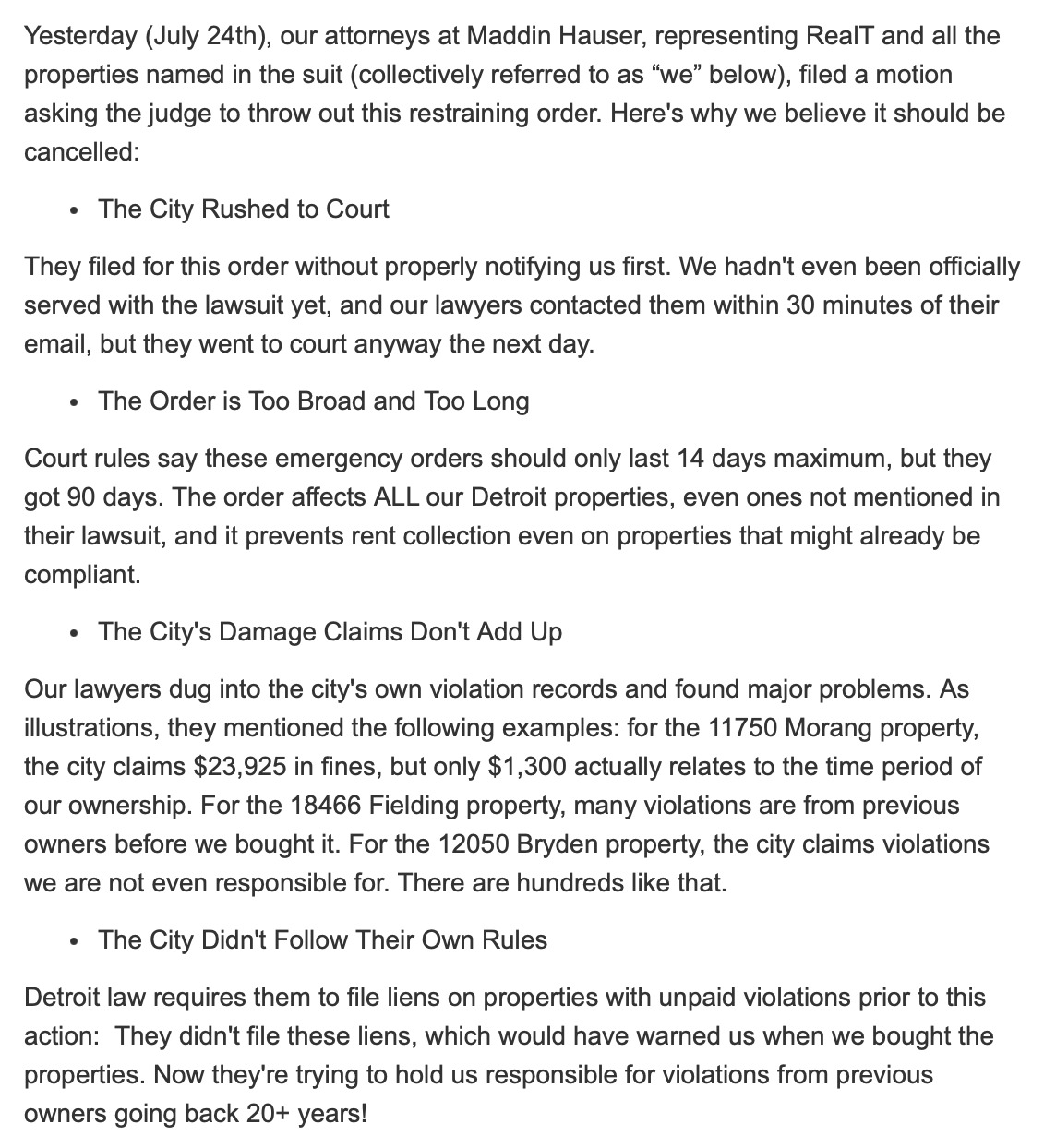
According to RealT’s lawyers, this 90-day order appears to be both unfounded and excessive. Normally, this type of legal procedure lasts a maximum of 14 days and the company concerned must be informed in advance. This does not appear to have been the case in this instance.
According to court rules, these emergency orders should only last a maximum of 14 days, but they got 90 days. Furthermore, it affects all of our properties in Detroit, even those not mentioned in the complaint, and prevents the collection of rent even for properties that are already compliant.
RealT
Motion filed to vacate the restraining order
According to RealT’s attorneys, the proceedings initiated by the City of Detroit contain numerous inconsistencies. In particular, a significant number of violations cited relate to owners prior to the real estate tokenization project’s acquisition of these properties.
Detroit law requires them to file liens (notices of encumbrances) on properties with unpaid violations before taking any legal action. They did not do so. Had they done so, we would have been notified when purchasing the properties. Now they are trying to hold us responsible for violations dating back more than 20 years!
RealT
As a result, RealT’s attorneys have filed an official motion with the court to vacate this order. A hearing is scheduled for early this week to allow the judge to rule. At the same time, the requested work is underway to bring the properties into compliance.