
While the cryptocurrency market appears to be entering a pullback phase, stablecoin volumes are skyrocketing. Let’s take a look at the various statistics specific to stablecoins to try to understand the current state of the market.
Are Stablecoins Benefiting from the Cryptocurrency Downturn?
On Saturday, we reviewed Bitcoin’s (BTC) performance, which failed to deliver an “Uptober” for the third time in its history. Nevertheless, not all sectors of the cryptocurrency market are in the same boat, starting with stablecoins, which set a new volume record on Ethereum (ETH) during the month of October.
In fact, this asset class generated 2.82 billion in trading volume, marking a new all-time high (ATH) for the fourth consecutive month. USDC led the pack, accounting for 57.45% of that volume in October:
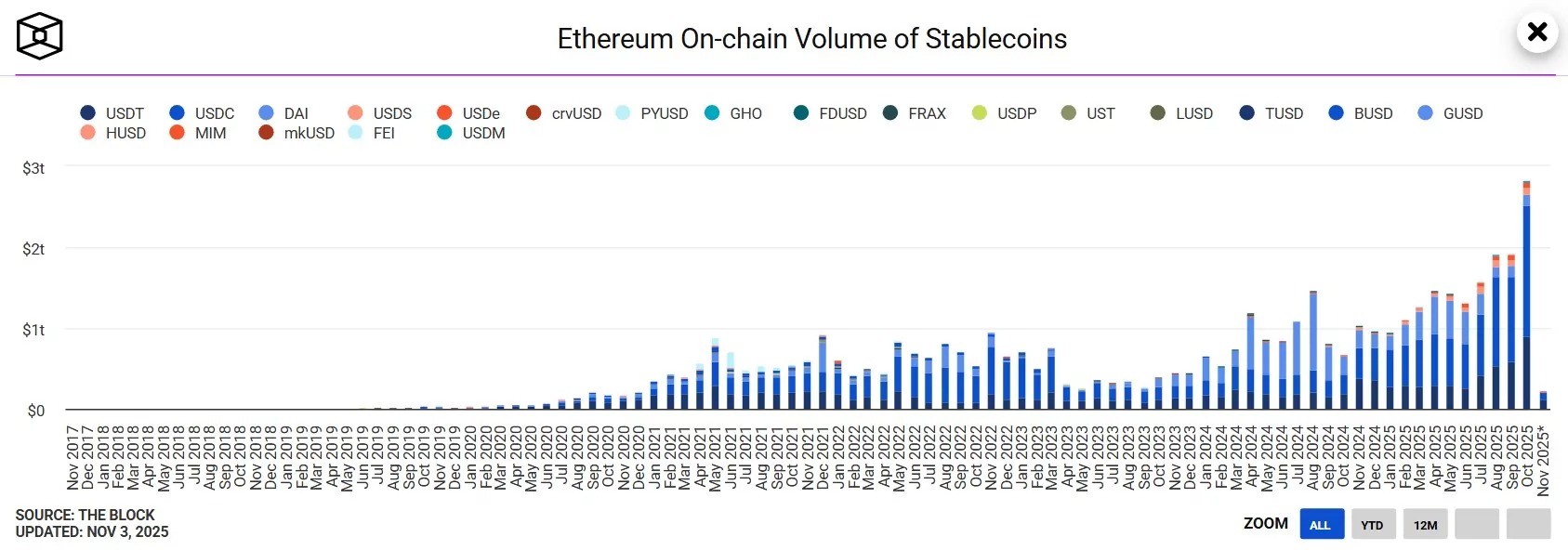
Stablecoin trading volume on Ethereum
Despite these volumes, it is interesting to note that stablecoin market capitalization has tended to stagnate in recent weeks. For USDT, for example, market capitalization has plateaued at around $183 billion for the past ten days or so. As for USDC, we also observe that the growth in market capitalization has slowed since last month:
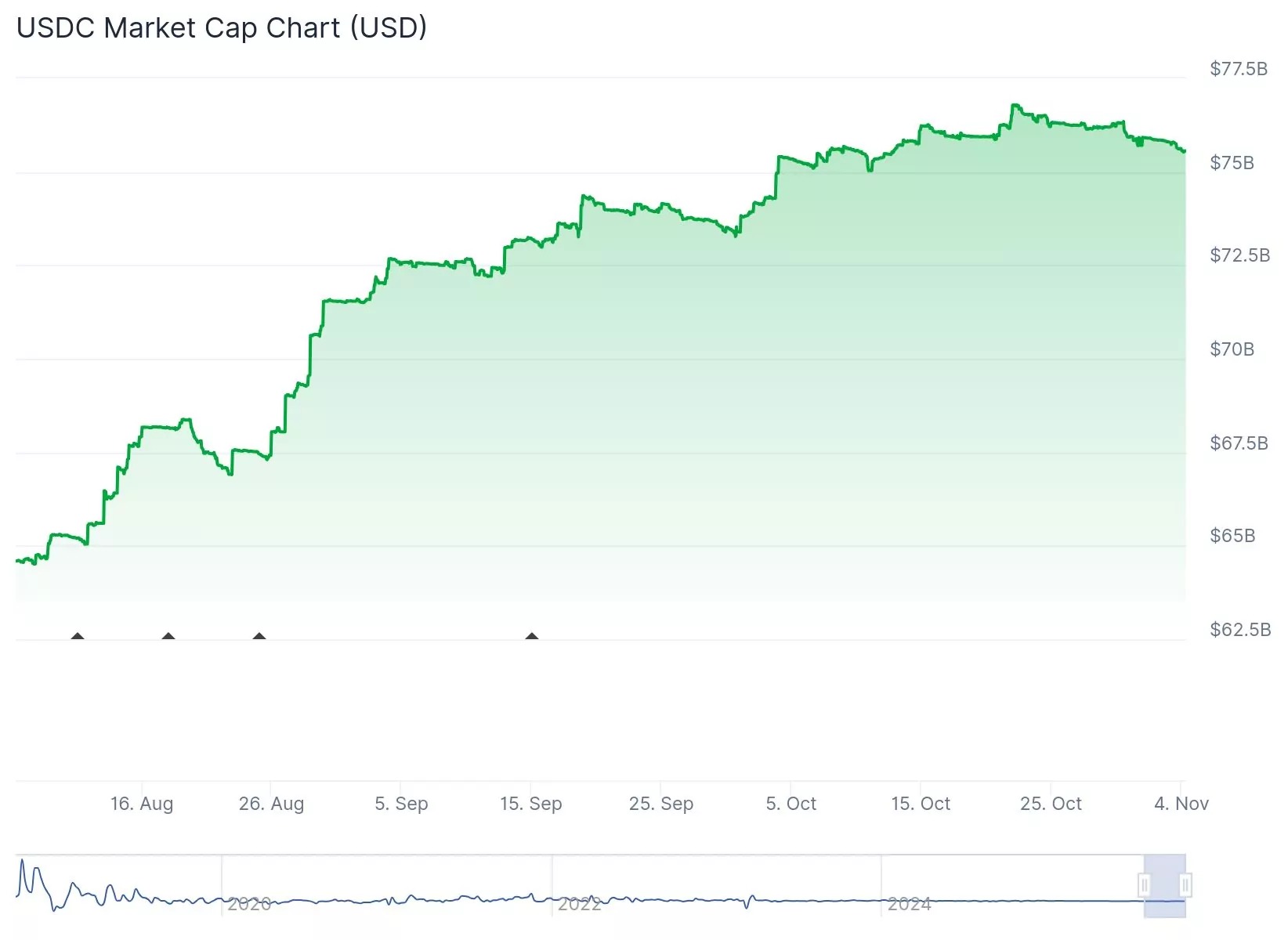
USDC Market Capitalization Over the Past 3 Months
For now, however, Circle and Tether remain at the top of the list of applications generating the most revenue, according to data from DefiLlama:
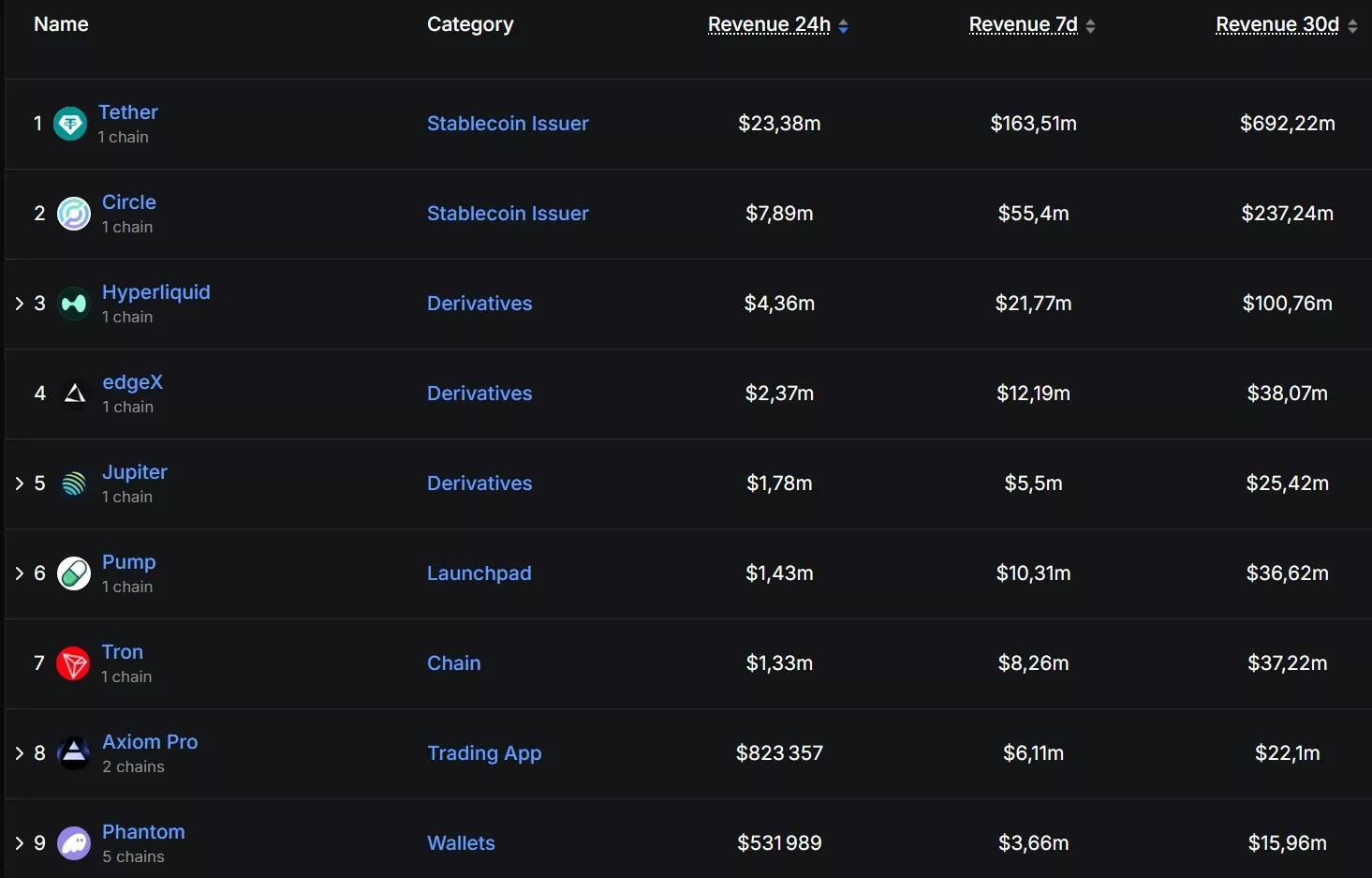
Top revenue-generating applications
Echoing the volumes mentioned earlier, this dominance is also evident in Ethereum’s on-chain data, as over the past 24 hours, the USDT and USDC smart contracts ranked as the 2nd and 5th smart contracts, respectively, through which the most gas was spent. Over a 24-hour period, this accounts for 11.28% of the gas spent on Ethereum, or 38.63 ETH.
Regarding the transactions generated by these same smart contracts, we can note, however, that while the USDC smart contract is close to its all-time high (ATH)—with more than 133,000 transactions generated on Monday—the USDT smart contract has not yet surpassed its record set on June 23, 2020, which stood at 316,442 transactions:
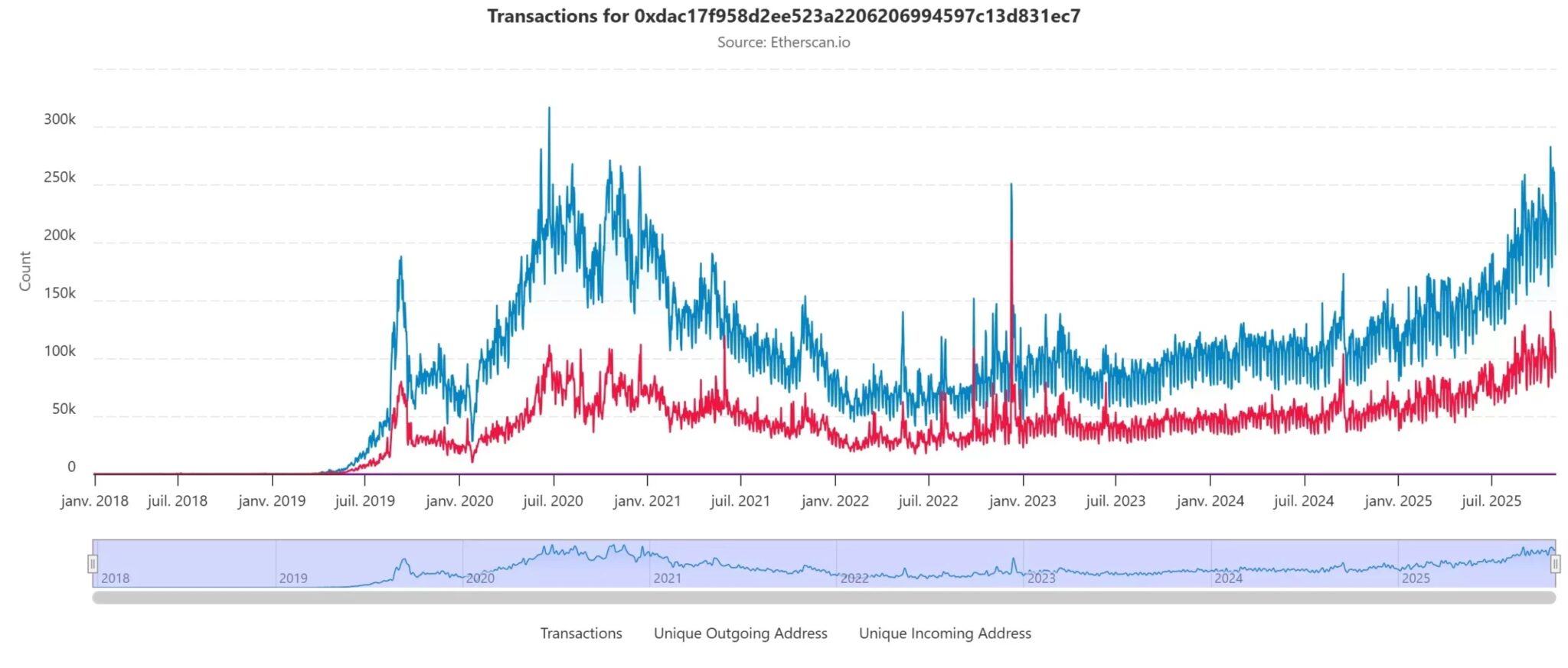
Daily transactions on the USDT smart contract
With November just beginning, this analysis can be repeated at the end of the month to see how the trend evolves. Beyond all adoption factors—whether related to U.S. regulation or initiatives by traditional financial players—market conditions can also be put into perspective.
And for good reason: despite a new all-time high (ATH) in early October, the price of BTC now appears to be entering a phase of uncertainty, and profit-taking may have fueled trading volumes in stablecoins. When the cryptocurrency market is unsure which direction to take, investors may turn to these stablecoins to generate other forms of returns, particularly through lending.