
The appeal of a sector can be measured in various ways, one of which is by looking at the amount of capital invested by venture capital firms. And with $4.6 billion, the third quarter of this year set a record unmatched since the unprecedented successes of 2021–2022.
Venture capital firms make a strong comeback in the third quarter
The growth of the cryptocurrency sector requires significant investment from venture capital (VC) firms, which are at the forefront of supporting the most innovative areas. However, it must be acknowledged that the frenzy of 2021–2022 has given way to a more measured approach toward this ecosystem.
This reality was recently examined in a report published by the research department of the crypto firm Galaxy Digital, which described these VCs’ activity as “active and healthy overall” during the past quarter.
In fact, funds raised since the beginning of 2025 have already surpassed the totals for the previous two years, with more than $10 billion raised so far, even though “the number of deals does not appear set to exceed that of previous years.”
And for good reason: the $4.6 billion recorded during the third quarter already stands as the best result since the third quarter of 2022, just before the dramatic collapse of the FTX cryptocurrency exchange.
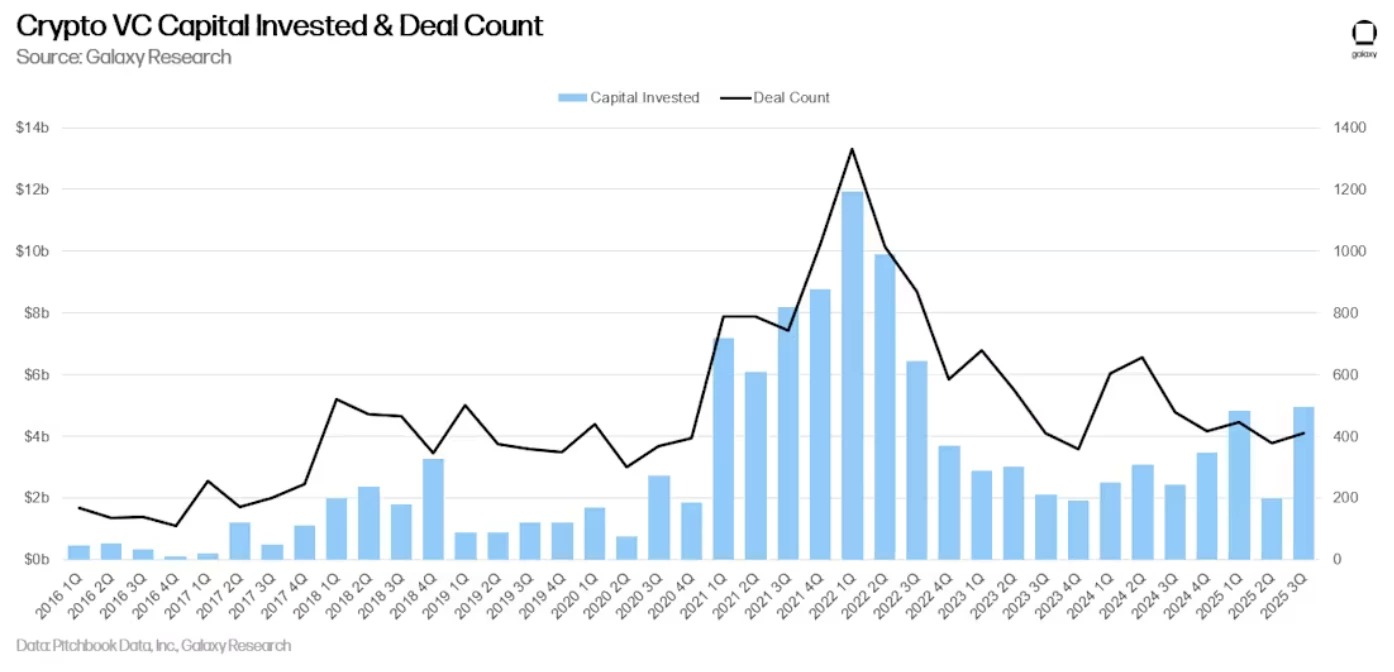
Capital invested by venture capital firms and number of deals
In the third quarter, venture capital firms invested $4.65 billion (up 290% month-over-month) in crypto- and blockchain-focused startups and private companies across 415 deals (up 9% month-over-month).
Investments Now Decoupled from Bitcoin’s Performance
During the third quarter, just 7 deals alone accounted for half of the funds deployed by venture capital firms in crypto- and blockchain-focused companies, including: Revolut ($1 billion), Kraken ($500 million), Erebor ($250 million), Trésor ($146 million), Fnality ($135 million), Mesh Connect ($130 million), and ZeroHash ($104 million).
Of the capital invested, 57% went to established companies, while 43% went to newer startups. The top sectors? The Trading/Exchange/Investing/Lending category ranks first, while Payments/Rewards and Banking saw significant increases.
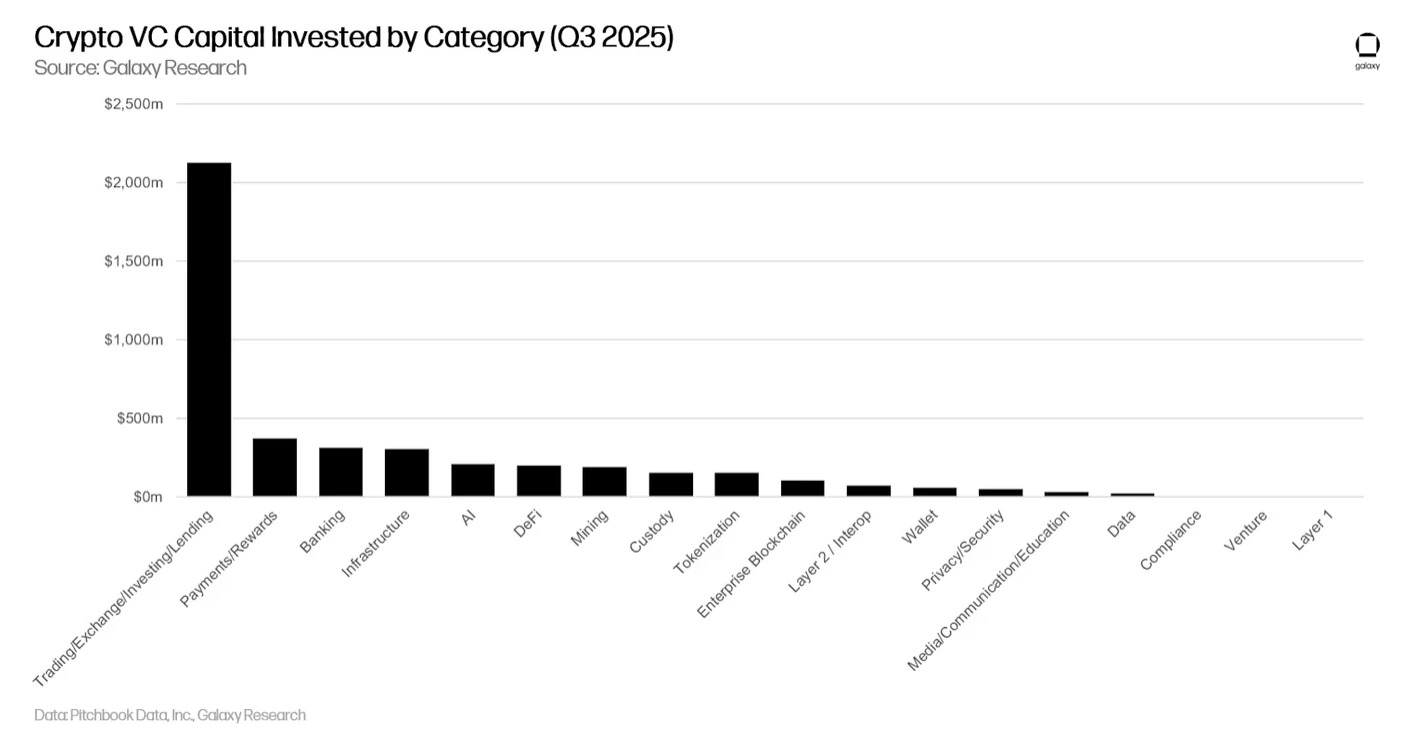
Venture capital investments by crypto sector
As for pre-seed deals—such as the Monad project, whose ICO has just taken place—their number remained stable month-over-month “and remains solid compared to previous cycles.” This data is considered “a way to assess the robustness of entrepreneurial activity,” while investments in established companies “reflect the growing maturity of the market as a whole.”
Unlike in previous bull markets, capital invested in crypto startups is no longer directly correlated with the price of Bitcoin. In fact, BTC “has risen significantly since January 2023, while venture capital activity has struggled to keep pace,” particularly in the face of increased competition from ETFs and Digital Asset Treasuries (DAT).
Very (Too?) Favorable Investment Agreements
Nevertheless, the strong presence of venture capital firms in the cryptocurrency sector remains controversial at times, particularly when it comes to the distribution of tokens associated with certain projects or the favorable terms they enjoy.
One need only look at the Berachain project, which is at the center of controversy following the revelation of its agreement with the investment firm Nova Digital. At issue: a refund clause on its $25 million investment allowing it to recover all of its funds if the price of the BERA token were to fall.
Meanwhile, the venture capital firm Mercury Fund has just filed a lawsuit against the Plasma project following an error—apparently corrected a little too late—in the drafting of the warrant procedure associated with the distribution of the XPL token. A shortfall of 278.5 million units makes quite a difference.