
According to the latest report from Chainalysis, cryptocurrency crime reached a record high in 2025 with a total estimated transaction value of at least $154 billion. Could this be linked to the marked increase in activity by nation states in the crypto ecosystem? We take stock…
A 700% increase in funds received by sanctioned entities
For many years, estimates of the impact and scale of cryptocurrency-related crime have fueled heated debates, between caricatural fantasies and the reality of the facts. This is why Chainalysis’ annual report is always a must-read, setting the record straight with verified data and figures.
The 2025 report begins with a rather worrying observation, as this period will clearly have seen “a marked increase in nation-state activity in the crypto ecosystem, marking a new stage in the maturation of illicit on-chain operations.”
As a result, the 2025 balance sheet seems to stand out very clearly from the relative stability observed in previous years, to the point of making it “a record year for crypto crime” across all sectors. This is all the more true when we consider that Chainalysis’ figures are a low estimate.
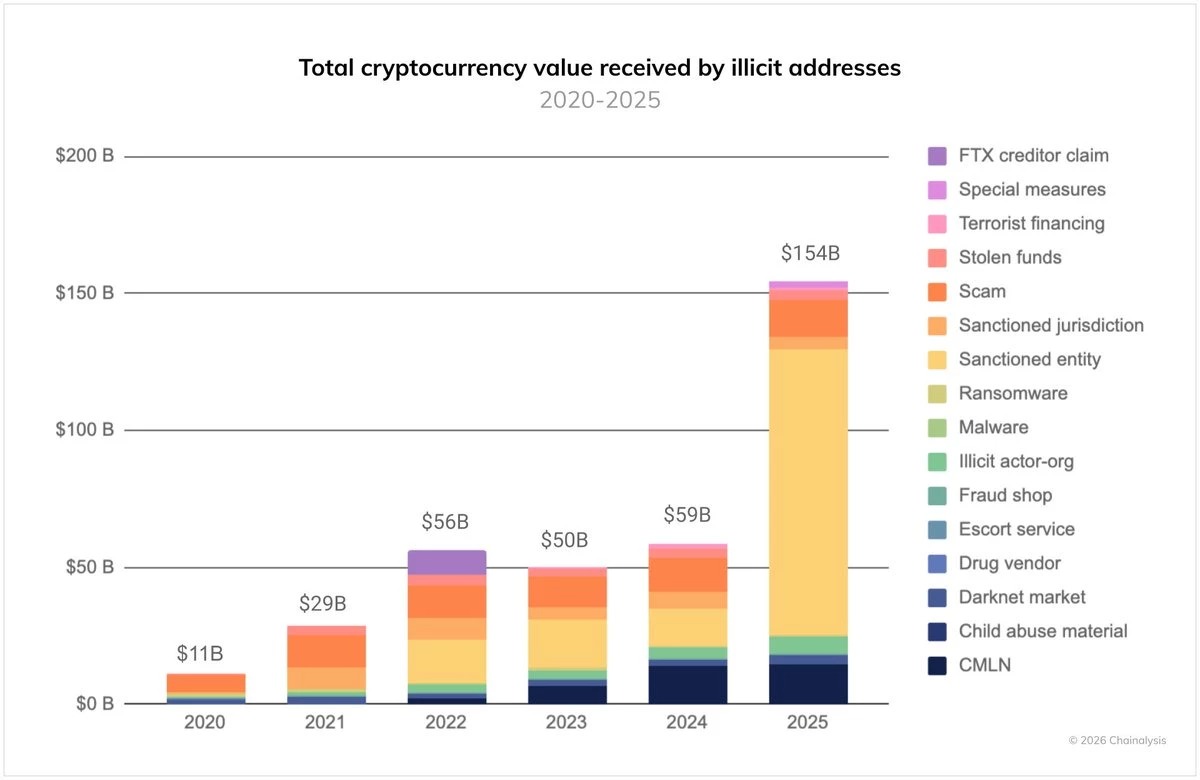
According to our data, illicit cryptocurrency addresses received at least $154 billion in 2025, a 162% year-over-year increase, primarily due to a dramatic 694% increase in funds received by sanctioned entities.
Chainalysis
Crypto crime enters the era of nation states
At the same time, Chainalysis experts point to a significant increase in illicit activities carried out by nation states, both by relying on these “highly professionalized” service providers and by “developing their own customized infrastructure to circumvent sanctions on a large scale.”
The main examples include the launch of the ruble-backed A7A5 token by Russia in February to circumvent international sanctions, which has already recorded more than $93.3 billion in transactions. Other examples include the unprecedented emergence of Chinese money laundering networks (CMLN) and the availability of illicit “full-stack” infrastructure for cybercriminals.
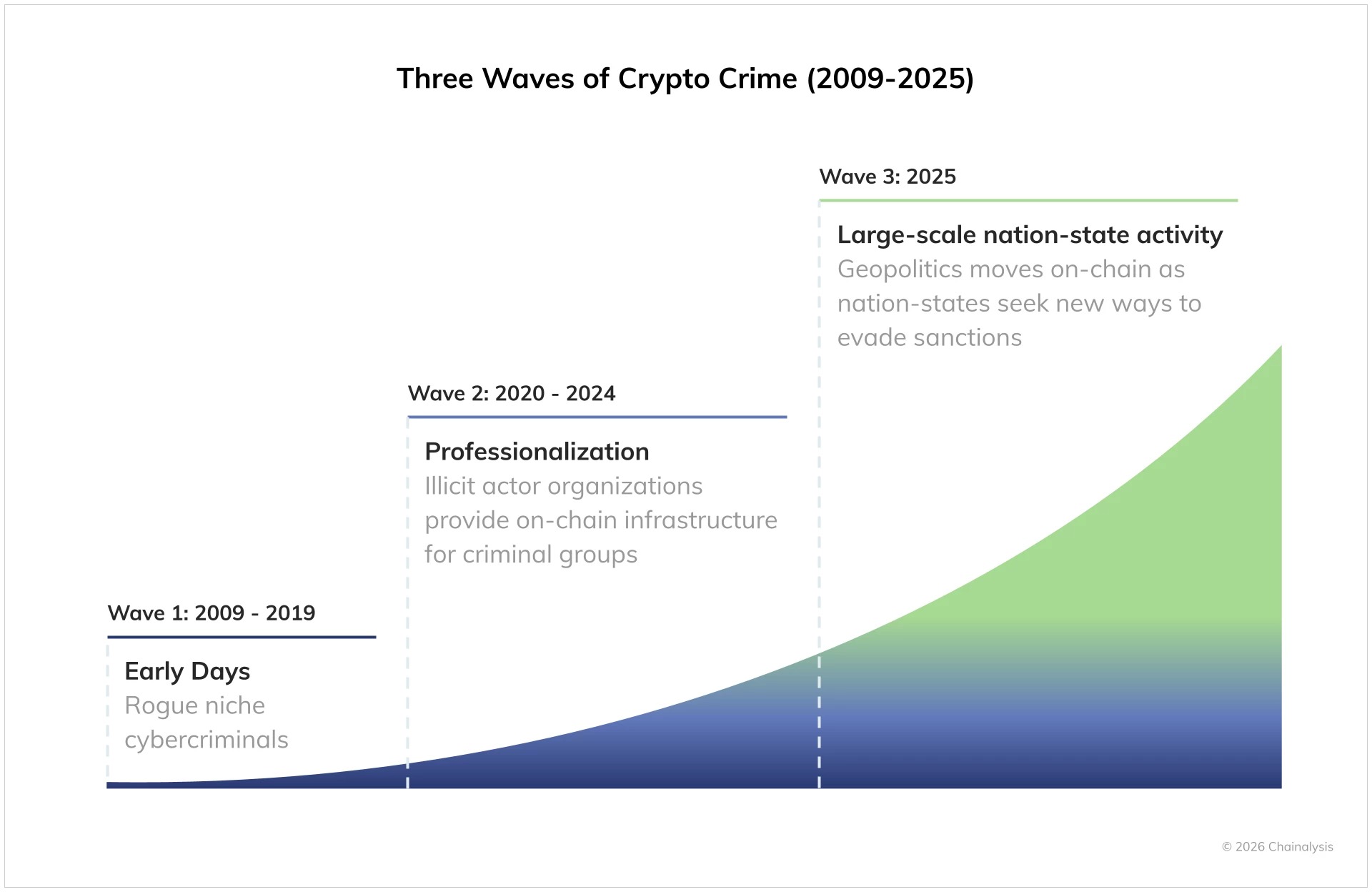
As nation states become integrated into illicit crypto supply chains originally designed for cybercriminals and organized crime groups, public authorities and compliance and security teams now face significantly increased challenges in terms of both consumer protection and national security.
Chainalysis
It is difficult not to make the connection with the $2.02 billion in cryptocurrencies stolen by North Korean hackers over the past year, for a total estimated loss of $6.75 billion. This represents an increase of more than 50% over one year, despite a decline in the number of attacks, which clearly echoes the professionalization discussed above.
Stablecoins widely popular and physical attacks on the rise
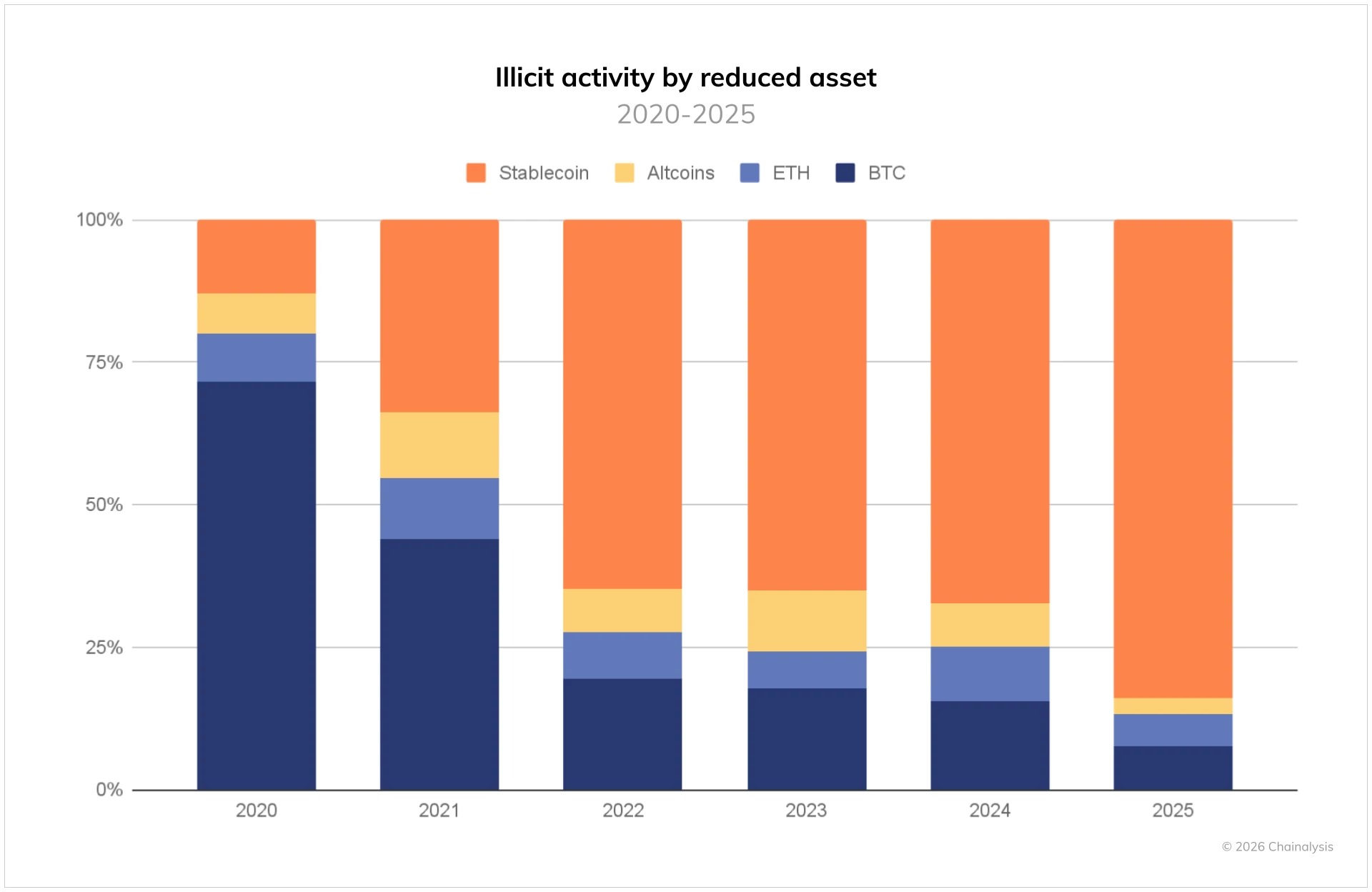
Finally, stablecoins remain the tokens most favored by crypto criminals, accounting for 84% of the total volume of illicit transactions detected by Chainalysis.
The reasons? The very same ones that are currently accelerating their adoption as a global currency: “ease of cross-border transfers, lower volatility, and broad utility.”
At the same time, these large-scale virtual transactions should not obscure another, much more disturbing and real reality, described as a “growing intersection between crypto and violent crime.”
Indeed, Chainalysis experts also address the more (in)human aspect of crypto crime, whose current abuses involve human trafficking networks turning to cryptocurrencies, but also “a particularly worrying increase in physical coercion attacks” involving kidnapping or false imprisonment with the aim of forcing victims to transfer their crypto assets.
However, these illicit volumes remain well below those of the global crypto economy, which is largely composed of legitimate transactions. Our estimate of the illicit share of total attributed crypto transaction volume has increased slightly since 2024, but remains below 1%.
Chainalysis