
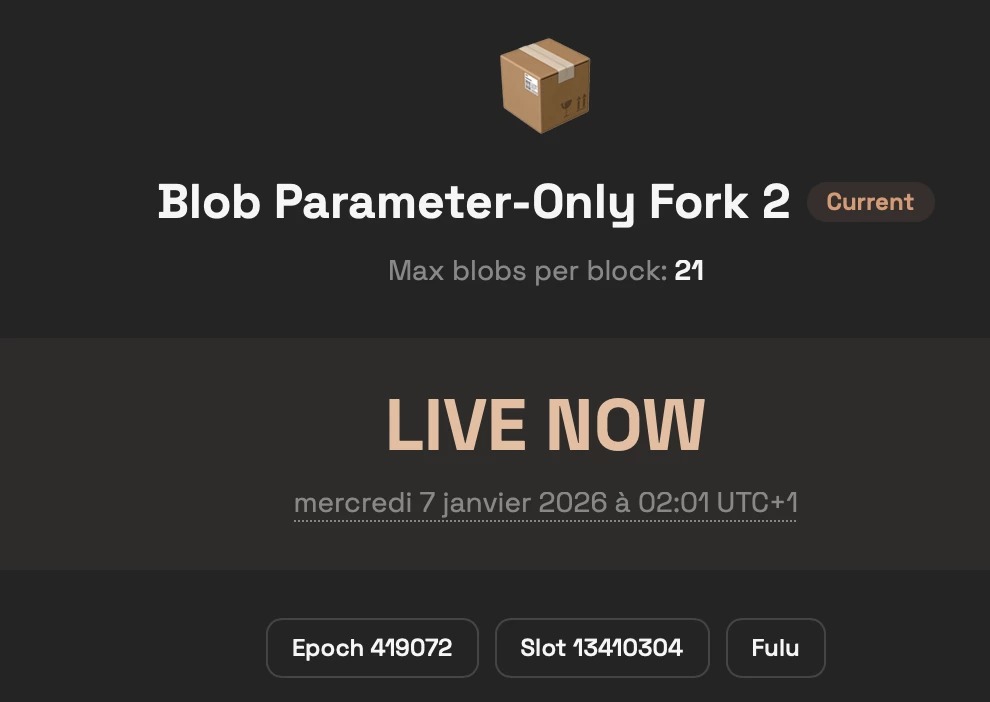
Ethereum continues its evolution toward improved scalability with the recent approval of an increase in its simultaneous data management capacity. A “Blob Parameter Only (BPO)” fork allows it to increase its blob limit from 14 to 21.
Ethereum increases its data management capacity
Since the effective deployment of its latest major upgrade, called Fusaka, the Ethereum blockchain has seen a significant increase in activity, with daily transactions breaking its 2021 record at the start of this year.
This situation brings the persistent issue of scalability back to the forefront, in order to manage this increase in data to be processed in real time. This is cause for celebration with the recent validation of its second fork—named Blob Parameter Only (BPO)—effective since January 7.
In practice, this measure is primarily aimed at enabling more optimized management of its blobs, temporary data packets intended for its layer 2, so as not to overload its blockchain (layer 1). The goal? To increase their number—previously between 10 and 14—in order to set a new limit between 15 and 21.
A blockchain with “elastic” capabilities
According to available data, demand for blobs on Ethereum has grown steadily since the Fusaka upgrade, without ever reaching the previous capacity limit. In other words, there is still plenty of room for growth.
For Andrew Gross, technical lead for the EVM block explorer Blockscout, this fork now offers “far from saturated blob space (…) and smoother rollup fee dynamics, greater data margin, and a system that dynamically adapts to demand.”
In practice, Ethereum has become an elastic base layer, capable of growing with demand without sacrificing decentralization or coordination stability.
Andrew Gross