
Since October, the tide has turned for Bitcoin miners. Profitability is declining, some equipment is being shut down, and the market seems to be entering a new phase. Yet despite the pressure, miners are not selling their bitcoins. Why are they still holding out? And more importantly, how long can this last? Let’s dive into the on-chain signals to understand what is really going on behind the decline in the BTC price.
Bitcoin under severe pressure
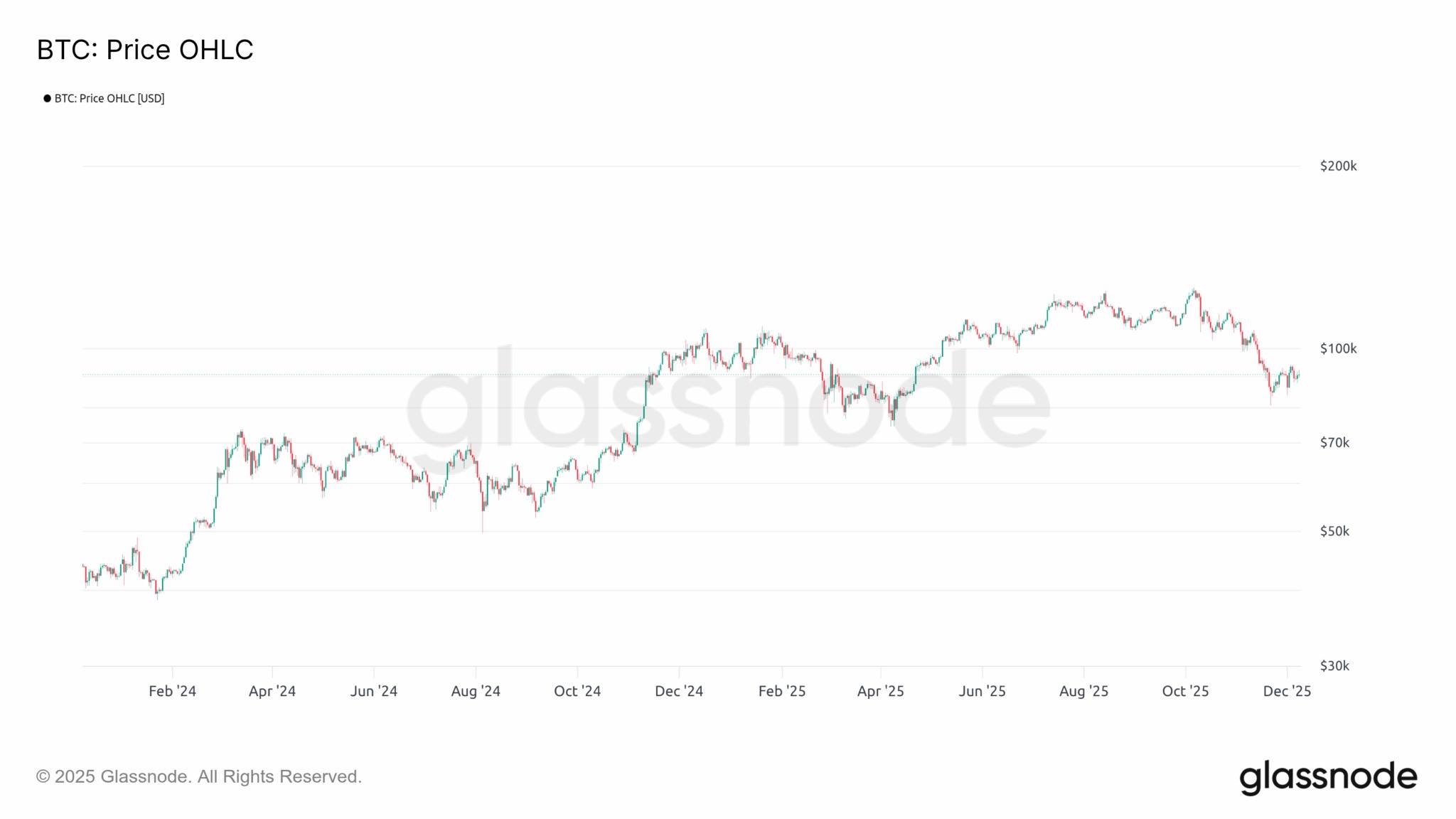
As the price of BTC struggles to regain the $94,000-$95,000 range, the likelihood of a dead cat bounce is increasing.
The market’s transition to a bear market is having a strong impact on investor psychology, preventing a bullish bias from being maintained in the short term.
Against this backdrop of weak price performance, BTC miners are trying to muddle through as best they can. Will they manage to hold out? Let’s take stock here!
Miners under pressure
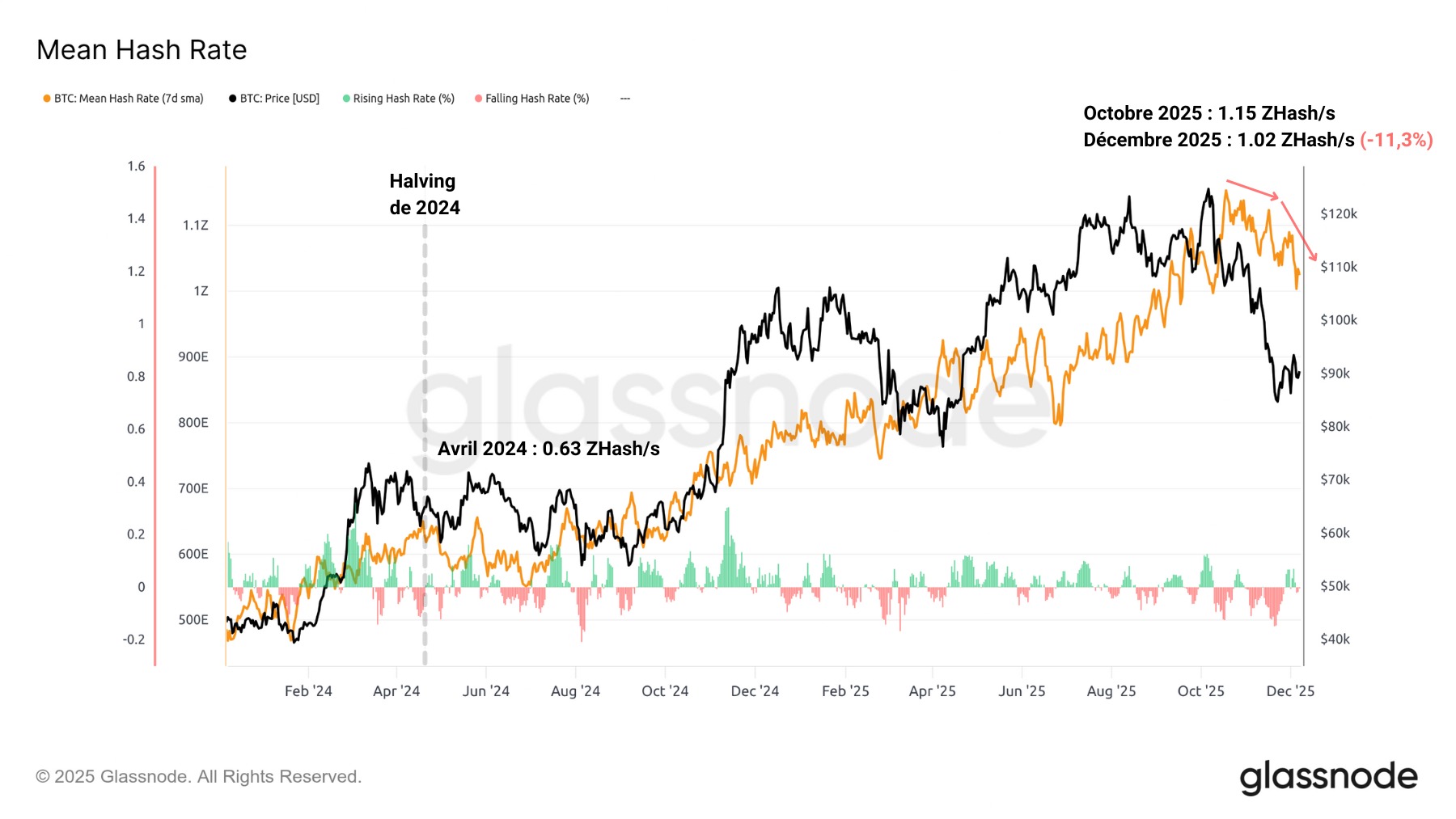
Since the halving in April 2024, the Bitcoin network’s hashrate has seen a sustained increase of around +82% as the bull market unfolded.
However, since October 2025, there has been a drop in the hashrate, suggesting that some BTC miners are scaling back their activities.
This usually occurs when their economic conditions become too strained, often during a drop in the price of bitcoin.
We can therefore assume that the correction underway since October’s ATH is putting miners in enough difficulty to force some to unplug their ASICs.
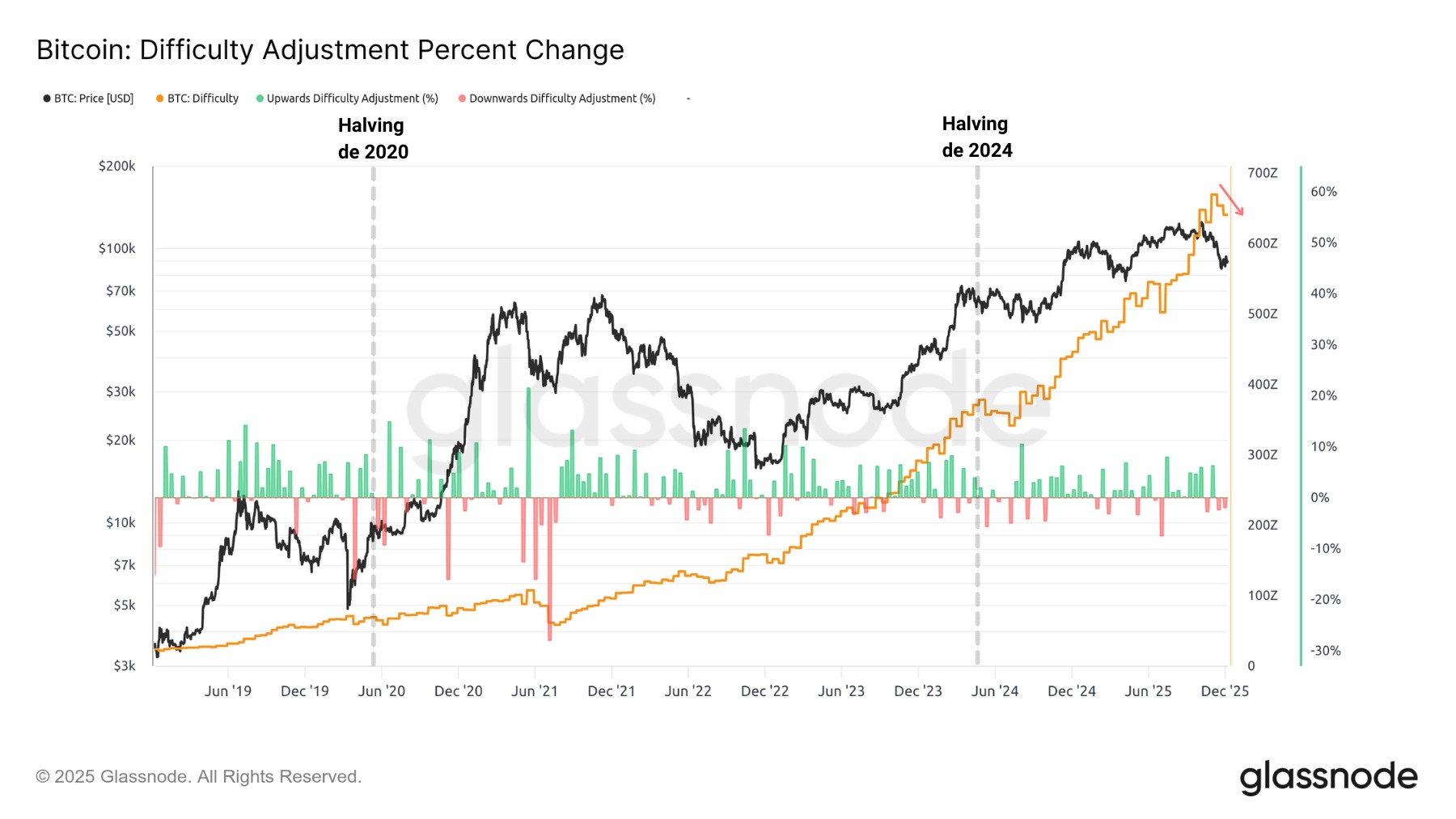
In response to this drop in hashrate, the mining difficulty of the Bitcoin protocol has been adjusted downward, meaning that the conditions for producing new BTCs are easing to relieve miners.
This is a sign that competition has become too intense (high hashrate) and that some miners have been unable to keep up in the current economic conditions (sharp correction in BTC).
In the event of an unexpected bullish market recovery, the economic and operational conditions for miners could also improve rapidly.
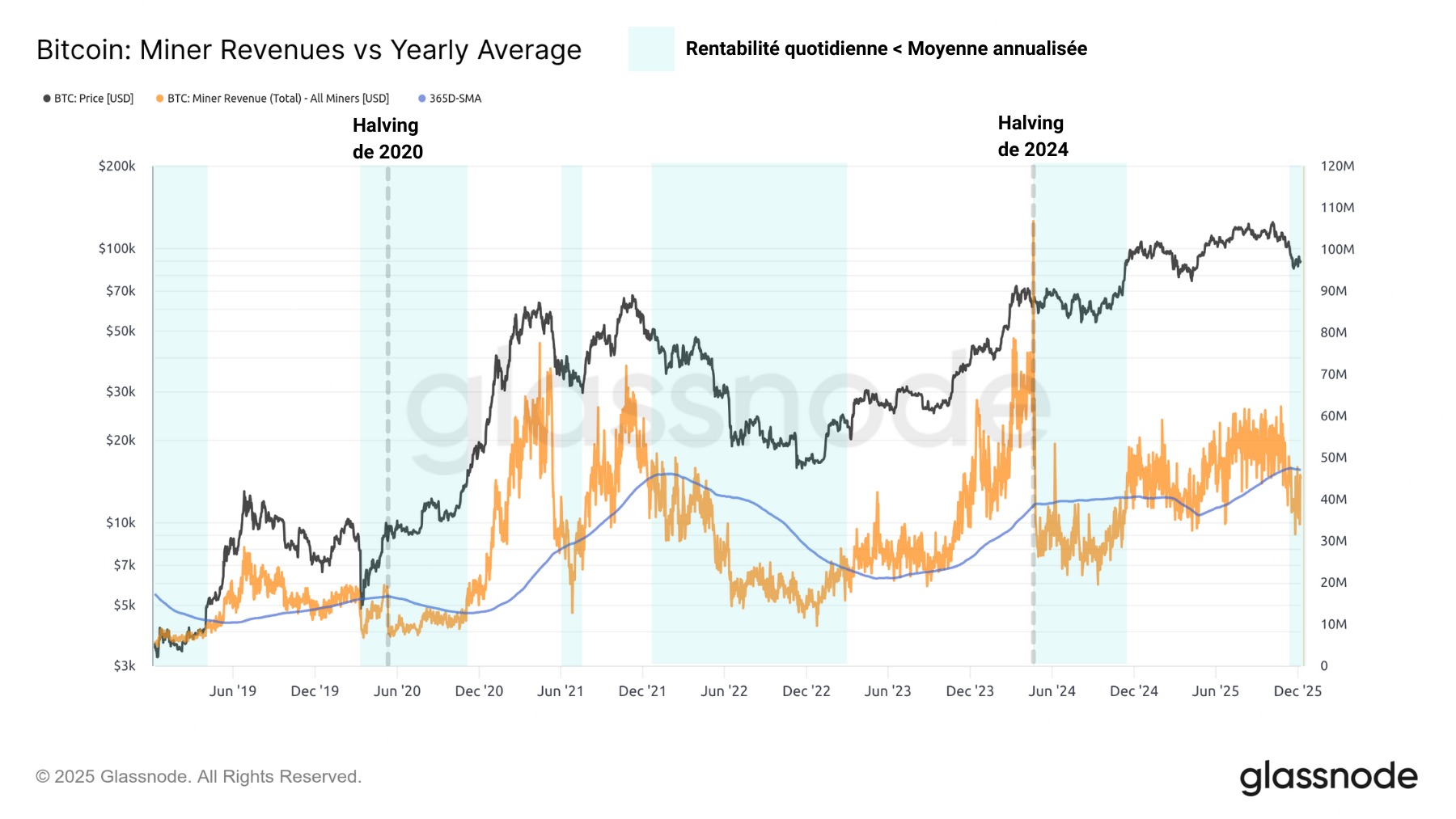
To estimate the overall profitability of miners, we can compare their total daily revenues in dollars (in orange) and their annualized average (in blue), which serves as a long-term benchmark.
- When daily revenues are above the annualized average, miners’ profitability is considered sustainable.
- When daily revenues are below the annualized average, miners’ profitability is considered unsustainable.
During November, daily revenues fell below $48 million per day, indicating a deterioration in the profitability of mining activity.
It is typically during these periods that miners reduce their activities, disconnect ASICs, and may even sell off BTC in the most extreme cases.
No sign of major capitulation
While we now know that some BTC miners have had to scale back their operations and disconnect some ASICs to cope with declining profitability and high hashrate values, the damage seems to stop there.
Indeed, to identify a major capitulation by miners, their spending/transfer volumes must reach significant levels, indicating that a loss-taking phase is underway.
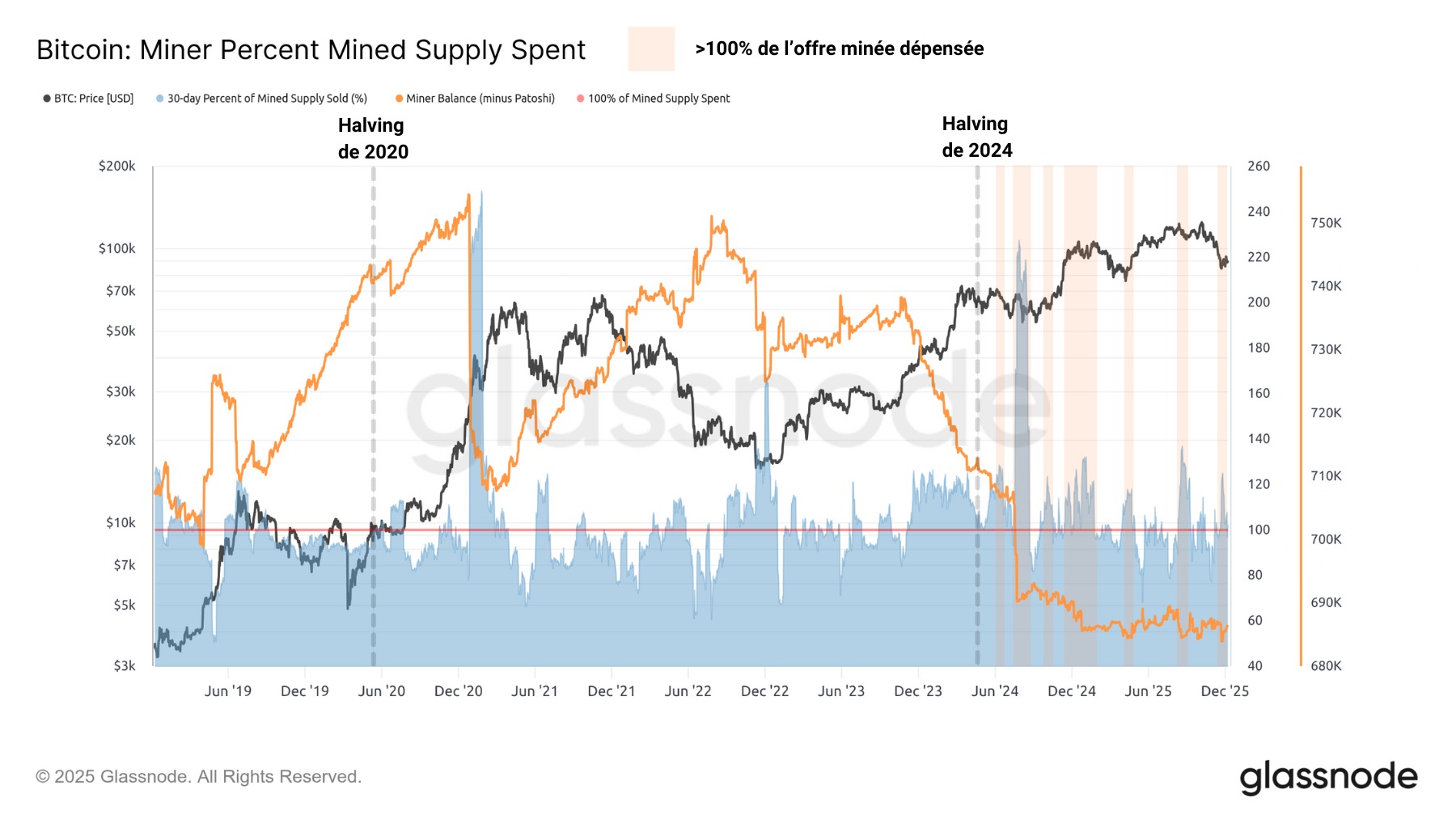
Although miners’ spending has exceeded daily mining output several times recently, their reserves have remained fairly stable throughout 2025, unlike the significant sell-offs in 2023 and 2024.
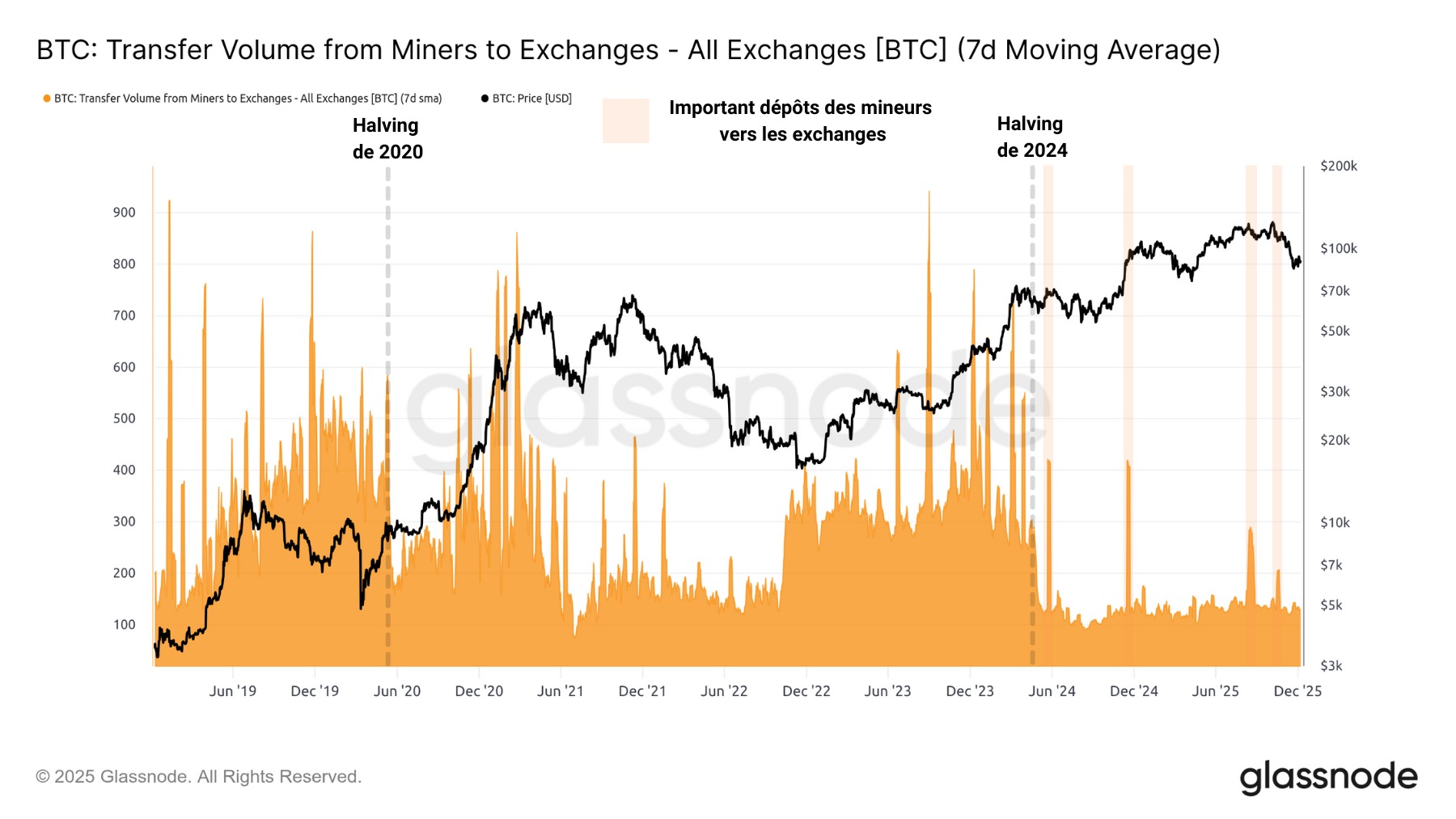
The flow of BTC transferred from miners to exchanges also allows us to track miners’ spending behavior, which remained fairly moderate in 2025.
With the exception of a few spending spikes resembling profit-taking behavior in 2025, miners do not appear to have liquidated a significant portion of their holdings.
This suggests that current economic and operational conditions are not sufficiently deteriorated to cause large-scale capitulation among miners.
Summary of this on-chain analysis of Bitcoin (BTC)
Ultimately, this week’s data indicates that some BTC miners have had to scale back their activities and disconnect some ASICs to cope with the decline in profitability since October.
During November, miners’ daily revenues fell below $48 million per day, making mining increasingly unviable.
However, with the exception of a few peaks in spending resembling profit-taking behavior in 2025, miners do not appear to have liquidated a significant portion of their bitcoin holdings.
Their reserves remained fairly stable throughout 2025, suggesting that current economic and operational conditions are not sufficiently deteriorated to cause large-scale capitulation among miners.