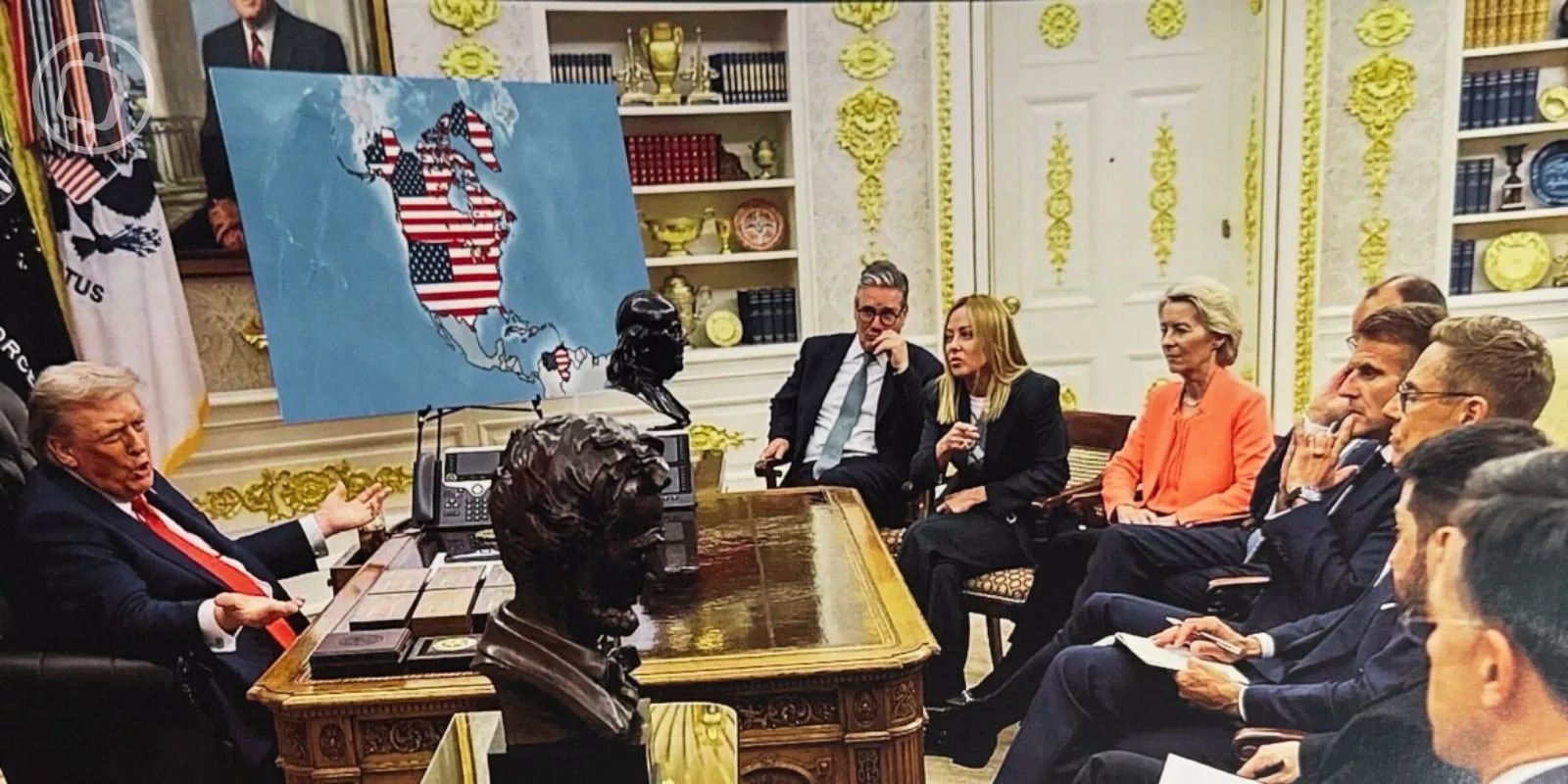
Behind Donald Trump’s spectacular statements on Greenland lies a much colder and more strategic logic than it appears. This Arctic territory is at the heart of major military, economic, and geopolitical issues, and tensions between the United States, Europe, Russia, and China. Between the lines, this issue reveals one thing above all: the real power struggle is not being played out on the ice, but on the markets and in the credibility of the dollar.
Greenland is not a whim
Every time Greenland comes up in conversation with a US president, many react as if we were dealing with an exotic whim of Uncle Sam. In reality, the United States’ interest in this territory is long-standing, consistent and, above all, linked to a very traditional logic of power.
Historically, Washington has viewed Greenland as a natural extension of its strategic depth in the North Atlantic and Arctic. The best-known episode occurred in 1946, when the Truman administration proposed buying Greenland from Denmark at a time when the US military considered the island a key point for defense and projection toward the North Pole.
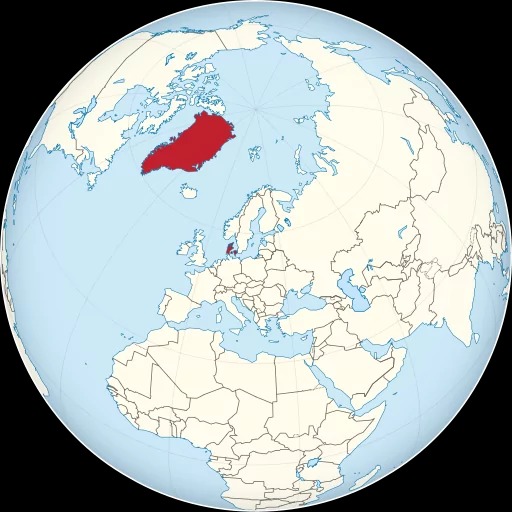
During the Cold War, this logic materialized with an American military presence, surveillance and defense systems, and a base that became emblematic (Thule, now Pituffik). Greenland was not just a piece of ice, but rather an outpost on the shortest route between North America and the Soviet zone, with a direct interest in missile detection and control of the Arctic space.
What is changing today is the relative value of the issue in a world where the Arctic is gaining in importance for three reasons:
- Military: in a rivalry between major powers, areas that allow for surveillance, deterrence, and military projection become strategic;
- Economically and logistically: the gradual opening up of Arctic routes, thanks to or because of the melting ice, and interest in critical resources are increasing the value of raw materials that were secondary 30 years ago;
- Geo-economic: Greenland is also a space where the question is not only “Who owns this land?” but “Who can enter it?”
In recent years, Beijing has attempted to position itself through investments and infrastructure such as airports and strategic assets. What is striking is that many of these attempts have failed, precisely because the US/Denmark partnership (and Greenlandic actors) saw the risk. Allowing a rival power to establish itself in such a sensitive area, even “through the economy,” means accepting disguised strategic penetration. In my view, Greenland is less a piece of land to be bought than an access point to be secured.
Trump, or when the logic of deals clashes with that of alliances
The sequence becomes explosive when two things are mixed together: a real strategic priority (securing Greenland) and a “Trump-style” negotiation method.
The initial idea may be in line with American historical continuity, i.e., securing a strategic node in the rivalry between blocs. But the manner in which this is done—threats, shocks, public pressure, and the use of tariffs as a weapon against allies—changes the nature of the game.
In concrete terms, the tariff threats targeting Europe, combined with the Greenland issue, have revived a very simple interpretation in recent days: Trump wants to push the balance of power to the maximum to get a deal, even if it is symbolic and partial. The markets have begun to take him seriously, with reactions on currencies and debates on “Sell the American Exceptionalism.”
The problem is that geopolitics is not a bilateral real estate transaction.
- Political humiliation: making trade or tariff relations conditional on territorial demands is very difficult for Europe to accept, especially for Denmark, which has international sovereignty over Greenland;
- Strategic boomerang effect: American power relies heavily on its alliances. Weakening them for immediate gain may cost more than it brings in, especially in the face of a China that loves to see the West divided;
- Hardening of positions: the more public the pressure, the more costly it is for the opponent to back down.
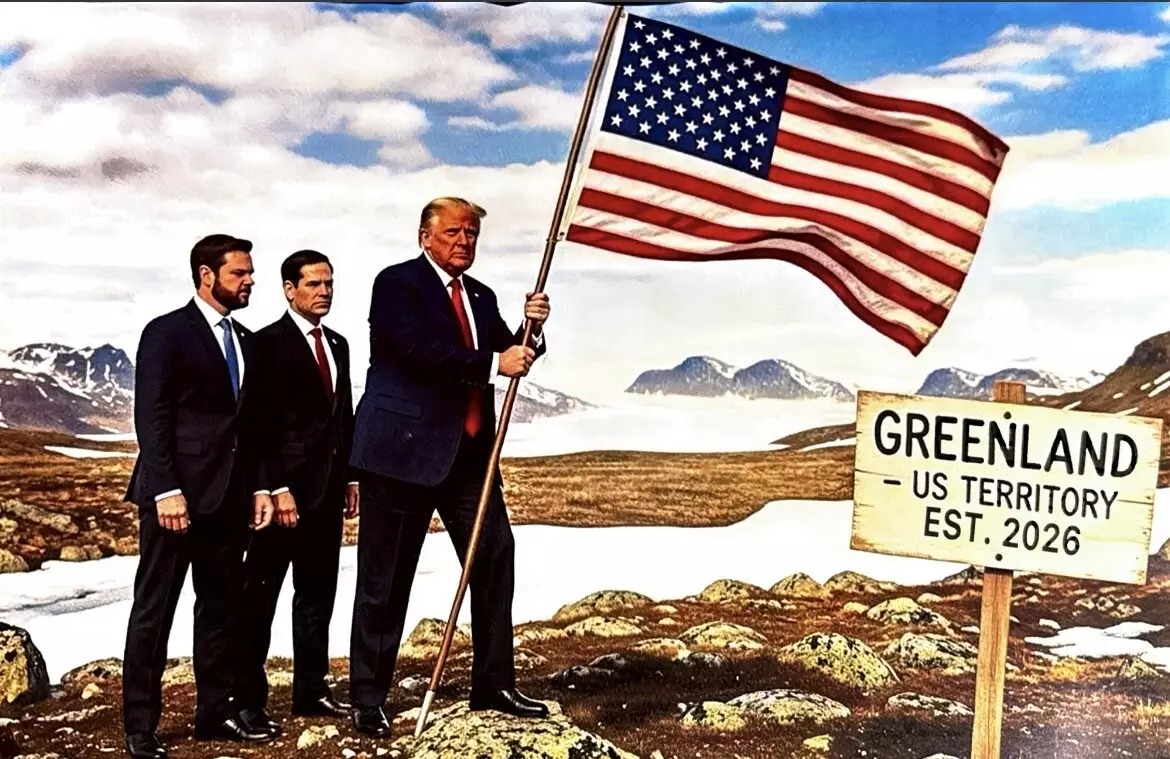
The credible objective is not a forced annexation, which would be too costly diplomatically, too risky, and beneficial to Beijing. The credible objective would be to strengthen American influence, to secure its presence legally and politically in order to prevent any Chinese entry via infrastructure and partnerships. This would make Greenland’s future trajectory more predictable for the Americans.
The dollar is the constraint, Europe is the lever, but an imperfect one
This is where we move from political theater to the cold mechanics of the markets. Using tariffs as a weapon against European partners is not without consequences for the economy. It can create imported inflation or disrupt value chains. In addition, investments in the US will be considered riskier given the uncertainty and potential retaliatory measures. Finally, it will weaken the multilateral trade framework. On the other hand, there is a structural limit: the dollar. The United States enjoys a unique privilege: the global reserve currency, which allows it to finance deficits and debts on terms that are often more favorable than any other country. This privilege depends on something intangible but crucial: trust.
When rhetoric becomes too chaotic, too transactional, or even too threatening, it does not necessarily lead to immediate collapse. On the other hand, an increase in geopolitical risk can cause micro-fractures such as greater diversification of investments, both geographically and in terms of asset types such as precious metals. It can also lead to higher long-term financing costs and greater exchange rate volatility, and thus domestic political pressure if the population or financial markets experience high inflation.
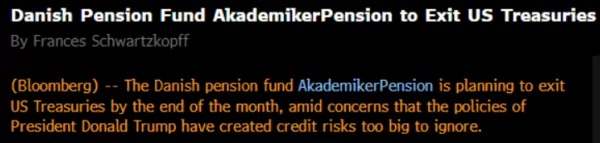
Europe is not just a spectator in this story, it is a major financial player. Recent estimates suggest that more than $10 trillion in US equities are held on the European side, not to mention the huge share held on the bond markets. This creates a form of potential leverage, even if it is difficult to actually activate without shooting oneself in the foot. Denmark has decided to take action via the AkademikerPension pension fund, which wants to sell its US bonds.
Trump can make threats, but he cannot follow through without considering both sides of the argument. The first is that voters don’t like inflation or uncertainty, and investors are benefiting (whether we like it or not) from the rise in financial markets. The second is that if long-term rates rise too quickly and too sharply, if the dollar weakens, or if foreign demand diversifies too quickly, the room for maneuver will be reduced.
This is why these noisy sequences often end with a concession (even a symbolic one) and a risk premium (on investments in the US) that never completely returns to zero.
Where does Europe fit into all this? Legally, Greenland is part of the Kingdom of Denmark, but strategically, everyone knows that the decision will be made by the US. This dissociation sums up our era, in which Europe remains central in terms of geography and capital but struggles to impose a unified strategy.
Personally, I don’t think Trump wants to buy Greenland because the US has neither the funds to buy a new state nor the time to build everything there. The goal is to gain control over infrastructure and military surveillance, a kind of economic and military protectorate.
Overall, we are in a pre-positioning phase where everyone is securing options, locking down access points, preparing narratives, and testing the limits of red lines under the guise of disproportionate blows or absurd statements.
In geopolitics, as in finance, buying time when uncertainty rises is sometimes the most valuable resource, and that is what Trump is trying to do.