
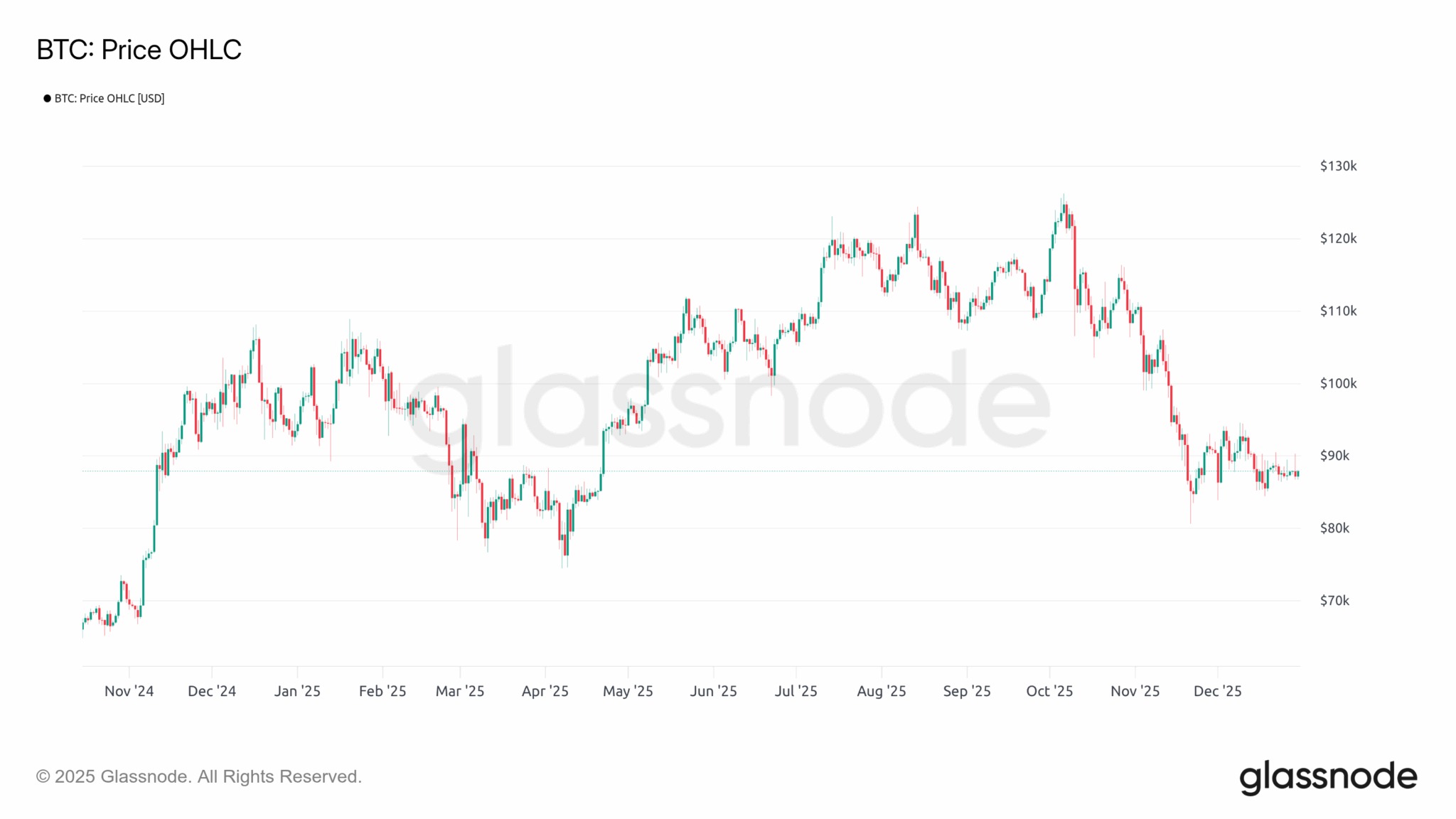
After a new ATH of $125,000 in October, December ended with Bitcoin (BTC) losing its bullish momentum. Here is a recap of the major events that marked 2025!
A year full of excitement
As the year draws to a close, TCCN offers you a comprehensive summary of the key on-chain dynamics for the Bitcoin (BTC) market.
Please note that some of the observations presented below will serve as a basis for more in-depth analysis in 2026, so stay tuned until the end!
Market context
After a strongly bullish end to 2024, BTC’s performance in 2025 was rather mixed, with a significant change in market structure during the winter.
The year 2025 was marked by a series of conditions visible across various metrics:
- bullish saturation at the beginning of the year;
- confidence test during the summer, followed by a resumption of the uptrend;
- further bullish saturation in October;
- a second test of confidence, followed by a loss of bullish momentum in November/December.
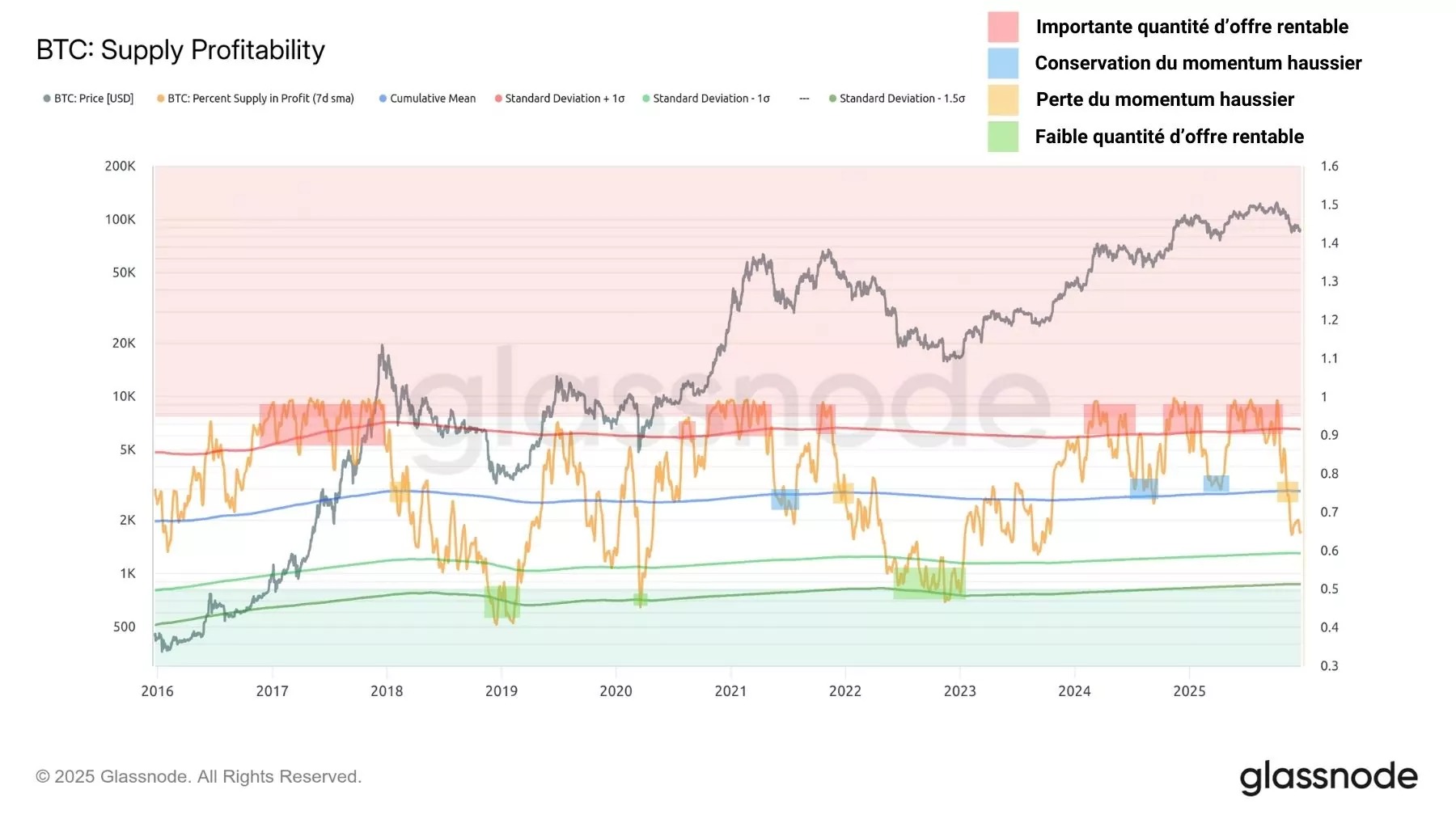
These dynamics are particularly clear in the chart showing the percentage of supply in profit, which measures the amount of BTC held in profit relative to the circulating supply.
Currently at nearly 65%, it fell below its historical average in October, plunging the market into a context of reduced profitability that historically precedes the advent of bear markets for BTC.
To date, two scenarios are possible:
- The percentage of supply rebounds to exceed 65% again, offering investors a favorable environment for buying and taking profits;
- The percentage of supply in profit continues to fall to values close to 60% to 50%, marking the advanced stages of bear markets.
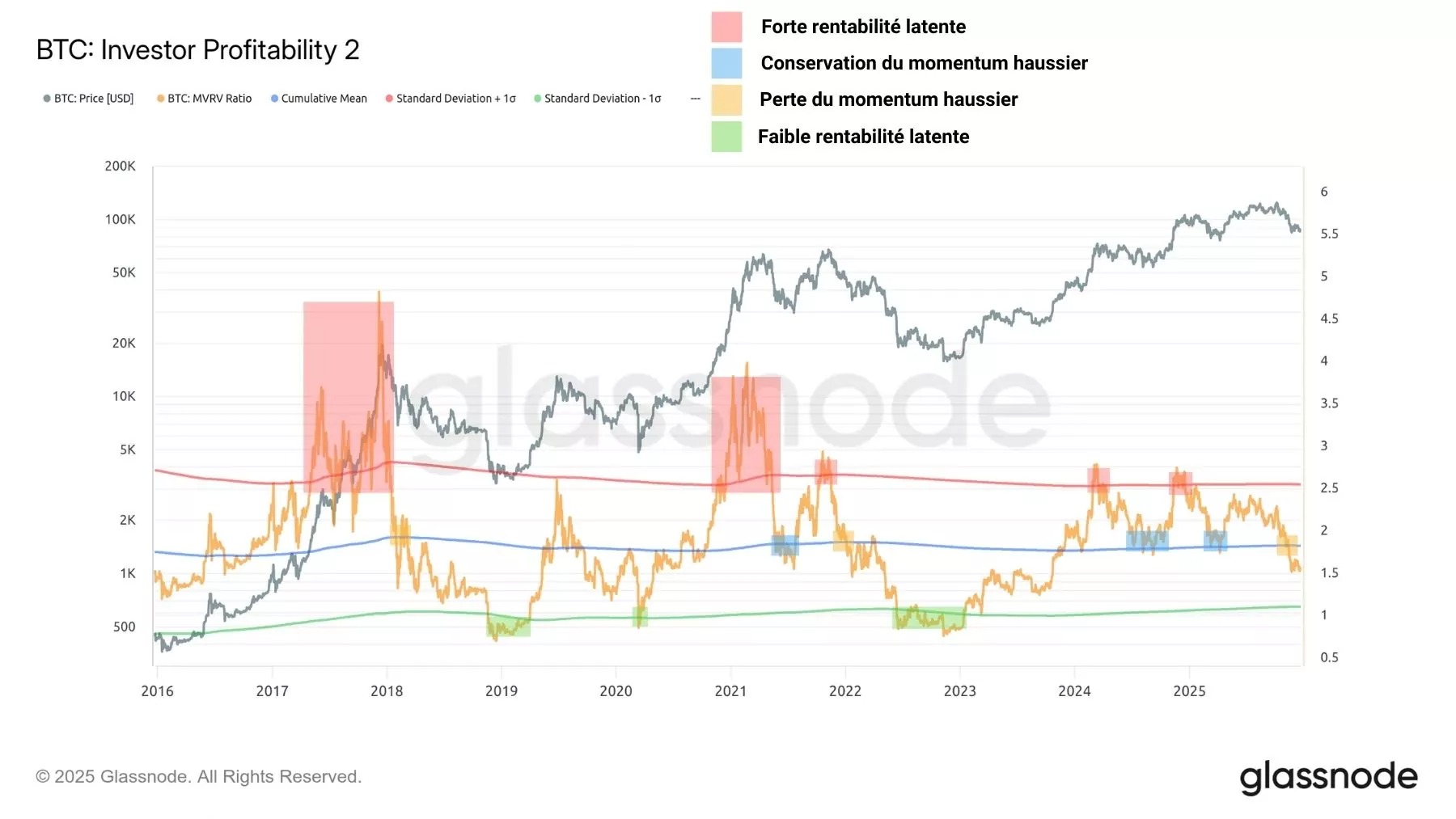
The MVRV ratio, which tracks the average latent profitability of the market, recorded the following progression:
- bullish saturation at the beginning of the year;
- confidence test during the summer, followed by a resumption of the uptrend;
- no bullish saturation in October;
- second confidence test, then loss of the historical average in November/December.
It is interesting to note that BTC’s performance during the second half of 2025 was too weak to trigger a signal of latent profitability saturation.
This divergence between the MVRV and the BTC price at the end of 2025 foreshadowed a market slowdown and a deeper correction, which eventually materialized once the $100,000 level was invalidated.
The fall of the MVRV ratio below its historical average then confirmed BTC’s transition from a bullish regime (buying and profit-taking) to a bearish regime (selling and loss-taking).
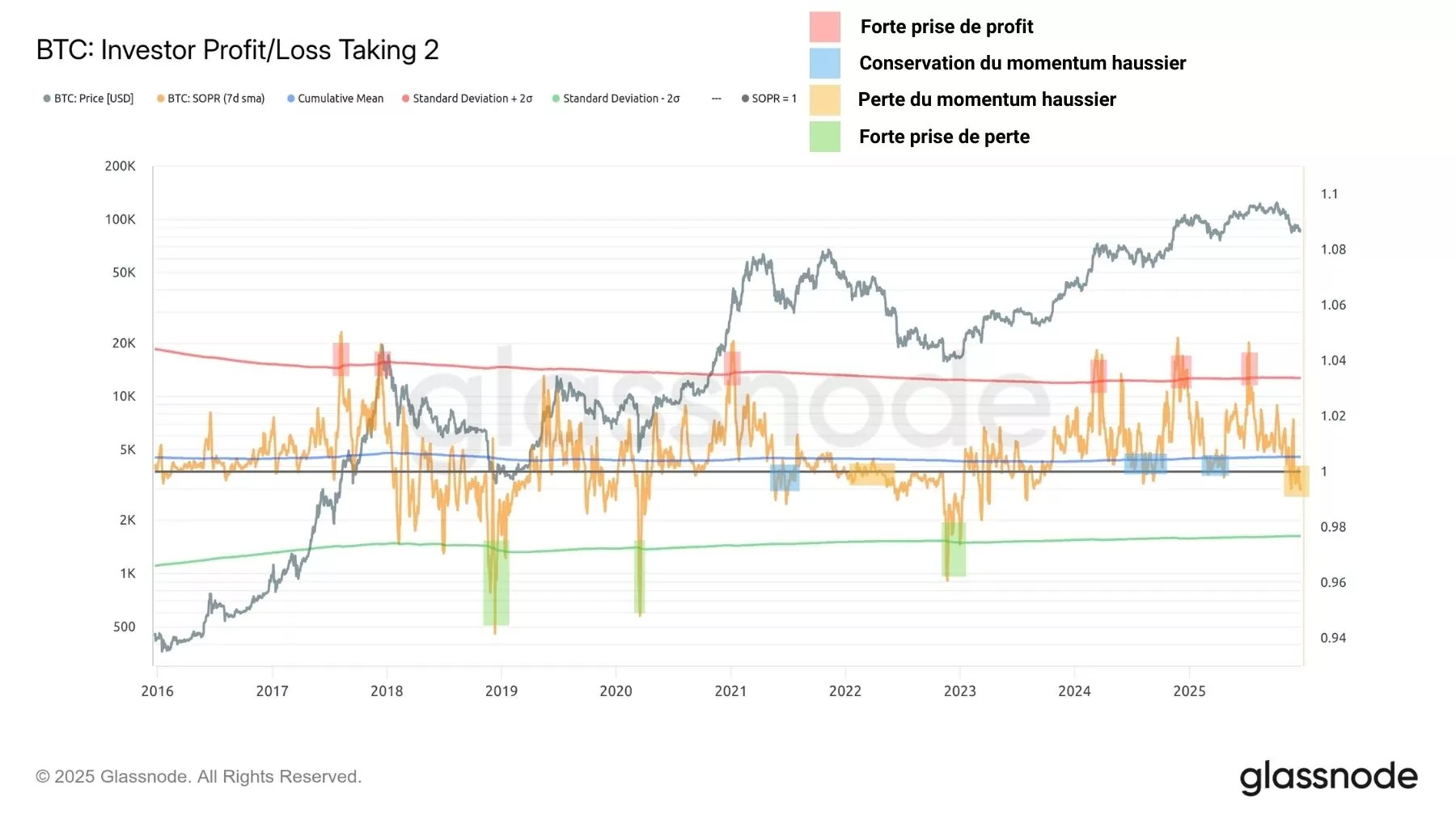
The dynamics of the SOPR ratio, which tracks the degree of profit/loss realized, are identical to those of the percentage of supply in profit:
- major profit-taking at the beginning of the year;
- confidence test during the summer, followed by a resumption of the uptrend;
- further profit-taking in October, increasing selling pressure;
- second confidence test, then loss of the historical average in November/December.
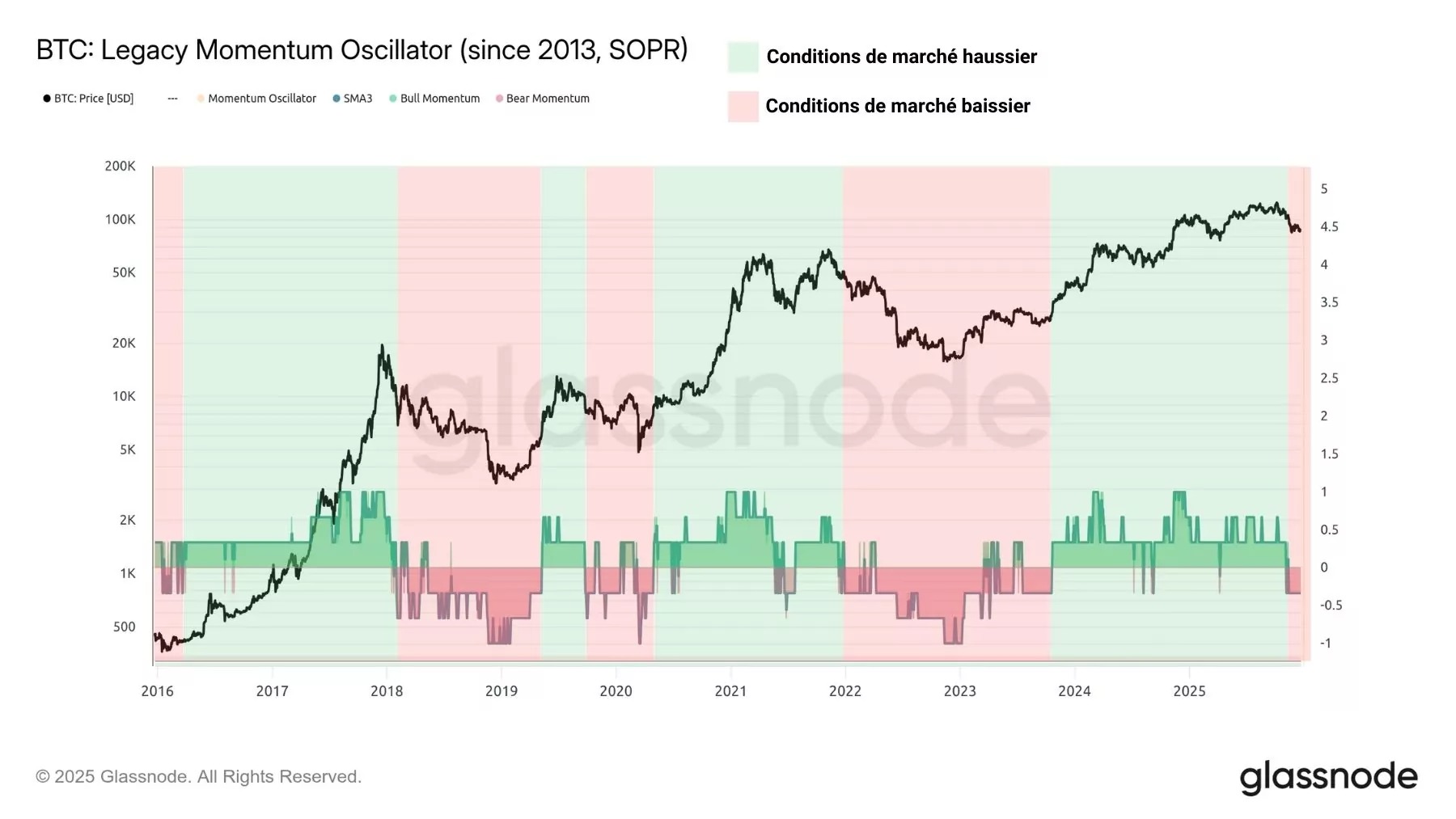
With the SOPR falling below 1 for an extended period, it indicates that the average investor is spending their assets at a loss, which usually occurs during transitions between bull and bear markets.
Once the above signals are condensed into a single on-chain model, it appears that current market conditions are more indicative of a bear market than a bull market, suggesting that 2026 could be partly bearish.
However, supply/demand dynamics will need to be closely monitored in early 2026 to best estimate the viability of a bullish recovery for BTC.
Spot market distribution
In spot markets, capital distribution and the diversity of BTC holders also evolve during 2025.
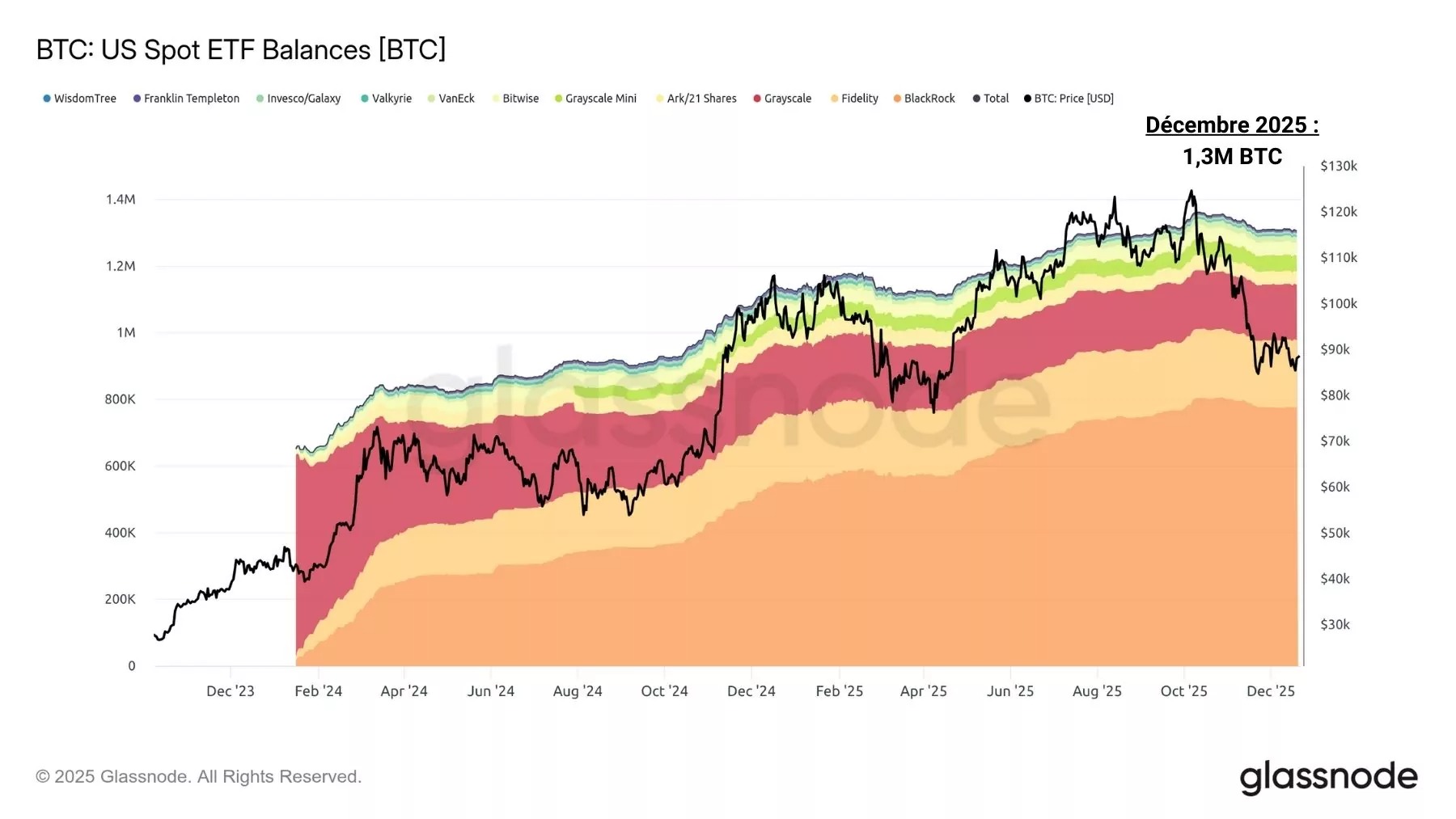
Spot Bitcoin ETFs in the United States continued to accumulate, with more than 100,000 BTC added to their reserves despite a significant distribution accompanying the year-end correction.
These instruments still represent one of the major vectors of institutional capital on the BTC spot markets, totaling more than 1.3 million bitcoins.
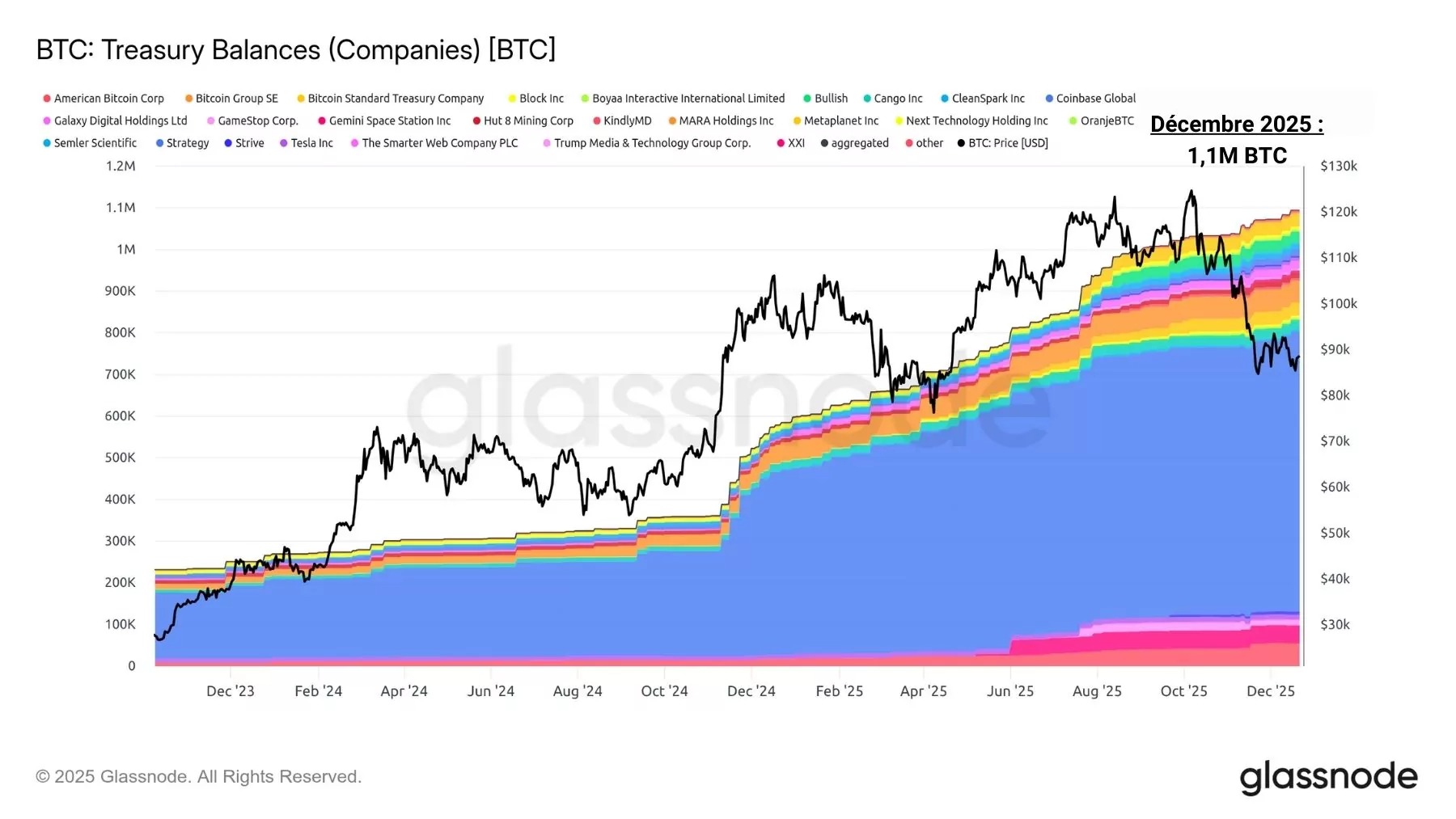
Corporate treasuries account for a growing share of BTC held by private entities, with an increase from 600,000 BTC to over 1 million BTC since the beginning of January.
Companies such as MicroStrategy, MetaPlanet, and GameStop hold and continue to accumulate BTC via spot markets, fueling a sustained trend throughout the year.
However, it is important to note that the risks of financial difficulty and liquidation for these companies remain significant and will need to be monitored closely if the downward trend in BTC continues below $80,000.
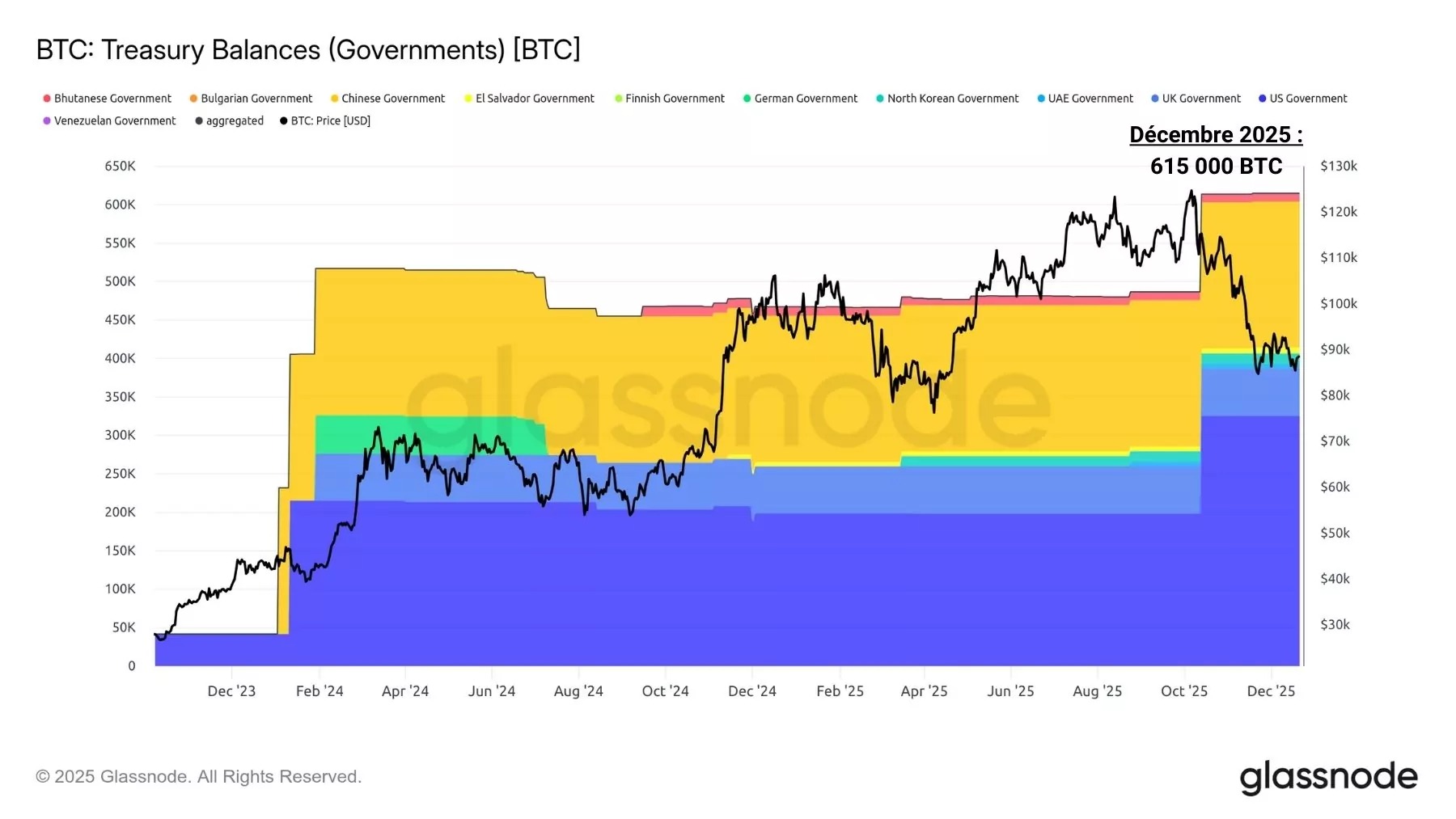
The treasuries of public entities, such as states, constitute a small segment of the spot sector and do not necessarily represent an exploitable investment bias for tracking the price of BTC.
The fact that the Salvadoran government regularly purchases BTC or that the German government liquidated its seized BTC did not represent a significant risk/opportunity signal during 2025.
There are currently around 615,000 BTC linked to states, an increase of around 100,000 BTC since the beginning of the year.
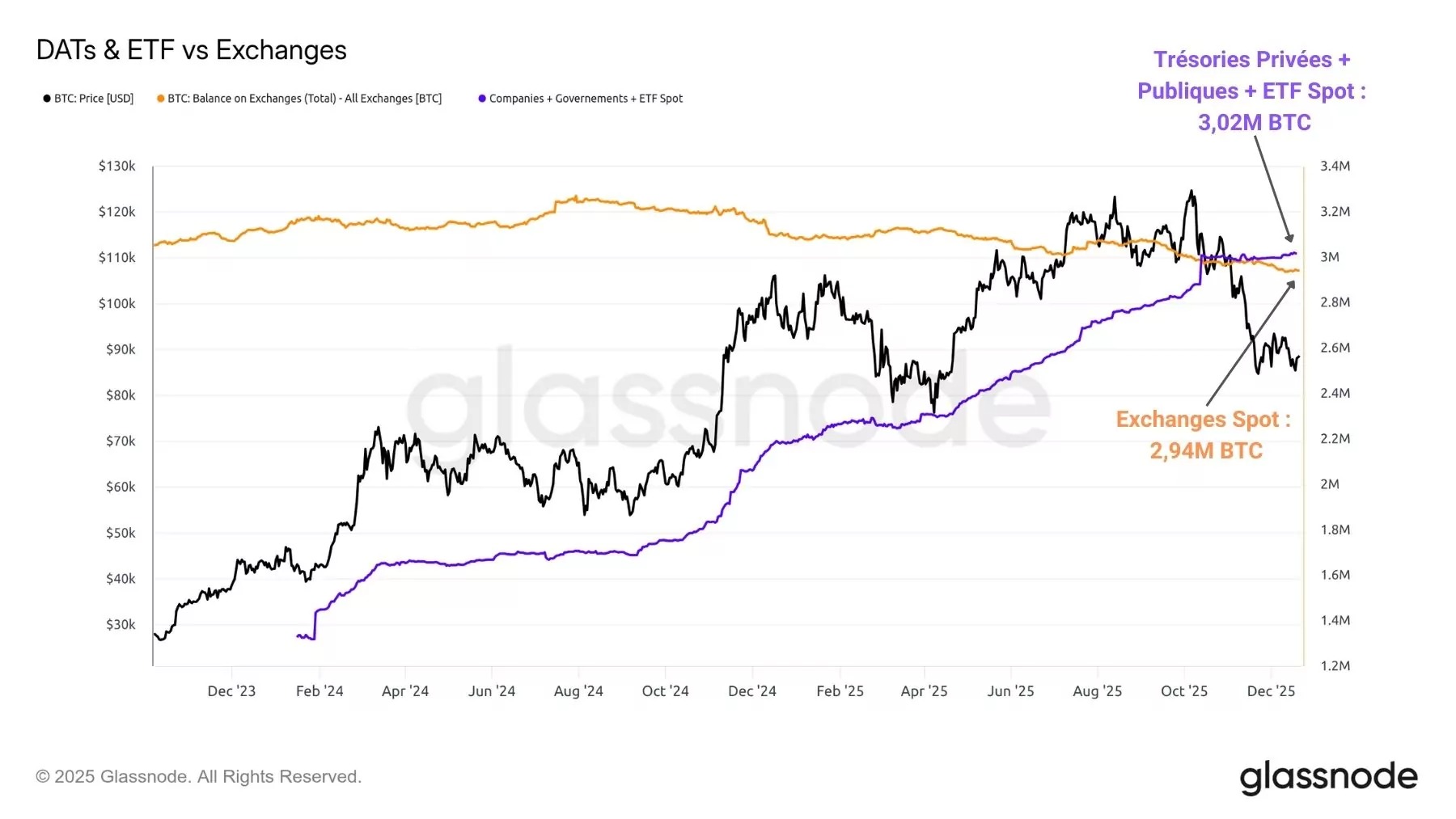
Combined, the three spot market segments studied earlier now exceed centralized exchanges in terms of cumulative reserves.
For the first time in the history of BTC, there are more bitcoins held by public entity treasuries, private company treasuries, and spot Bitcoin ETFs than on major marketplaces such as Coinbase, Binance, or Kraken.
This marks a turning point in the history of Bitcoin, where spot markets are expanding to new holder profiles to the point where the initial marketplaces are gradually being overtaken by other methods of holding and investing.
Surprising Cyclicality
Contrary to expectations, the price of BTC has maintained a surprisingly precise cyclical pattern over the last three bull cycles.
The time dimension seems to have a significant impact on the development of BTC bull/bear cycles between 2017 and 2025.
Indeed, the time elapsed between a halving and the subsequent cyclical peak coincides surprisingly for the last three bull cycles, with approximately 520 days post-halving to reach a new market top…