
Investing in the cryptocurrency sector can sometimes feel like an obstacle course, especially when you come up against the many scams and hackers lying in wait. This American investor has just had a painful experience of this, following the theft of $3 million in XRP.
American investor loses $3 million in XRP
Security is essential in the cryptocurrency sector. This is particularly true in an environment rife with scammers looking for potential victims, where every mistake usually results in the permanent loss of the funds involved.
This is apparently what happened to an American investor who held a portfolio estimated at just over $3 million in Ripple’s XRP. He explains his misadventure in a video posted on YouTube, which quickly caught the attention of crypto investigator ZachXBT.
According to on-chain research conducted by ZachXBT, this theft—clearly carried out by a specialist—was quickly directed to the Tron (TRX) blockchain, using around 100 transactions operated via a bridge protocol.
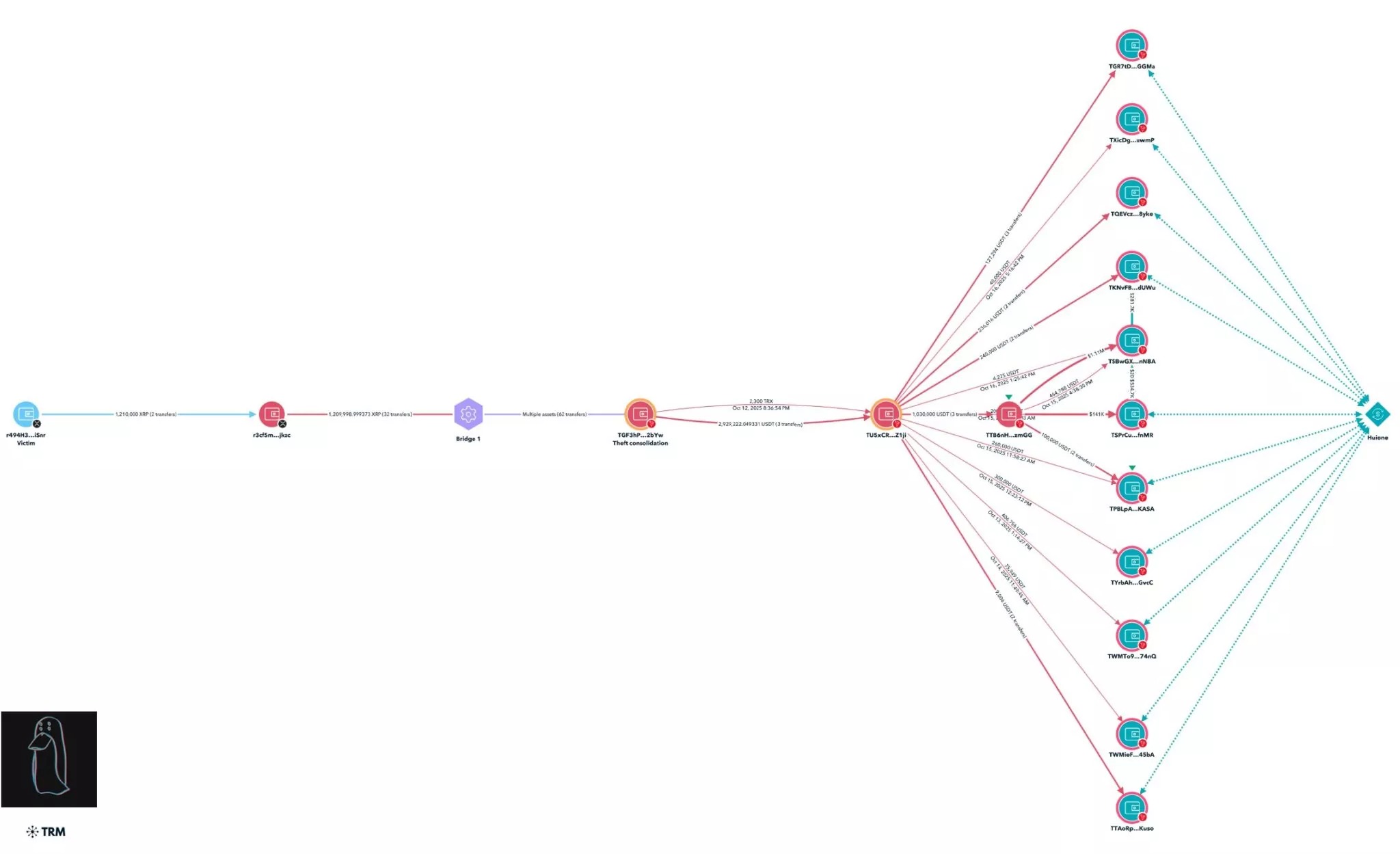
Once transferred to Tron, the funds were then laundered through an OTC (over-the-counter) market involving the illicit Cambodian platform Huione, known for facilitating money laundering operations linked to pig butchering scams and other financial frauds.
Last week, the US imposed additional restrictions on Huione in connection with the seizure and sanctions against the Prince Group, worth $15 billion. I hope that centralized exchanges and stablecoin issuers will implement stricter controls, as they represent one of the greatest threats to the sustainability of our industry.
ZachXBT
Human error at the root of this case
But another key piece of information also emerges from ZachXBT’s investigation into the procedure that facilitated this theft. The crypto investigator is quick to describe the victim in this case as “inexperienced.” This was clearly an opportunity that the thief exploited.
Evidently, the investor in question thought they were using an Ellipal-type cold wallet to secure their XRP. The problem? Due to a mistake on their part, they ended up using a much less secure hot wallet without realizing it.
This confusion was reported by ZachXBT, who presents it as inevitable given the existing offerings, which “offer both custodial and non-custodial solutions. “
At the same time, ZachXBT highlights the glaring lack of training among law enforcement agencies to deal with these types of cases quickly, as well as the numerous fund recovery companies that charge astronomical sums to ”deliver basic reports with little actionable information.”