As Donald Trump steps up pressure on the Fed, which way will key interest rates go? Several banks give their views, while the Treasury Secretary expresses concern about the situation.
In which direction will Fed rates move?
On Monday, we reported on the subpoena received by the US Federal Reserve (Fed), marking a new turning point in the disagreements between Donald Trump and Jerome Powell over key interest rates.
At the last FOMC meeting in December, the Fed decided to lower rates by 25 basis points, bringing them to a range of 3.5% to 3.75%.
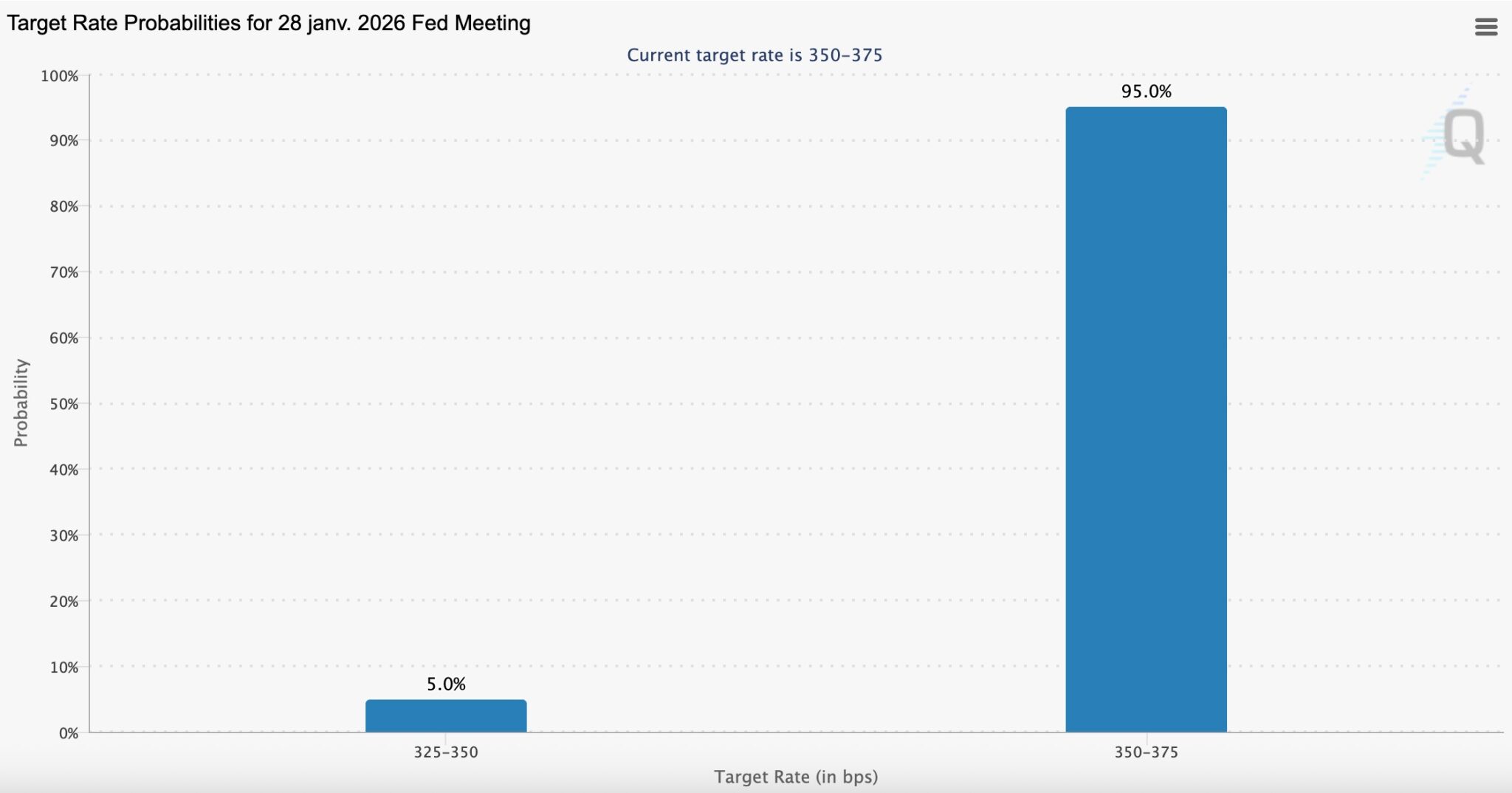
For the January 28 meeting, the CME Group’s Fedwatch tool suggests a 95% probability that current levels will be maintained, compared with a 5% probability of a 25 basis point reduction:
In a note published last Friday, JPMorgan, which had previously expected a cut early this month, now believes that the Fed will not cut rates this year, even with a new chairman at the helm of the central bank:
If the labor market weakens again in the coming months, or if inflation falls significantly, the Fed could still ease its monetary policy later this year. However, we expect the labor market to tighten by the second quarter and a fairly gradual process of disinflation.
In fact, the bank is even positioning itself for a 25 basis point increase in interest rates in the third quarter of next year.
For their part, Goldman Sachs analysts are forecasting a 25 basis point cut in September, while Barclays analysts are considering a similar scenario for December.
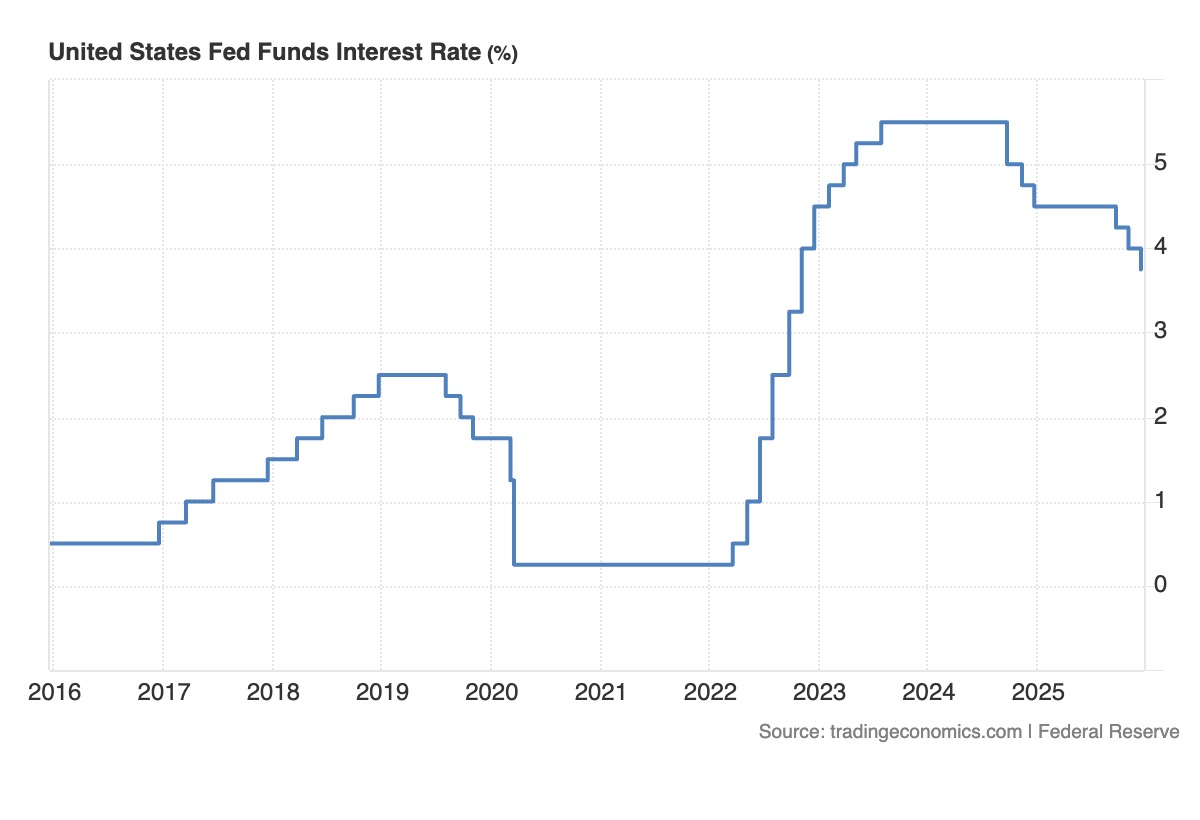
As a reminder, the Covid-19 period led to a period of abnormally low rates, after which they soared to 5.5%, before gradually falling from September 2024 onwards:
While Donald Trump regularly calls for rate cuts, Treasury Secretary Scott Bessent has nevertheless criticized the criminal investigation now targeting the Fed chairman. According to comments reported to CNN by a source close to the case, Scott Bessent fears that this affair could have a negative impact on the financial markets and that Jerome Powell’s possible dismissal could cause increased volatility.
For now, this scenario does not seem to be playing out, according to the S&P 500, which once again hit a record high on Monday.
For her part, District of Columbia U.S. Attorney Jeanine Ferris Pirro said on X that “the word ‘indictment’ came out of Mr. Powell’s mouth, and no one else’s,” and that this summons would not have taken place if he had responded to past requests:
The U.S. Attorney’s Office contacted the Federal Reserve several times to discuss cost overruns and the Chairman’s testimony before Congress, but its requests were ignored, necessitating legal action—which is not a threat.
In this case, the renovation work on the Federal Reserve headquarters, which is at the heart of this subpoena, is estimated to cost $2.5 billion.