A major player in the Mexican real estate market is adopting the Bitcoin Treasury Companies strategy. By converting its assets into BTC, it aims to protect itself from inflation and reinvent its capital management. This is a first in a sector that is still largely dependent on credit and interest rates.
Grupo Murano bets $1 billion on Bitcoin: the end of traditional real estate?
Elías Sacal, CEO of Mexican real estate group Grupo Murano, recently unveiled his new Bitcoin-focused strategy in an interview with Bitcoin Magazine: to convert a large portion of the company’s assets into BTC, with the ambition of building a $10 billion cash reserve in Bitcoin within five years.
In a sector still largely dominated by debt and dependence on interest rates, this repositioning may come as a surprise. However, since Bitcoin was designed to disrupt the current monetary paradigm based on fiat currencies and central banks, adopting it may also become essential.
Owner of numerous hotels and residential complexes across Mexico, Grupo Murano says it wants to move away from the traditional real estate model, which it considers too exposed to inflation and interest rate volatility.
Instead, the company has announced that it will resort to refinancing and sale-leaseback transactions, a mechanism in which an asset is sold and then immediately leased back by the former owner. This approach allows Murano to free up funds while retaining the operational use of its assets.
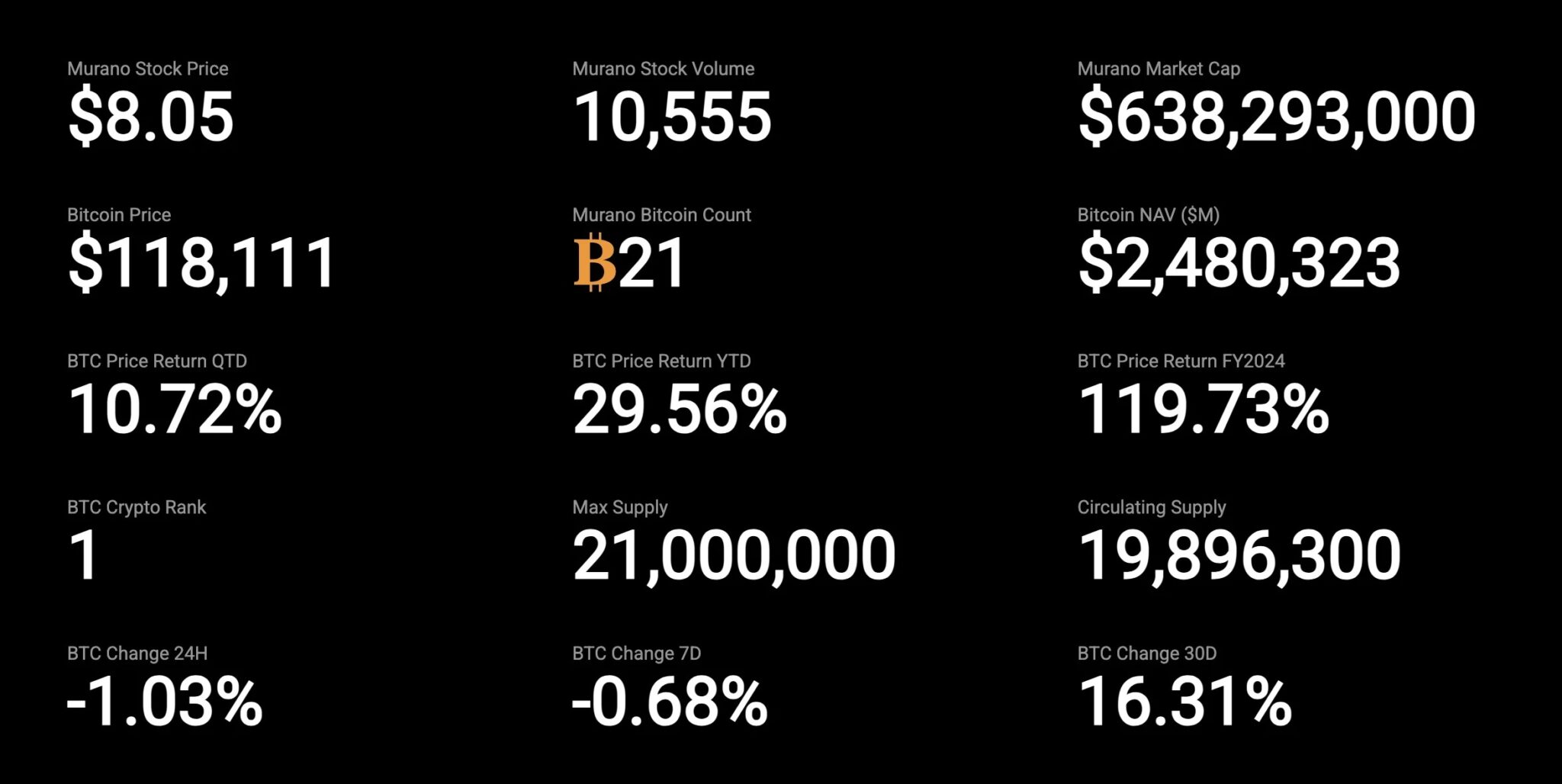
It is precisely with these resources that the company, which already holds 21 BTC, plans to buy Bitcoin on a massive scale.
“Rather than letting buildings sit around waiting for low valuations, we believe that BTC will appreciate more.”
Rather than betting on the slow appreciation of its assets or the gradual collection of rent, Sacal is betting on a 300% increase in the price of Bitcoin over the next five years, or $472,000 per BTC, and plans to allocate up to 80% of the company’s capital to BTC.
Bitcoin and the demonetization of real estate: towards a paradigm shift?
Grupo Murano’s gamble does not stop there: the company plans to install Bitcoin ATMs in its hotels, train its employees in the use of the currency, and accept payments in BTC, targeting primarily customers from the United States.
In addition, Elías Sacal defends a theory well known to Bitcoiners: that of the demonetization of the real estate market. This theory is based on the following observation: real estate is being used less and less to house households and is increasingly seen as a tool to protect against inflation, i.e., a store of value.
However, in a scenario where Bitcoin establishes itself as a global store of value, a growing share of investments could shift away from real estate and toward BTC, the best-performing asset of the past 10 years. As a result, this could put downward pressure on real estate prices, which would become less effective at preserving wealth over the long term.
Michael Saylor, CEO of Strategy, the company that owns the most Bitcoins in the world, takes a similar view. He claims that Bitcoin will not only compete with gold and its $23 trillion market cap, but could also demonetize fiat currencies ($120 trillion), global debt ($315 trillion), and the real estate market as a whole ($330 trillion).