
Previously largely confined to the intimate sphere of crypto trading, stablecoins are now establishing themselves as financial tools with the potential to revolutionize the current monetary model. This paradigm shift has many consequences and implications.
Stablecoins: the new champions of payment
The stablecoin sector is experiencing unprecedented growth in its adoption in traditional economic and financial spheres, driven by the recent implementation of the GENIUS Act regulatory framework in the United States. And with good reason: more than 99% of its current supply involves stable cryptocurrencies backed by the US dollar.
This is a monetary paradigm shift whose scope and consequences are still difficult to estimate, although some analysts are already venturing to predict that the sector will be worth $2 trillion in the coming years, compared to $265 billion today.
This is why the analysis company Keyrock has just published a comprehensive report on the power of stablecoin payments. Just look at how P2P transfers in this area are now establishing themselves as the most efficient way to carry out cross-border transactions. They involve negligible fees, whereas traditional intermediaries charge between 4% and over 12%.
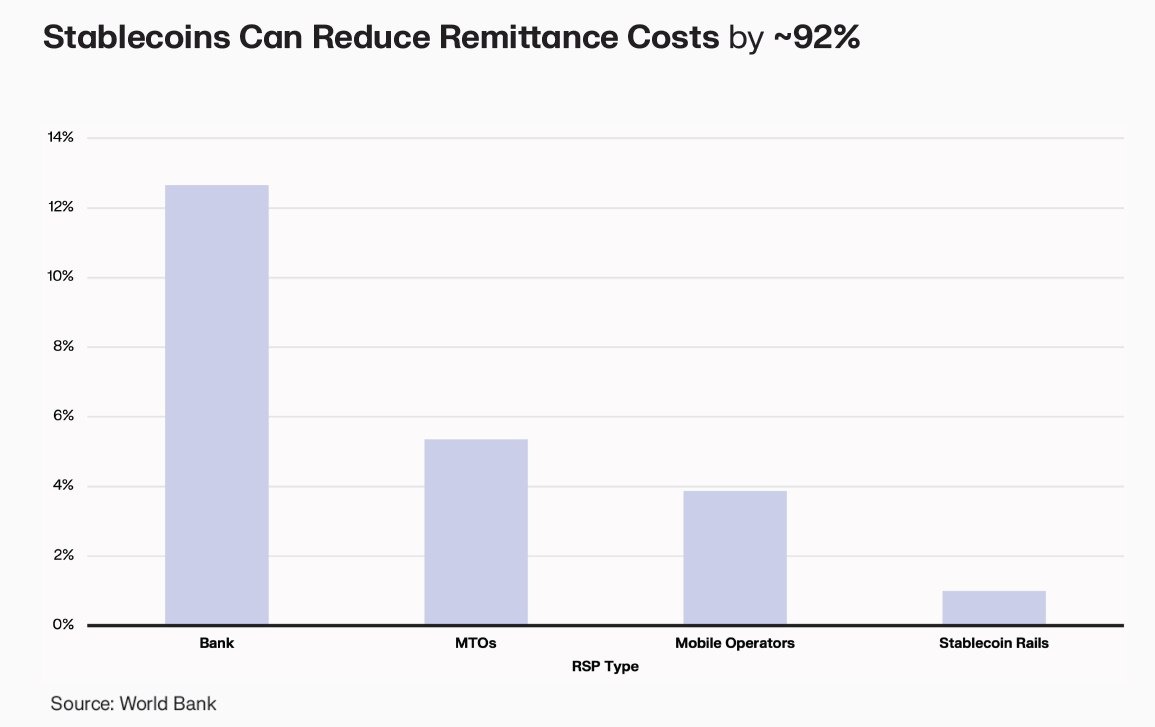
Stablecoins are beginning to bridge the gap by weakening the single-layer payment stack. They have already grown from just 0.04% of US M2 money supply in 2020 to over 1% today, marking the emergence of a parallel monetary layer.
Keyrock
Emerging markets vs. US monetary policy
One of the obvious reasons for the current acceleration in the stablecoin sector stems from the recently approved regulatory opening in the US, which clearly benefits certain issuers such as Circle (USDC). However, the attempt to sideline the leader Tether (USDT) does not seem to challenge its strong dominance in the field.
The reason for this situation can largely be summed up by an important reality that must be taken into account: “the true potential of stablecoins lies in emerging markets, which are home to 85% of the world’s population.” It is easier to understand why Tether CEO Paolo Ardoino is focusing more intensely on this aspect than on regulatory approval for his USDT.
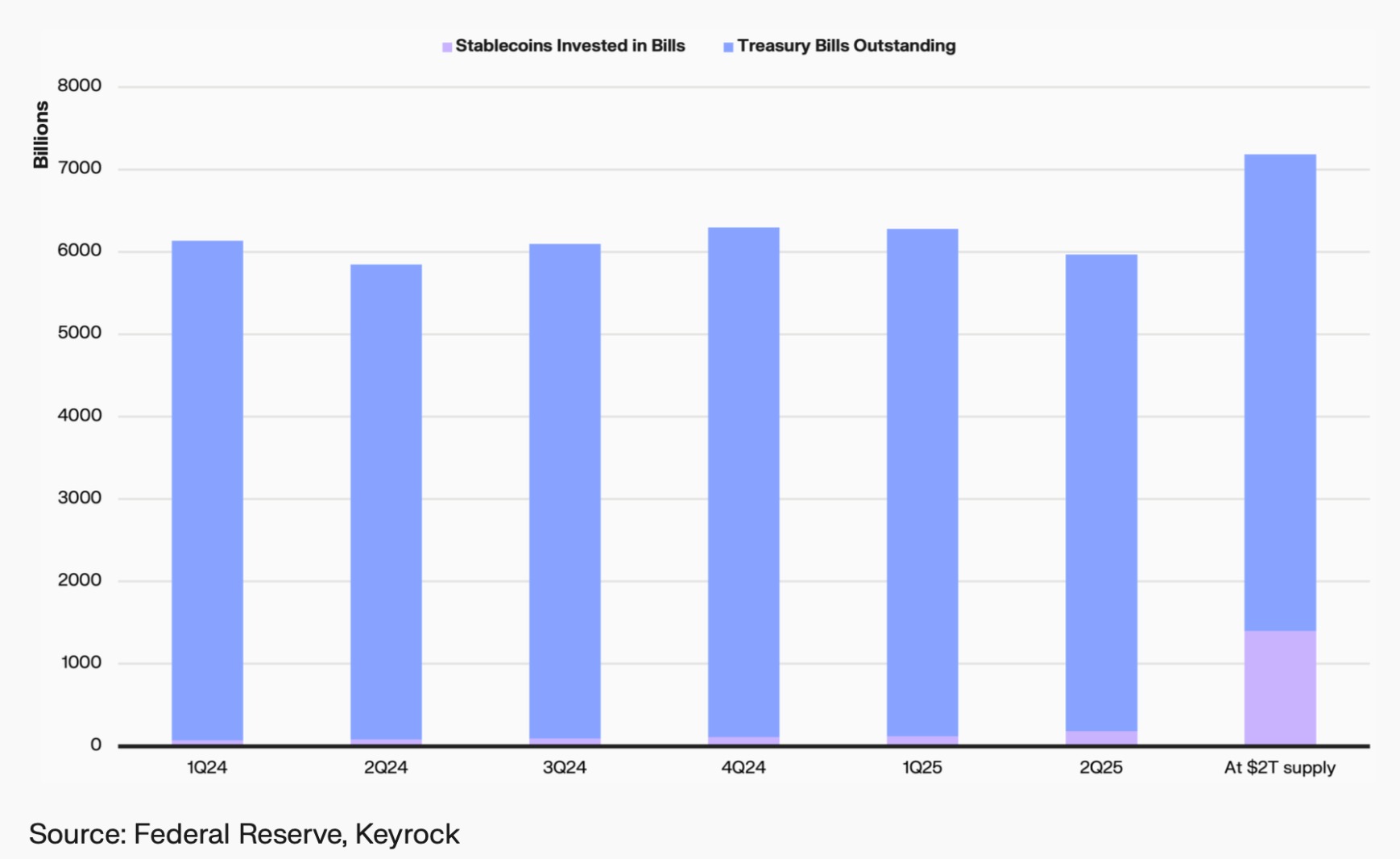
At the same time, their almost exclusive relationship with the dollar means that they need to hold reserves to guarantee their peg and the liquidity necessary for their proper functioning. This reality is reshaping the US Treasury bond sector, which is facing a change in the stablecoin market that could see it hold 25% of its shares.
By way of comparison, “the main stablecoin issuers now hold more US Treasury bonds than countries such as South Korea, Germany and Saudi Arabia.” This presence is already having a very strong influence on demand in the short-term segment, to the point of influencing US monetary policy.
Much more than just a tool
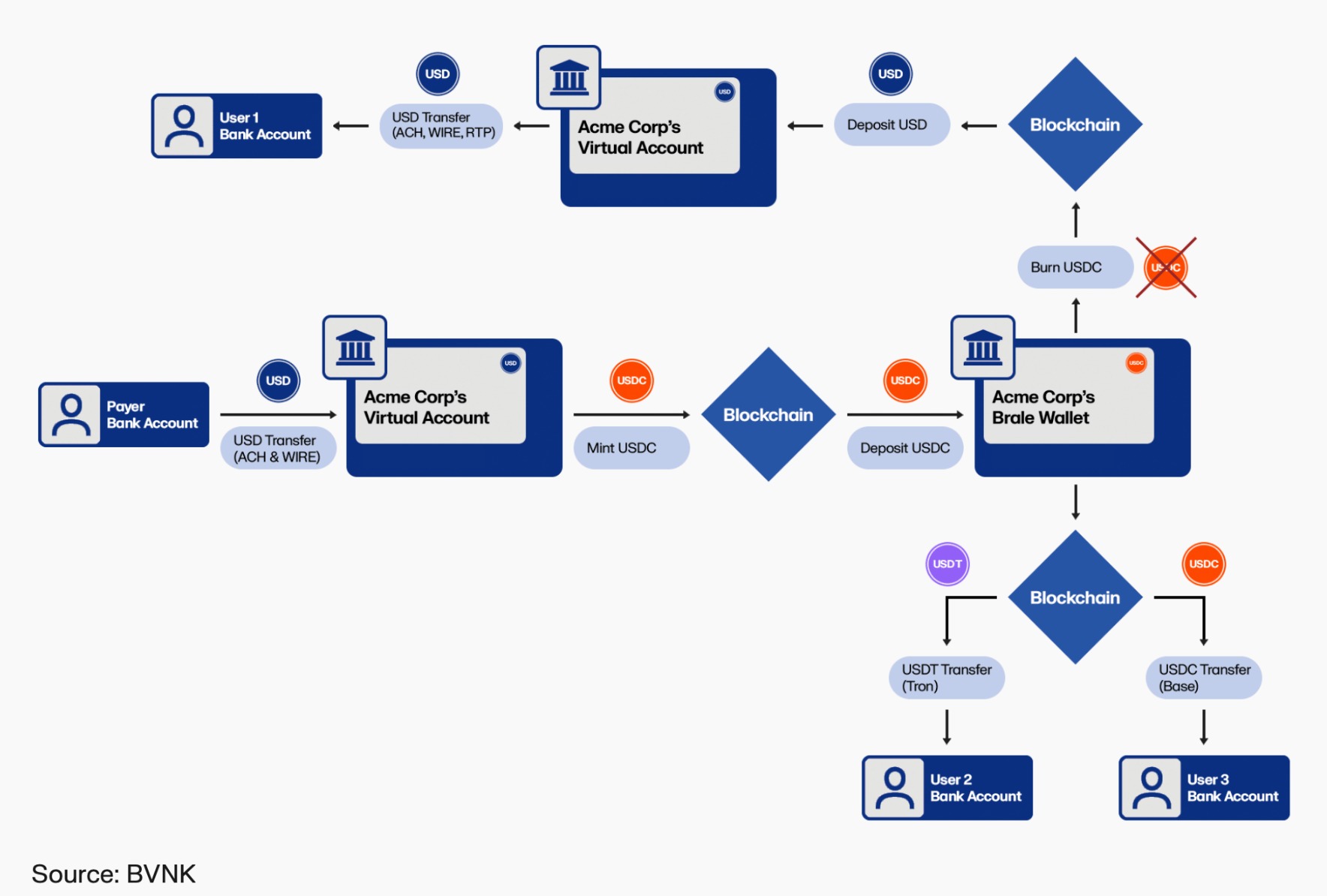
Stablecoins are therefore emerging as the future of digital payments, without costly intermediaries and imposed office hours. According to Keyrock analysts, this reality goes far beyond the simple status of an operational tool.
Indeed, we are now talking about real infrastructures capable of managing—and monetizing—the entire chain.
This vertical integration allows them to monetize every layer of the stack, including cash deposits, transaction fees, DeFi yield, and consumer applications, while returning more value to users.
Keyrock
The growing adoption of stablecoin payments is also supported by the introduction of dedicated payment cards offered by industry giants such as Visa and Mastercard, who are determined not to be left behind. All this is accompanied by passive returns for cardholders, offered by players such as Coinbase and PayPal. The monetary revolution is underway.