The sudden reawakening of very old Bitcoin addresses raises crucial questions. If these wallets have indeed been compromised, what “A demonstration of intelligence” – Bernard Arnault (LVMH) defends the US/European Union agreement
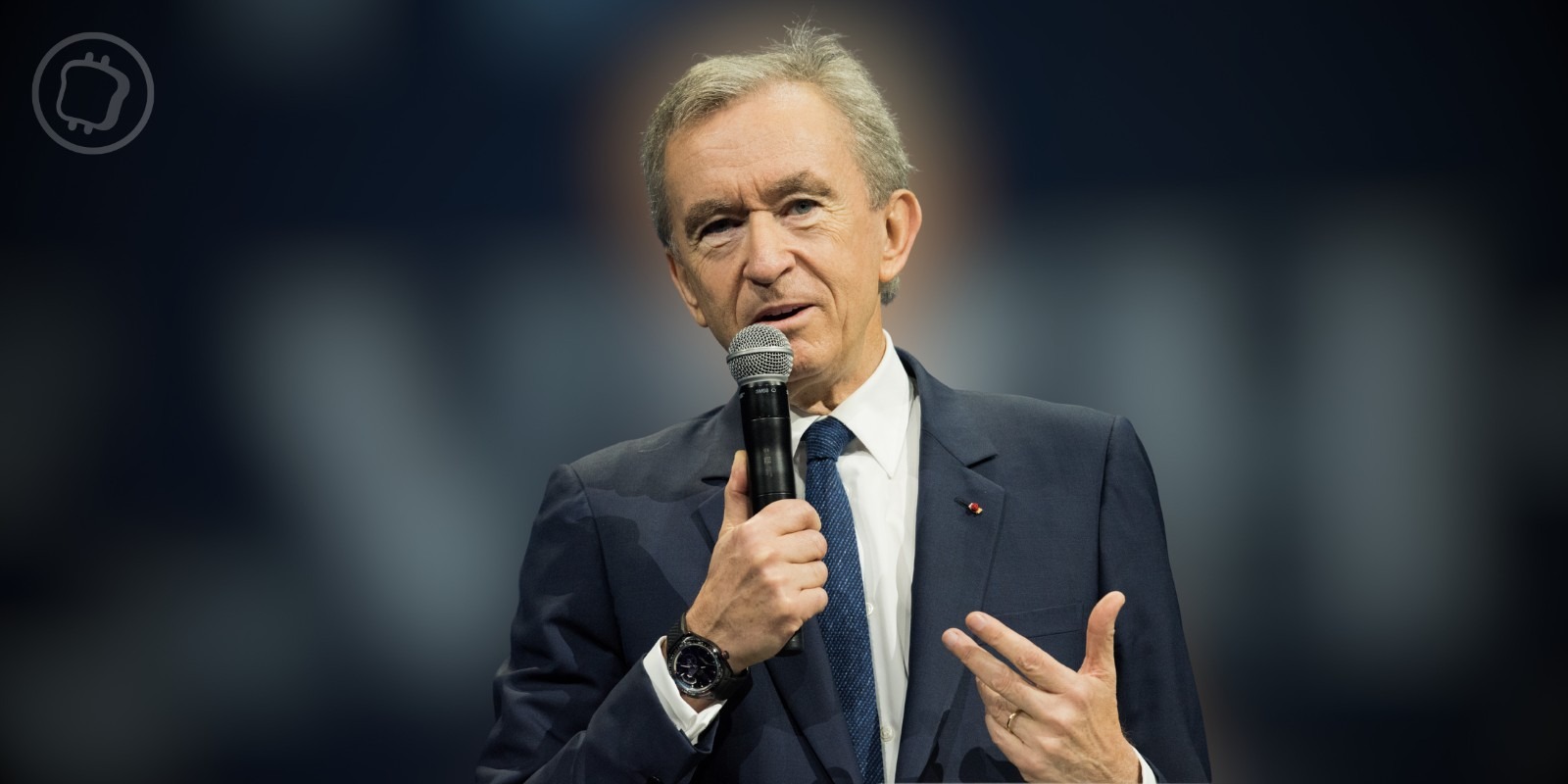
While there has been widespread criticism in France following the agreement between the European Union and the United States, one dissenting voice stands out: that of Bernard Arnault. The billionaire, who is close to Donald Trump, believes the agreement is fair.
Bernard Arnault defends the agreement between the US and the European Union
Bernard Arnault shared his opinion in an op-ed published on Tuesday, July 29, in the newspaper Les Échos. The CEO of LVMH, long France’s richest man, defended the agreement between Donald Trump and Ursula von der Leyen announced last Sunday:
The agreement reached between the European Union and the United States has been criticized […] However, I would like to point out […] that a deadlock had to be avoided. In the current context, this is a good agreement.
The agreement between the two economies is widely seen as unbalanced: the European Union has agreed to 15% tariffs on most of its exports, with promises of investment worth hundreds of millions of dollars in the United States.
Much criticism in France
For many, it is a slap in the face. French Prime Minister François Bayrou spoke of a “dark day” for France, while President Emmanuel Macron has not yet reacted.
Van der Leyen-Trump agreement: it is a dark day when an alliance of free peoples, united to assert their values and defend their interests, resolves to submit.
— François Bayrou (@bayrou) July 28, 2025
But according to Bernard Arnault, the agreement is a “demonstration of intelligence.” It shows that Europe knows how to “defend its strategic sectors”:
It wasn’t Europe that asked for this agreement. [But] faced with a partner capable of breaking existing rules, we had to stand firm without causing a rupture.
Bernard Arnault, close to Donald Trump
Bernard Arnault’s reaction, which goes against the grain, is not entirely surprising, however. The billionaire is close to President Trump, having attended his inauguration in January 2025. He was also received at the White House in May 2025.
Bernard Arnault has also confirmed that he has known Donald Trump since the 1980s and has repeatedly expressed his support for the US president’s policies.
It seems that in the United States, you are welcomed with open arms: taxes are going to be reduced to 15%, the workshops you can build in the United States are subsidized in a number of states, and the US president is encouraging this.
The billionaire head of LVMH also regrets the high taxes in France. But not in the United States, it seems, since he considers the 15% taxes on European exports to be appropriate. What impact could this have on blockchain, user confidence… and the price of BTC? Analysis of several scenarios.
The transfer of 80,000 Bitcoins sets the web ablaze
On July 4, eight Bitcoin addresses that had been inactive for more than 14 years were suddenly reactivated, moving a total of 80,000 BTC, or more than $8.6 billion.
Each transaction, for an exact amount of 10,000 BTC, was preceded by microtransactions containing messages embedded via the OP_RETURN opcode, appearing to come from notaries at Salomon Brothers. These messages stated that access to the wallets had been taken by a third party and invited the legitimate owners to prove their ownership by cryptographic signature before October 5, 2025.
Despite a flood of often far-fetched theories, the most likely hypothesis today is that the investment bank Salomon Brothers, which initiated these transactions, was commissioned by a client to identify and investigate certain BTC that had been dormant for more than a decade.
These eight addresses are not the only ones affected: many old addresses have received the same messages. One of the holders, the owner of the 80,000 BTC in question, reportedly took these warnings seriously and transferred their funds to other, more secure wallets. In the days that followed, all 80,000 BTC were deposited on the Galaxy Digital platform and eventually sold for a total of $9.4 billion.
Although at this stage there is no proof that the wallet was actually compromised, this case highlights a sensitive issue: the potential vulnerability of the first Bitcoin wallets, including those believed to belong to Satoshi Nakamoto, containing nearly 1,125,000 BTC, or $132 billion.
Is it possible to take control of someone else’s Bitcoin wallet?
Before going into detail about different scenarios, it is essential to understand how Bitcoin wallets are created. The seed phrase, i.e., the sequence of 12 or 24 words to be saved in order to recover your Bitcoins in case of wallet loss, is in fact only a simplified representation of the private key. Each wallet is secured by these private keys, a random sequence of 256 bits (0s and 1s) used to sign transactions.
With 2²⁵⁶ possible combinations, or approximately 115,792 billion billion billion billion billion, it is mathematically almost impossible to guess a key by brute force.
However, if the generation of this key relies on low entropy, i.e., a faulty random generator or predictable values, an attacker can analyze this weakness, drastically reduce the number of possible combinations, and make the key predictable or reproducible.
In this case, attackers can scan billions of weak keys generated by vulnerable software in the hope of finding one that has already been used, thereby gaining access to the funds in the corresponding wallet.
What could happen if several dormant Bitcoin wallets were compromised?
If malicious actors were to take control of one or more old Bitcoin addresses, three main scenarios could be envisaged. Each would have very different consequences for Bitcoin, both technically, economically, and psychologically.
Regardless of the scenario, many experts emphasize the antifragility of the system designed by Satoshi Nakamoto. But is this resilience real… or is it a fantasy perpetuated by utopian Bitcoin maximalists?
Scenario 1: Immediate mass sale of compromised BTC
In this first scenario, the holders, or attackers, decide to immediately liquidate the recovered BTC. This would undoubtedly be the worst-case scenario for Bitcoin in the short term.
Depending on the amount stolen, or unlocked if it comes from a lost wallet, such a sale would exert extremely strong downward pressure on the market, causing a sharp drop in the price of BTC.
The market reaction would be immediate: panic selling, chain liquidations of leveraged positions, withdrawal of institutional investors, and a massive loss of confidence among retail investors. Even if some of these sales were made via OTC platforms (to avoid directly impacting public order books), the psychological effect would still be disastrous.
Nevertheless, in such a scenario, it is likely that the event would be perceived as a direct attack on the Bitcoin network and its ecosystem. Thus, any actor taking possession of these funds, whether a liquidator, an exchange platform, a bridge or a service provider, could choose to block the assets to avoid any complicity with fraudulent activity.
As demonstrated by the Lazarus group during the hack of the Bybit platform, when cryptocurrencies are stolen, the safest strategy is to quickly convert them into BTC. But in this particular case, if it is BTC itself that has been stolen, what can be done with it? Liquidating such sums without revealing one’s identity seems impossible.
Even using decentralized platforms, the obstacle remains significant: these protocols could quickly run out of liquidity to absorb the transaction.
Assuming that this is indeed the case, and that the attacker has managed to liquidate their BTC, an attack of this magnitude could cause the price of Bitcoin to fall by 20 to 50% in a matter of days.
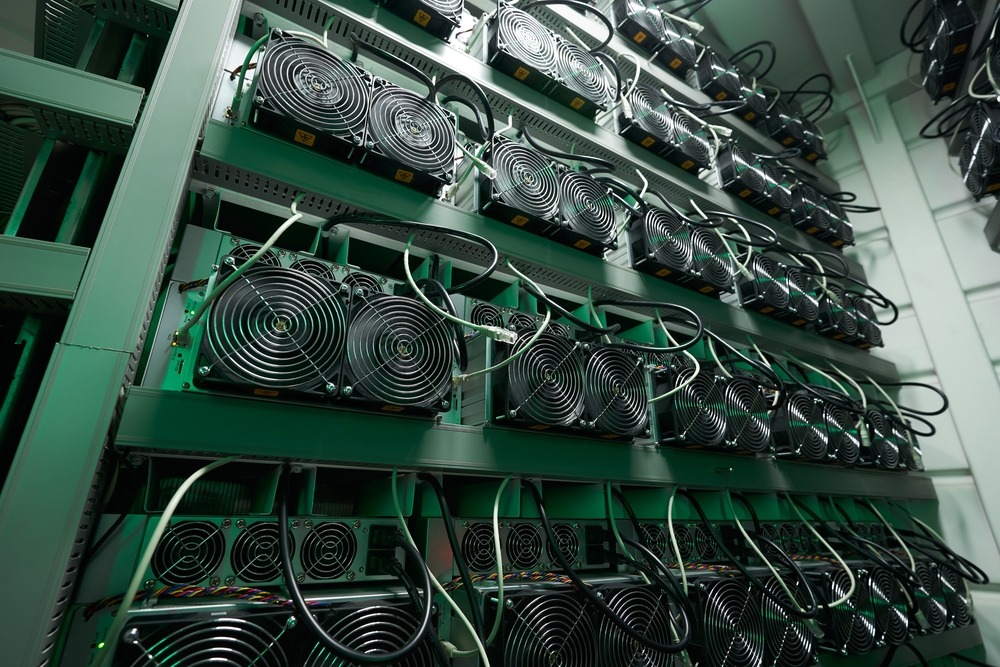
Technically, such a drop would have no direct impact on the Bitcoin blockchain consensus, which is based on proof-of-work. But economically, a sudden drop in price would reduce the profitability of mining, forcing some miners to shut down their machines.
This would lead to a drop in the hashrate, weakening the network’s resistance to 51% attacks, in a proportion generally correlated with the price decline.
A striking precedent occurred when mining was banned in China: in just a few weeks, both the price of BTC and the hashrate fell by 50%. It took nearly six months for the hashrate to return to its previous levels.
At current levels, around 900 EH/s, a 50% drop in hashrate would bring it down to November 2023 levels, or around 450 EH/s, a level at which it was already unlikely that a 51% attack could enable double spending of BTC.
Scenario 2: Destruction of stolen BTC, a voluntary burn
The second scenario envisages a voluntary destruction of funds, also known as a “burn”: the compromised BTC would be sent to an unrecoverable address, such as “1BitcoinEaterAddressDontSendf59kuE,” making the Bitcoins permanently inaccessible.
These addresses are technically valid for the network, but have no associated private keys, making them usable for receiving funds but never for spending, as no associated private key can sign transactions.
Although this type of action is extremely rare, it is not unprecedented in the history of Bitcoin. But why deliberately destroy such a large sum?
It could be an ideological gesture, intended to send a strong signal: a rejection of personal enrichment, a denunciation of the concentration of wealth, or a desire to increase the scarcity of BTC.
In this scenario, the individual who took possession of the funds would be acting as a “good Samaritan,” preferring to destroy the BTC rather than use it or risk affecting the network by selling it.
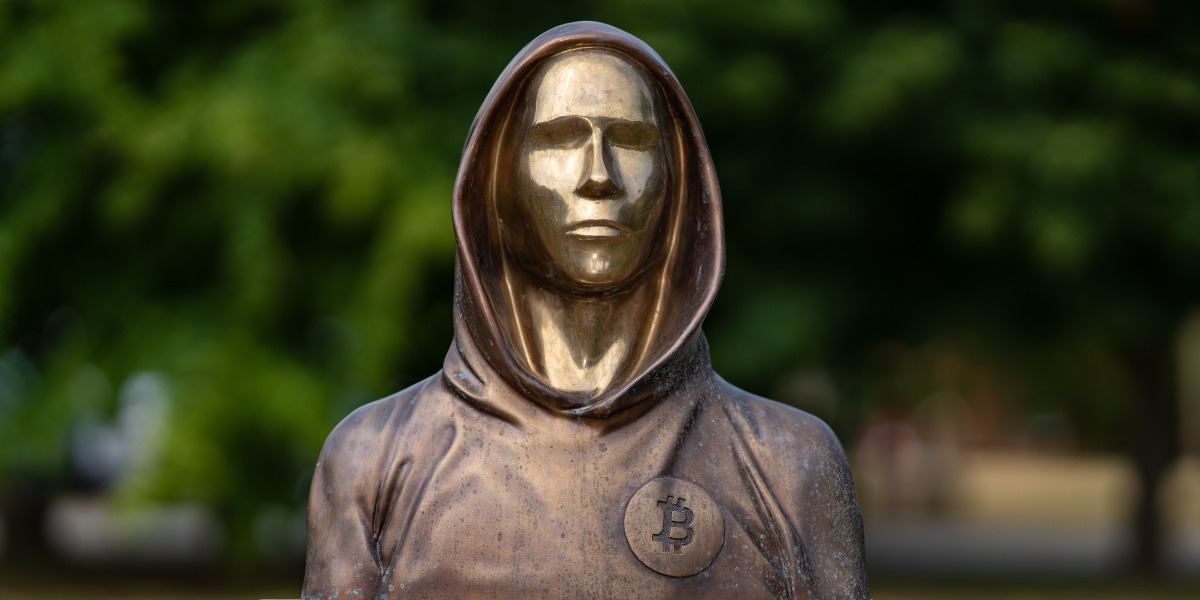
And if the wallets found were those of Satoshi Nakamoto himself, burning these funds could be interpreted as a powerful symbolic act, a way of completing his work while preserving his anonymity, neutrality, and the legacy of Bitcoin forever.
This gesture would undoubtedly have only a limited impact on the price in the short term, but it would cause a real emotional shockwave in the community. It would reignite debates about the security of old keys and the almost sacred status of historical wallets.
In the longer term, such a burn could even contribute to a bullish effect by reinforcing the perceived scarcity of Bitcoins.
Scenario 3: Gradual and discreet use of BTC
The third scenario would unfold if BTC fell into the hands of a pragmatic player: gradual, discreet, and spread-out use over time.
In this case, the holder could use the funds to finance personal or professional activities, make donations, or sell small amounts on a regular basis.
This approach would maximize profits while avoiding triggering panic reactions or drawing attention to the movements of funds. With daily trading volumes on Bitcoin now sufficiently high, the network can absorb several thousand BTC without causing any major disruption. In reality, such a scenario would not be very different from a classic case of voluntary reactivation, such as the 80,000 BTC transferred earlier this month: an old address resurfacing with no obvious signs of compromise. This is also the behavior observed among several former large holders, who have reactivated their old wallets over the years without any significant impact on the market.