
While staking on Ethereum seems to have been struggling since this summer, the number of validators is now at its lowest level since June 2024. Let’s take a closer look at these figures.
Staking on Ethereum (ETH) is still struggling
Over the past two months, we have repeatedly reported on the significant outflows of ETH related to staking on Ethereum.
Currently, the withdrawal queue is still 40 days long, with more than 2.31 million ETH waiting to be withdrawn. At the same time, nearly 1.35 million ETH are also in the queue to enter staking, with a wait time of just over 23 days.
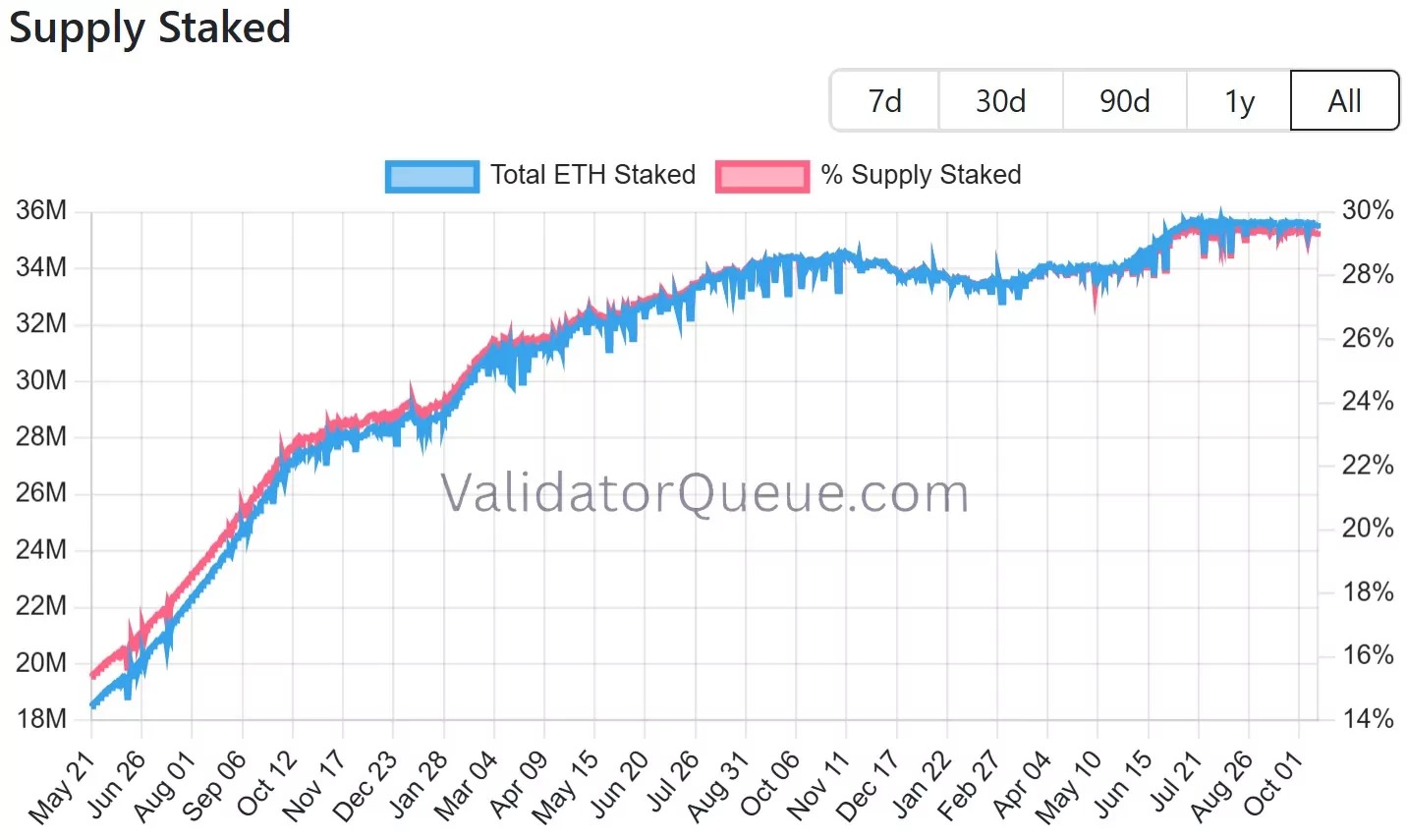
Faced with this imbalance, the amount of ETH staked is tending to decrease, and while the all-time high was 35.71 million units last July, there are now 35.61 million Ethers securing the network.
Admittedly, the difference is small, but the slowdown is such that over the last 12 months, the total amount of ETH staked has increased by only 3.96%, after already declining between October 2024 and March. At the same time, the percentage of supply deposited in staking has increased from 28.46% to 29.4%:
In this context, the number of active validators on the Ethereum blockchain has fallen by 6.26% since its peak on July 17. There are now 1,027,710 validators, the lowest level since June 25, 2024:
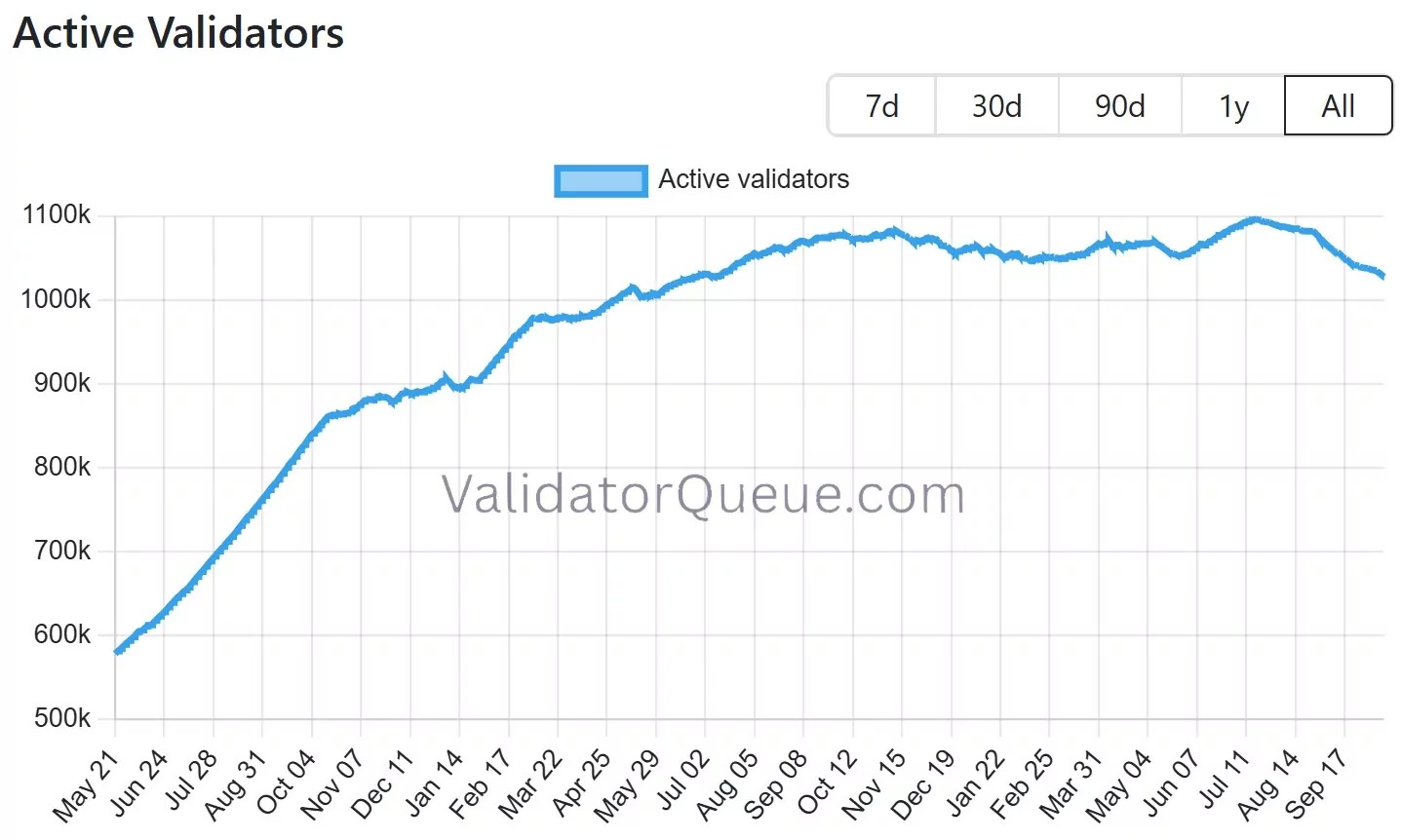
Since the Pectra update, it is likely that the number of validators will continue to decline, or at least increase at a slower rate than in the past. This is because the total amount of ETH required per validator has changed from a fixed amount of 32 units to a range between 32 and 2,048. In the future, it will therefore be particularly relevant to focus primarily on the amount of ETH staked, as stakers may choose to group their validators together. Nevertheless, this dynamic does not yet seem to have really taken hold, given that the average ETH per validator is currently 34.65 units.
For its part, after falling sharply below $3,500, the price of ETH has since risen to $4,100 at the time of writing. What is interesting to note here is that the crash (symbolized in orange) did not have a significant impact on the staking queue, both for entries and exits:
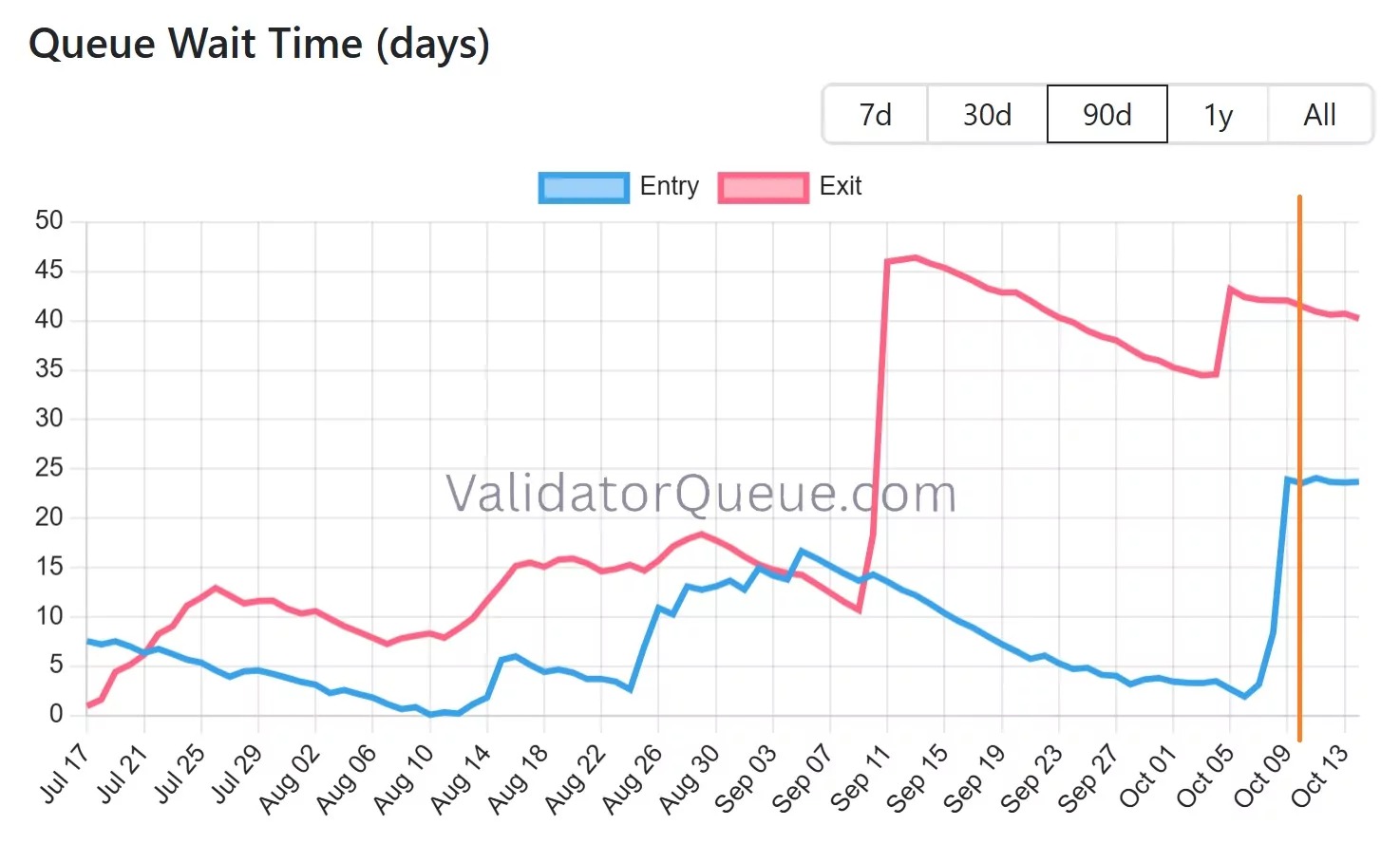
However, we observe a significant spike in the entry delay on October 9. The explanation lies with Grayscale, which obtained authorization to integrate staking into its ETFs and thus deposited nearly 947,000 ETH last Thursday.