
Stablecoins are now establishing themselves as the new popular use case in the cryptocurrency sector, with the capacity to SpaceX now holds $1 billion in Bitcoin, but there is a catch
With the rise of BTC, SpaceX’s Bitcoin holdings are now valued at over $1 billion. But is this really a record?
The value of SpaceX’s bitcoins exceeds $1 billion
With Bitcoin (BTC) reaching a new all-time high, investors are naturally seeing the value of their holdings rise, and this is also true for exposed companies. Among them, SpaceX now sees the value of its bitcoins reach $1 billion.
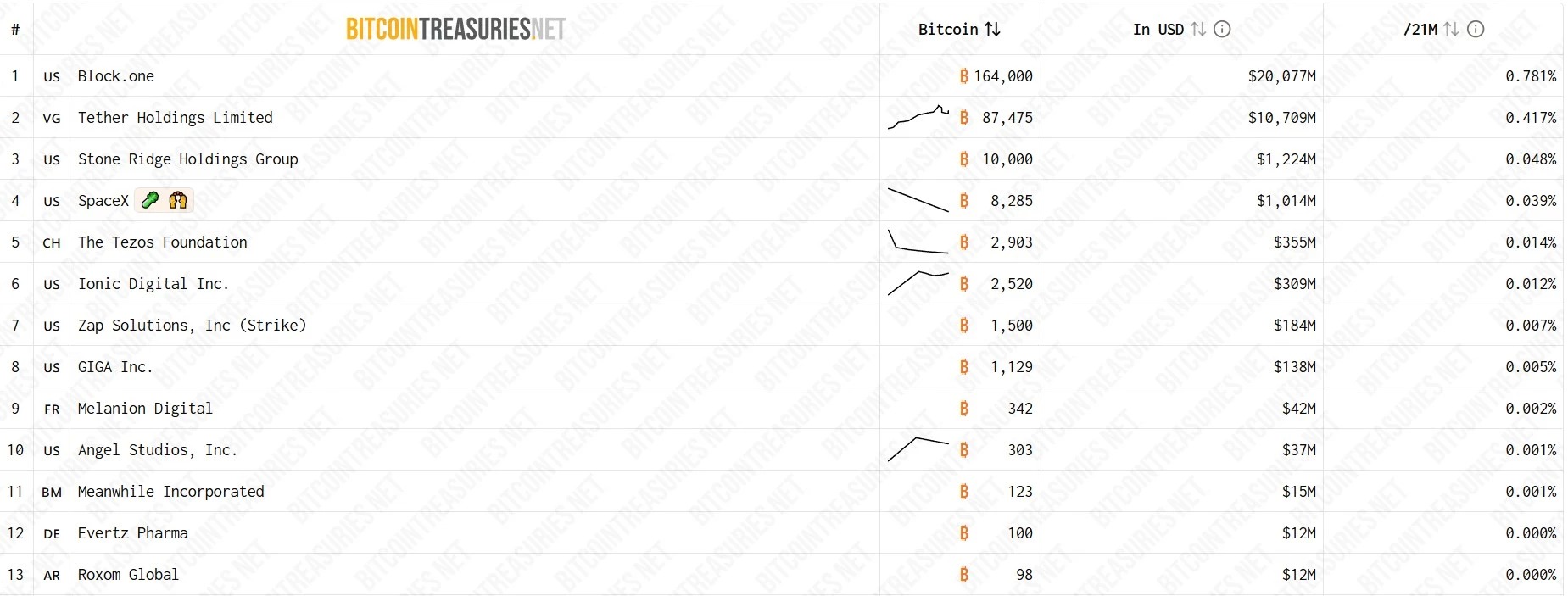
And with good reason, as Elon Musk’s famous aerospace company currently holds 8,245 bitcoins in reserve. According to data from BitcoinTreasuries, this makes it the fourth-largest unlisted company in terms of BTC holdings:
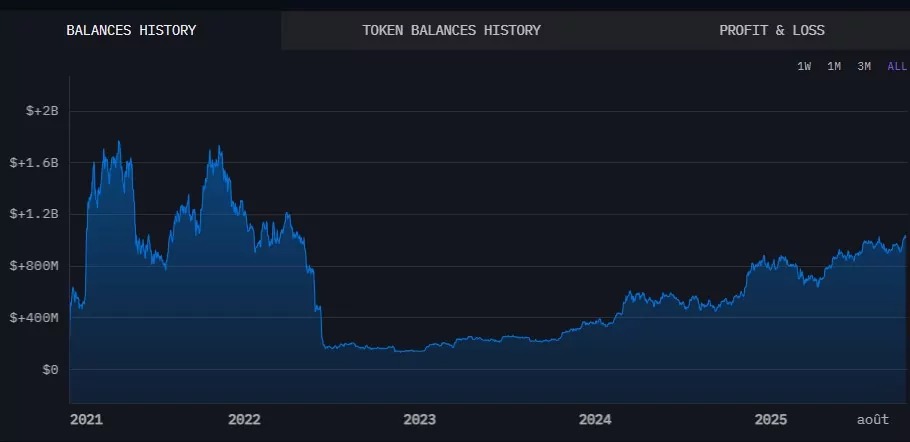
Despite this considerable amount, it should be noted that SpaceX’s bitcoin holdings have decreased significantly in recent years. This is because the company held up to 28,000 units at the beginning of 2021 before starting to sell, including a massive sale of approximately 17,700 units in the spring of 2022. When converted to dollars, SpaceX’s record was $1.8 billion in April 2021:
Given the unrealized gains of investors, it will now be interesting to see if some Bitcoin Treasury Companies choose to sell all or part of their holdings. This could upset the global monetary balance. This development could capture $1 trillion directly from the banking sector over the next few years.
Stablecoins: an estimated $1 trillion in bank deposits captured
The stablecoin market is emerging as one of the crypto trends of 2025, with a total capitalization that has just crossed the symbolic $300 billion mark. This is a drop in the ocean compared to the forecasts for the future, with amounts now estimated in the trillions of dollars. And with good reason, as even the banking sector is taking an interest in these cryptocurrencies backed by traditional currencies, more than 99% of which are currently denominated in dollars.
This situation has prompted Standard Chartered Bank to warn of what it describes as the biggest capital flight the banking sector has ever seen. Indeed, the stablecoin market could capture the equivalent of $1 trillion “leaving emerging market banks (…) within about three years.”
This situation was highlighted by Geoffrey Kendrick, head of crypto-asset research at Standard Chartered. This is particularly true in the face of significant macroeconomic uncertainties that will push individuals and businesses in emerging markets to place their money in stablecoin portfolios rather than traditional banks.
Stablecoins offer consumers and businesses in emerging markets new access to what amounts to a US dollar bank account. This makes the risk of deposit flight greater in these markets than in developed countries.
Geoffrey Kendrick
Savings estimated at $1.22 trillion by the end of 2028
Industry leader Tether (USDT) understands this very well: the future of stablecoins lies far beyond regulatory approval in European or US markets… which it is struggling to obtain. In fact, their rise is already well underway and much faster in emerging markets.
This reality is confirmed by figures from Standard Chartered, which show a significant increase in the use of stablecoins as a savings tool in developing economies, with an estimated amount of $1.22 trillion by the end of 2028, compared to $173 billion currently.
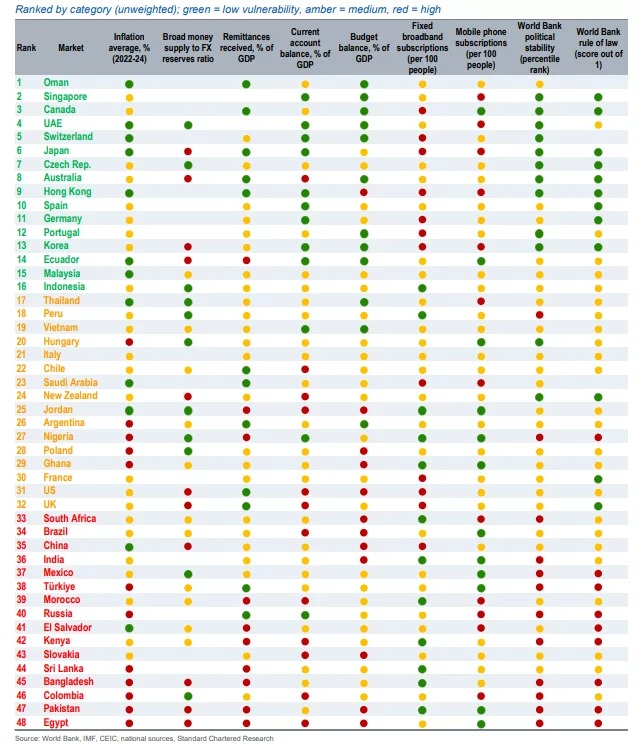
This is certainly a significant estimate, but it ultimately represents only 2% of bank deposits for the 16 countries considered to be at “high risk” of this deposit flight. These include the fragile economies of Egypt, Pakistan, Bangladesh, Sri Lanka, Morocco, and Kenya, but also major economies such as Turkey, India, China, Brazil, and South Africa.
In the United States, the banking sector is attempting to limit this flight of deposits to the stablecoin market with the support of the GENIUS Act regulatory framework, which prohibits issuers from paying returns to their holders. This is a pipe dream, considering that leading players such as Coinbase and PayPal currently offer this type of reward, thanks to stablecoins issued by third-party companies.