
The rapid expansion of data centers designed to run AI is driving unprecedented competition in the IT memory chip market. And needless to say, the decision by industry giant Micron to exit the public sector market won’t help matters.
Computer memory crisis: a “full-blown heist underway”
The rapid development of artificial intelligence (AI) is reshuffling the deck in many sectors, far beyond the simple fact of seeing it gradually and successfully perform increasingly complex tasks that until now involved intellectual and creative professions reserved for humans.
In fact, another battle is being waged from a more technical perspective, in the market for memory chips used in computing, particularly the well-known DRAMs. At the heart of the issue: data centers in constant need of RAM and computing power, to the obvious detriment of the consumer computing market.
An observation made by numerous IT specialists, to the point where the X account under the pseudonym Deus Ex Silicium speaks of a “full-blown heist currently underway” in the sector, with prices for DDR4 RAM, DDR5, and NAND Flash memory prices rising sharply since September, and “peaks of over 500% expected by next summer.”
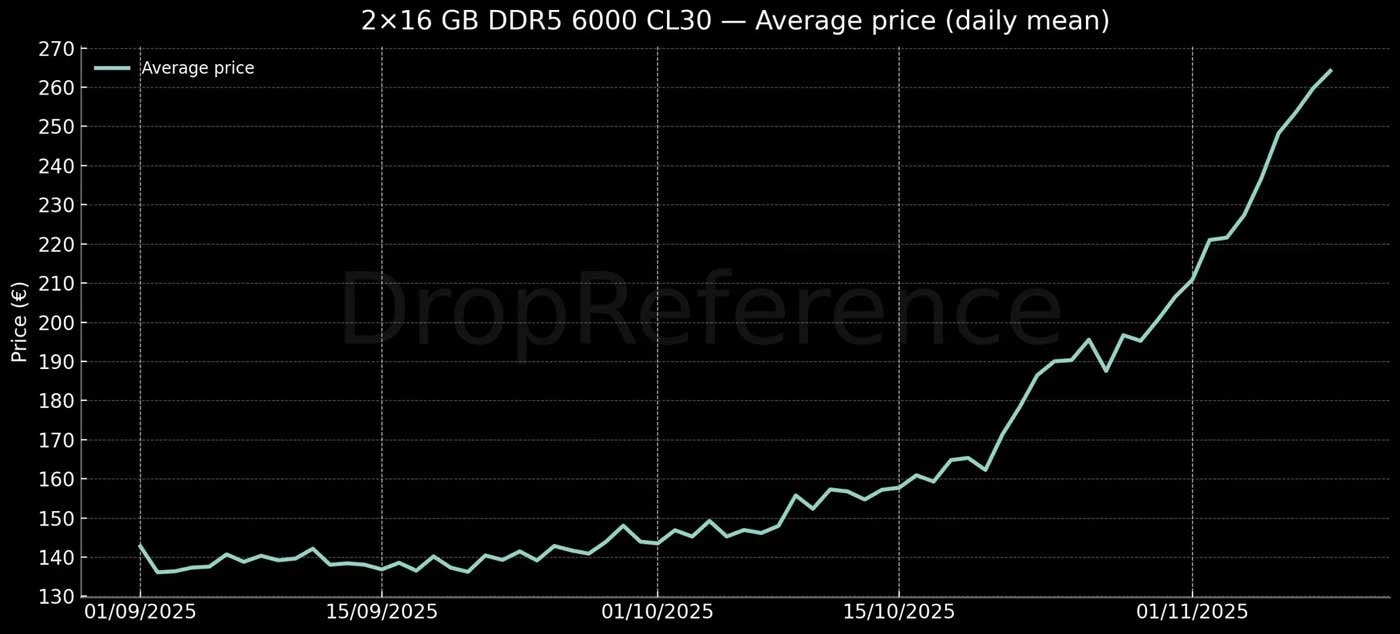
Memory chip prices have risen sharply since September
A memory shortage in which the giant Nvidia—which does not directly produce this type of chip—appears to be an aggravating factor, due to its dominant position in the AI accelerator market. But it has reportedly finally been caught up in this crisis. Indeed, some sources indicate that it is now shipping its GPUs without the video memory chips (VRAM) previously included, leaving its partners to handle the complexity of sourcing them.
Tech giant Micron exits the consumer market to specialize in AI
A complicated situation that could well become even more so, if we are to believe the recent announcement by industry giant Micron regarding the planned discontinuation by June 2026 of its consumer memory chips, sold under the Crucial brand.
The goal of this decision? To allow Micron to exit the consumer market where it has offered its products for 30 years in order to focus exclusively on its most profitable business: selling memory directly to AI computing farms operated by companies such as OpenAI, Google, and others.
A shift toward AI that also affects Bitcoin blockchain miners, particularly to increase the profitability of their electricity supply as BTC mining becomes less and less profitable.
From a more technical perspective, the current memory chip crisis does not directly affect the production of the ASICs required for their operations, but rather involves a broader reorganization of the global semiconductor supply chain. In any case, an inevitable increase in operating costs appears likely.