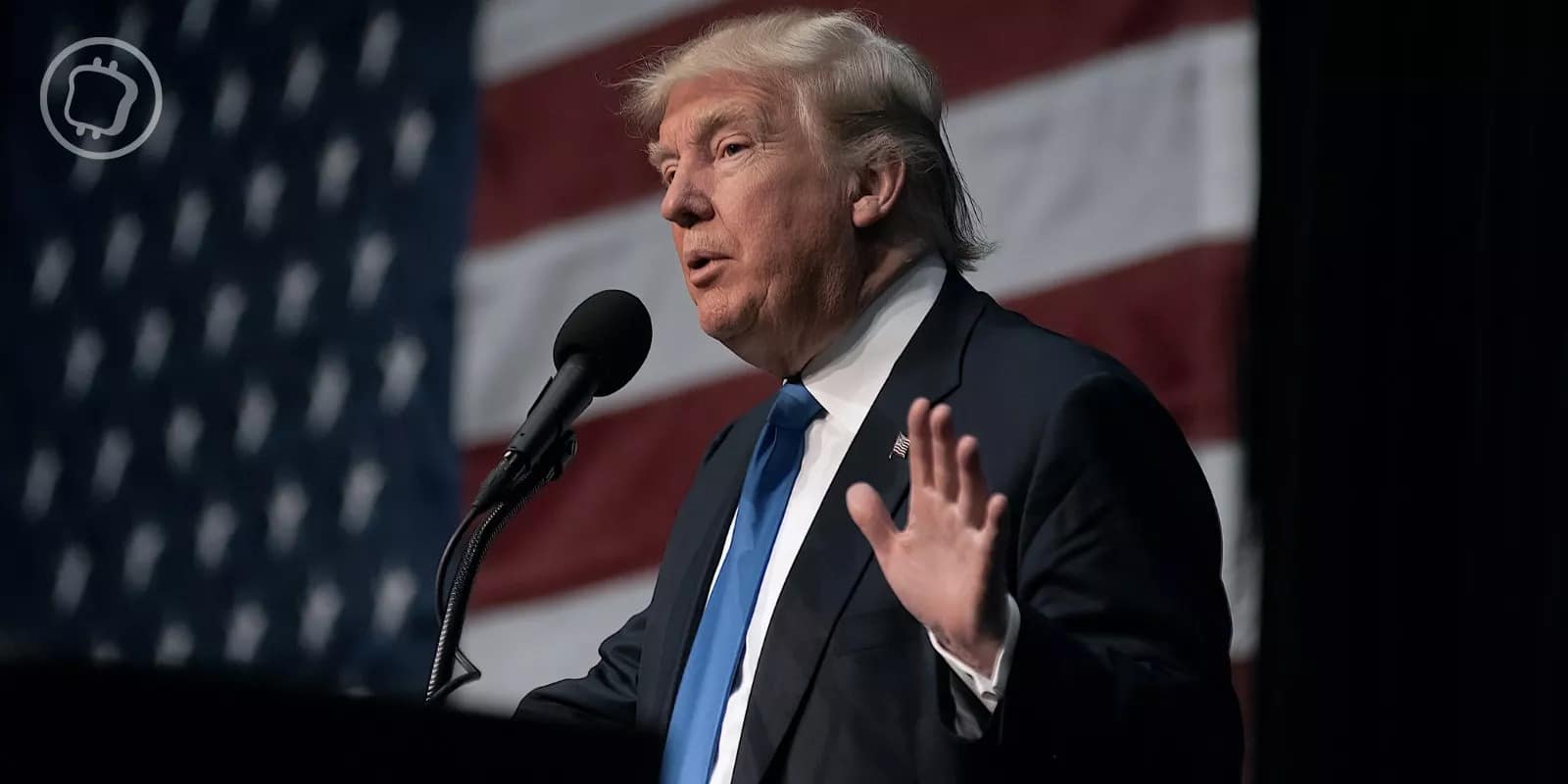
Donald Trump’s arrival in the White House has brought about many changes in US national politics. The latest example is the recent signing of his budget bill. A “Big Beautiful Bill” that is already highly controversial. We take a look at what this means.
United States: a controversial “Big Beautiful Bill”
Donald Trump has a knack for marketing. Proof of this is his budget bill, sold as a “Big Beautiful Bill” intended to fix the US finances. The bill was recently adopted by the US Congress after tough negotiations and was signed into law by the US president on July 4.
To ensure its success, Republicans used a process known as “budget reconciliation.” This procedure allows the supermajority requirement of 60 votes to be bypassed, reducing the number to 51. As a result, the vote passed a decisive review stage in the Senate on July 1 with exactly that number of votes, thanks to the decisive vote of Vice President JD Vance.
In effect, this bill essentially extends the individual and estate provisions put in place by Donald Trump as part of his 2017 jobs and tax cuts law. It also aims to fulfill his campaign promises, namely exempting tips from taxation and overtime pay until 2028 only.
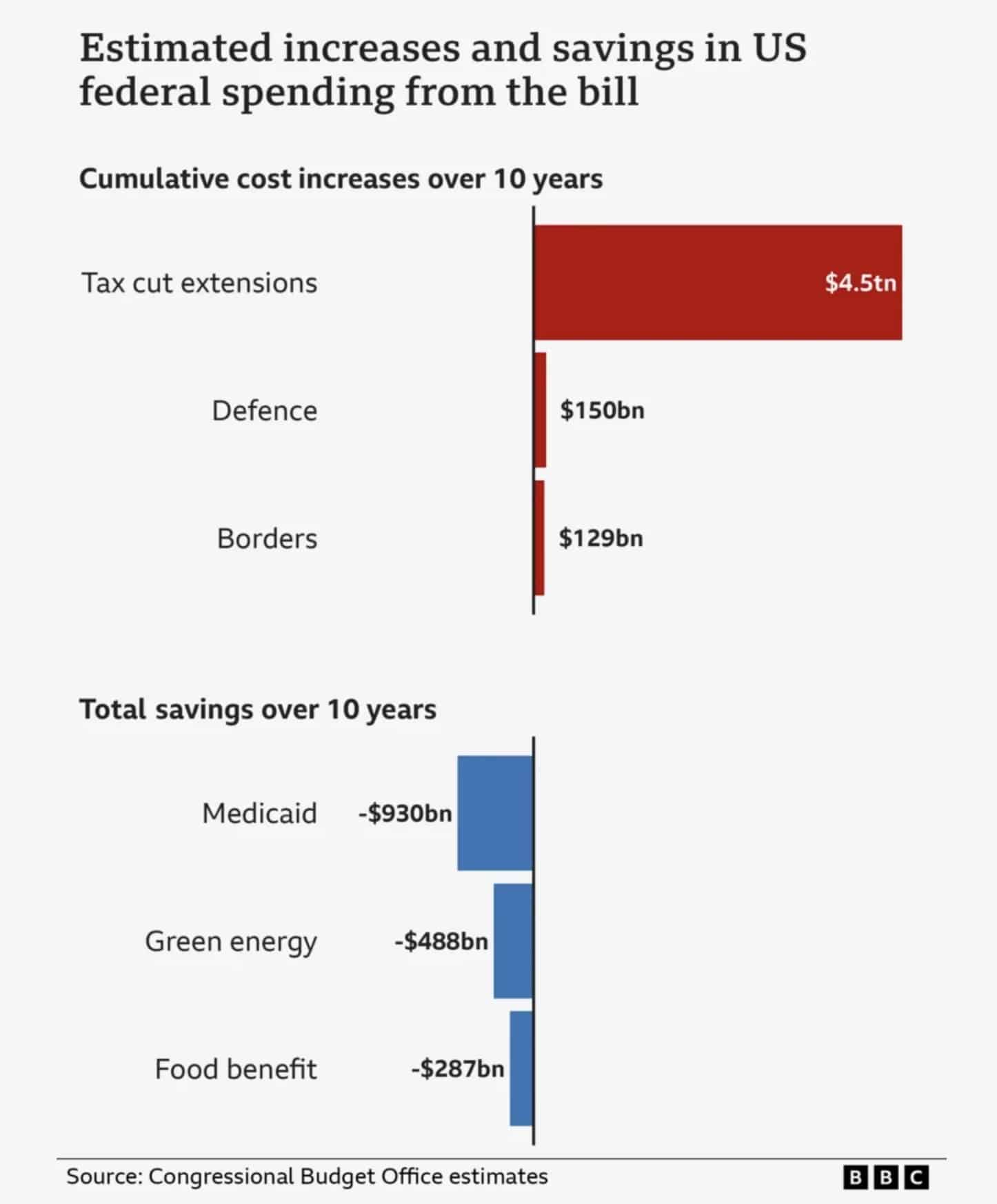
But that’s not all. Bloomberg also points to “billions of dollars allocated to defense and immigration enforcement, while cutting funding for healthcare, food assistance, and clean energy programs.” At the same time, tax breaks on car loans are being proposed for vehicles manufactured in the United States.
According to the Congressional Budget Office, this bill could have problematic consequences. Indeed, this body estimates that it could lead to an additional federal deficit of $3.3 trillion over the next 10 years.
A $5 trillion increase in debt
To finance this bill, Donald Trump is counting in particular on revenue from his tariffs. This windfall is estimated at between $6 trillion and $7 trillion over the next decade, according to White House trade advisor Peter Navarro. It therefore seems that the situation is set to continue!
This calculation is considered by some economists to be rather worrying, given the increase in borrowing requirements that is likely to weigh heavily on the national budget. This is particularly true in light of a debt burden that could exceed 118% of the size of the US economy by 2035.
At the same time, the already abysmal US debt ceiling—estimated at over $36 trillion—is set to be raised by $5 trillion. The aim is to prevent the current ceiling from being exceeded in the coming months.
This national budgetary framework raises questions about its ability to deliver conclusive results without risking further damaging the US economy. In any case, President Donald Trump announced at the time of its official enactment that a new “golden age for America” was dawning. This is a story to be followed closely.