
Despite the promise of stability associated with the massive influx of traditional finance, could the price of BTC still be susceptible to significant declines of around 70%? This is the opinion shared by this analyst, given the persistent misunderstanding of Bitcoin.
Towards a 70% retracement for Bitcoin?
It is difficult to accurately estimate the level of Bitcoin’s historic highs during its various cycles. However, one thing remained certain: the evidence of a painful correction following each of these records, until traditional finance joined the party.
Indeed, the prospect—now underway—of the crypto market being flooded with billions of dollars from institutional investors has been accompanied for years by the promise of taming BTC’s high volatility, for better or for worse.
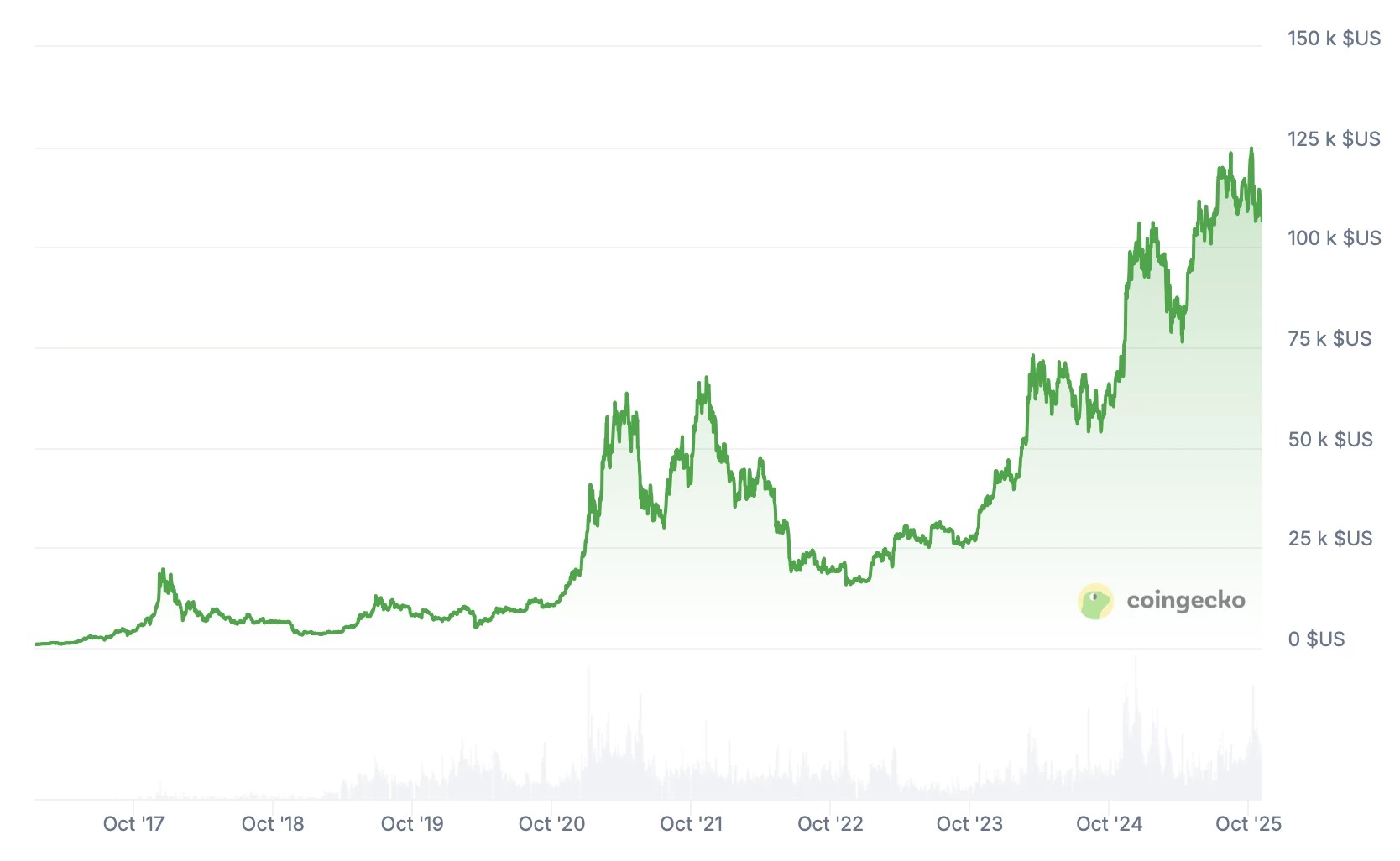
Could this be the beginning of longer-lasting and less volatile super cycles? Nothing is less certain, according to Vineet Budki, CEO of venture capital firm Sigma, speaking at the Global Blockchain Congress 2025 in Dubai. He still anticipates a possible retracement of 65% to 70% during the next cryptocurrency market reversal, expected within the next two years.
Bitcoin will not lose its usefulness if it falls to $70,000. The problem is that people don’t know what it’s useful for, and when you buy assets you don’t understand, you’re among the first to sell them; that’s where the selling pressure comes from.
Vineet Budki
BTC at $1 million, but (still) not in a straight line
According to Vineet Budki, the price of BTC will continue to experience successive bull and bear cycles as it progresses, even within an overall bullish long-term outlook, because traders—even institutional ones—don’t understand the assets they hold.
This is a problematic situation, but it should not prevent the price of Bitcoin from reaching $1 million over the next decade. This is especially true if, like Vineet Budki, we believe that its current speculative adoption will eventually give way to a genuine understanding of its real and effective utility on a global scale.
In any case, the arrival of traditional finance on the Bitcoin market is definitely changing the game, for the moment to the obvious disadvantage of individual investors who had previously been at the center of the equation. This is particularly true in the face of new, very greedy holders, such as publicly traded companies, governments, and even ETFs on behalf of their clients.
The question remains as to what the actual impact of the next Bitcoin halvings will be, given that the BTC market is now exposed to data specific to traditional finance, such as Fed rate hikes and money supply growth.