
In the stock market, everything boils down to rotation among major asset classes, and when it comes to Bitcoin, there is a strong relative cycle with precious metals, driven by the underlying trend of gold and silver. Check out Vincent Ganne’s analysis.
Gold and silver have outperformed BTC for the past year
Will the Bitcoin price be able to recover in the first quarter of 2026, as the debate rages over whether the market has entered a cyclical bear market or is merely undergoing a mid-cycle correction before hitting a new record high?
In the stock market, everything is just a rotation among the major asset classes, and when it comes to BTC, there is a powerful relative cycle with precious metals, driven by the underlying trend of gold and silver. Last year, precious metals crushed the competition, with silver rising by over 150% and gold by over 60%, while BTC ended the year down.
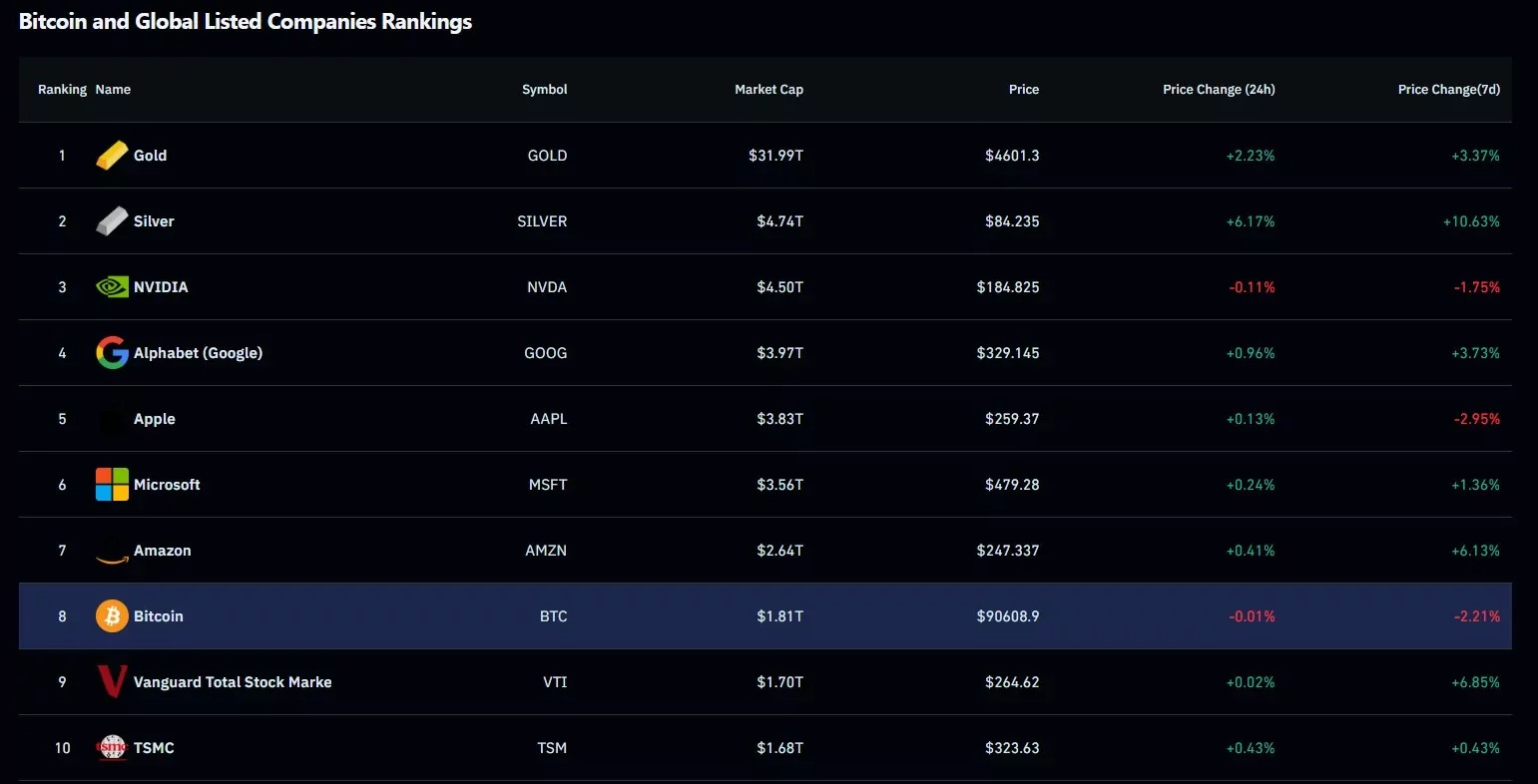
These three markets benefit from a wide range of US spot ETFs, and it is this investment vehicle that creates a phenomenon of communicating vessels. In short, it is inconceivable that the price of Bitcoin will resume a fundamental uptrend as long as gold and silver continue their vertical upward movement in the commodities market.
Gold and silver are now the top two global market capitalizations, ahead of the Magnificent 7, and Bitcoin is now significantly smaller—even twice as small as silver on the stock market.
BTC/GOLD & BTC/SILVER ratios under surveillance
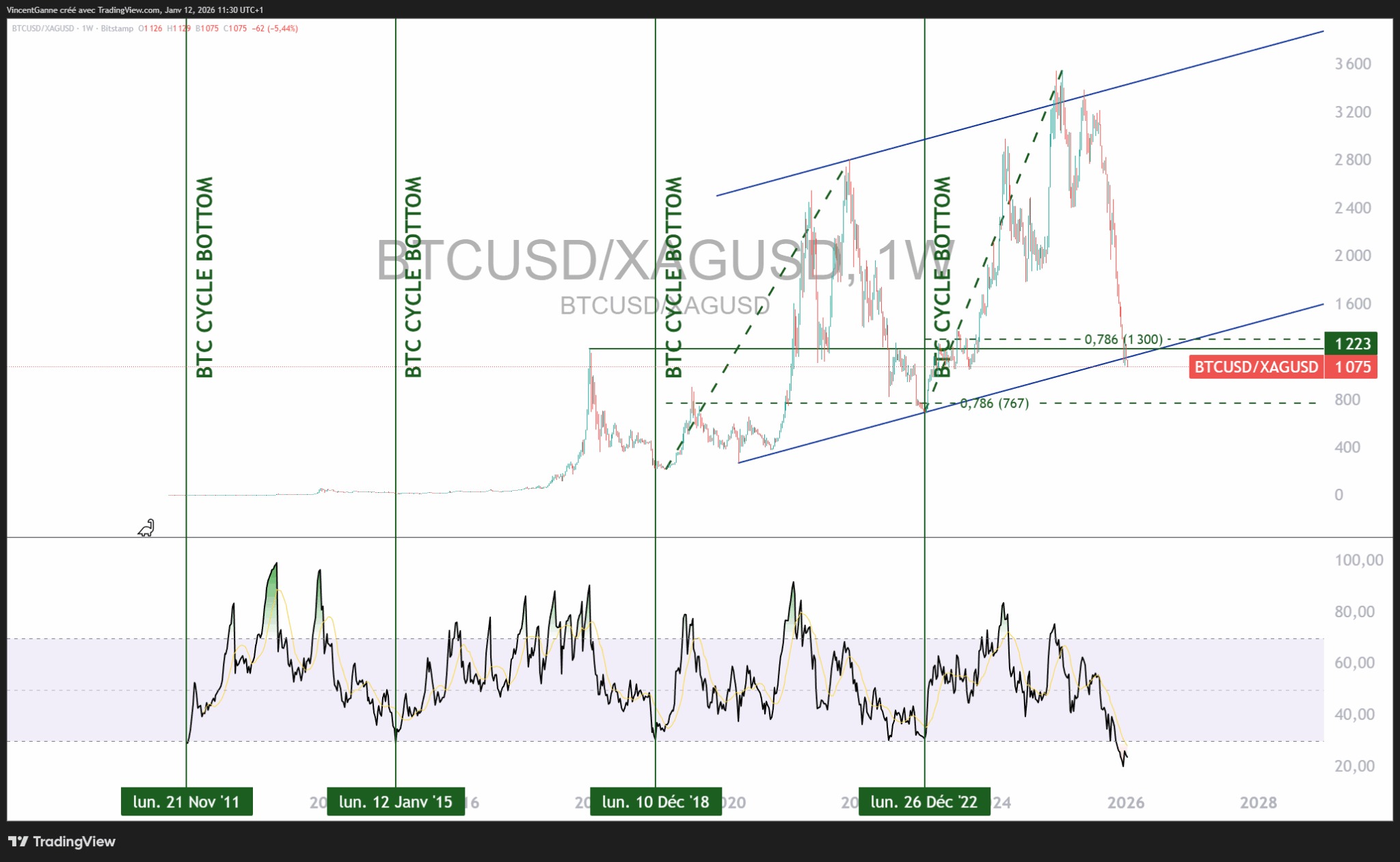
Technical analysis of the BITCOIN/GOLD and BITCOIN/SILVER ratios allows for a clear assessment of the relative cycle between the trend in precious metals and the trend in BTC. Historically, every major low in these two ratios corresponds to the end of a cyclical bear phase for BTC.
At this stage, technical analysis of these two ratios indicates a situation of massive overselling, which is favorable for a shift in favor of BTC. However, a market can remain oversold for a very long time before showing signs of a bullish reversal. These two ratios must therefore be closely monitored; the cyclical shift is clearly approaching, and this should allow BTC to rebound.
From a purely macro-financial perspective, this dynamic is part of a broader context of seeking protection against monetary erosion, structural government debt, and persistent geopolitical uncertainties. Gold and silver are fully fulfilling their role as safe-haven assets, while Bitcoin, still perceived as a more volatile asset, historically tends to outperform later on, once the initial stress phase has been absorbed by the markets.
From a technical perspective, ratio charts show an advanced compression of BTC’s bearish trends relative to precious metals, with long-term support levels reached or currently being tested. This type of setup has often preceded Bitcoin’s catch-up phases—not necessarily against the dollar, but first against gold and silver—signaling a gradual return of risk appetite.
It is also worth noting that BTC cycles tend to align with periods of relative, rather than absolute, capitulation. In other words, Bitcoin does not need gold and silver to collapse in order to rebound, but simply for their bullish momentum to run out of steam enough to free up capital flows toward assets with higher performance potential.
Thus, until the BTC/XAU and BTC/XAG ratios confirm a clear bullish reversal, any Bitcoin recovery will remain fragile and subject to high volatility. Conversely, a stabilization followed by a reversal of these ratios would constitute a major signal indicating that the cyclical rotation is well underway, paving the way for a new phase of BTC outperformance in the coming months.