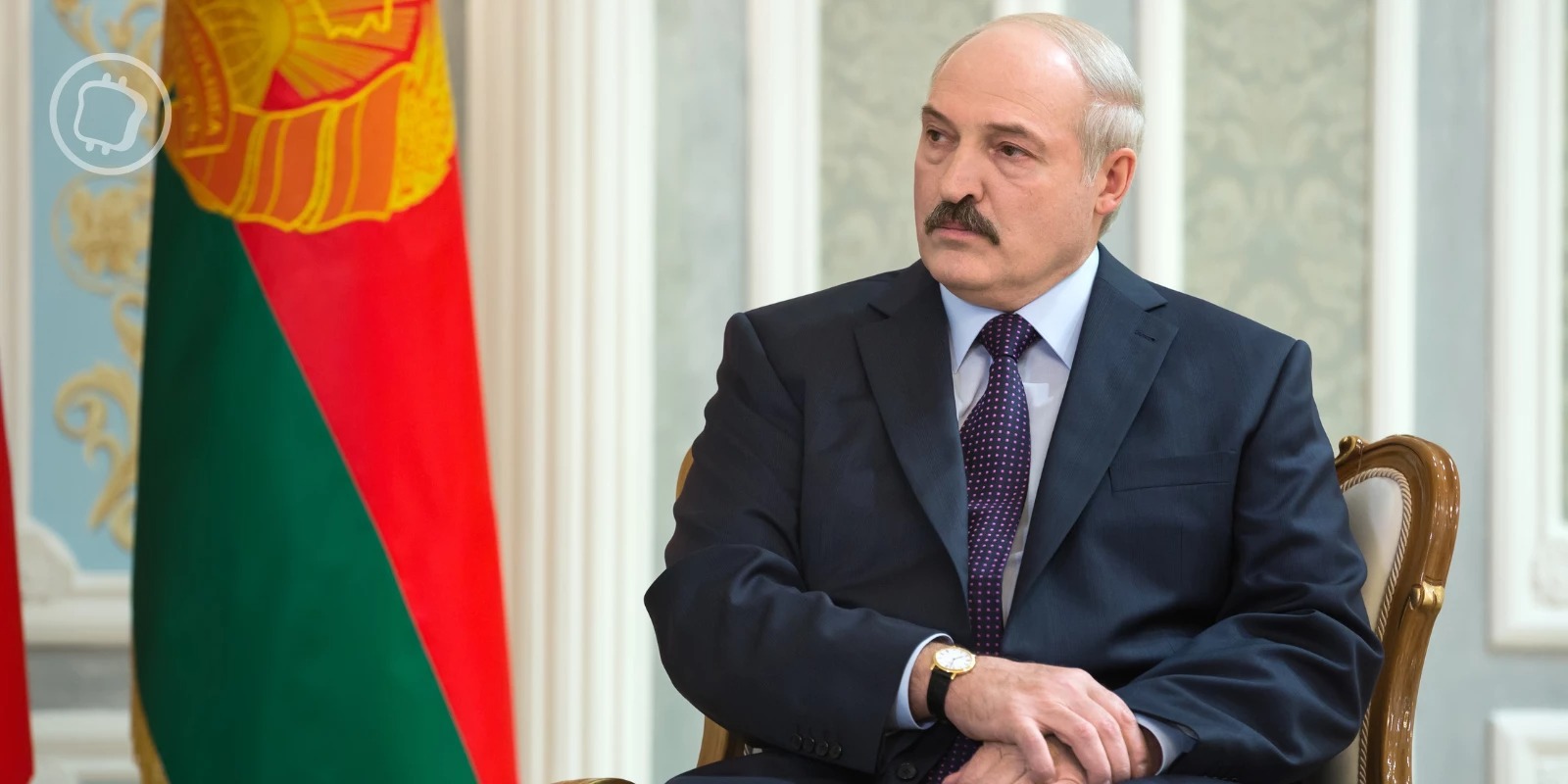
Belarus has just taken a decisive step forward in the field of cryptocurrencies by officially establishing a legal framework for “crypto banks.” Signed by President Alexander Lukashenko, Decree No. 19 specifies the conditions for the approval and supervision of these new financial institutions, which are capable of combining traditional banking operations with cryptocurrency-related activities.
What is a Belarusian crypto bank?
This weekend, Belarus officially established a legal framework for “crypto banks.” On January 16, Belarusian President Alexander Lukashenko signed Decree No. 19 on “crypto banks and certain issues related to control in the field of [cryptocurrencies].”
According to the press release, “this document aims to strengthen Belarus’ image as a leading country in the field of financial information technology and provides for the creation of favorable conditions for the activity of cryptobanks on the national territory.”
According to the description provided, a cryptobank is defined as “a company […] granted the right to combine activities involving the use of […] [cryptocurrencies] with the performance of banking, payment, and other related financial operations.”
To be admitted to the market, a cryptobank must first be licensed within the High-Tech Park (HTP), a special economic zone under the direct supervision of the state.
The company must also be formally registered with the National Bank of the Republic of Belarus, via its entry in the official register of cryptobanks. This step allows the central bank to control access to the market and fulfill its prerogatives related to internal security (money laundering and terrorism in general).
In addition, the cryptobank will be subject to two sets of complementary rules. On the one hand, it will have to comply with the legislation applicable to non-bank credit and financial organizations. In other words, standards similar to those of the traditional financial system.
On the other hand, it must also comply with the decisions of the Supervisory Board of the High-Tech Park. This council plays a specific role in supervising technology and innovation. The aim is to enable these entities to “offer their customers innovative financial products that combine the advantages of traditional banking with the technical sophistication, speed, and convenience of transactions using [cryptocurrencies].”
A history fraught with paradoxes
A former Soviet republic, Belarus still maintains very strong relations with Russia. As a result, Minsk is subject to Western sanctions in the same way as Moscow.
In this context, President Alexander Lukashenko sees cryptocurrencies as a way out. In early September, addressing commercial banks and the central bank, he invited them to promote the adoption of cryptocurrencies.
Like Russia, Belarus has had a rather ambiguous relationship with cryptocurrencies for several years. In April 2019, the president proposed using surplus energy from the country’s first nuclear power plant to mine Bitcoin. This proposal was reiterated in February 2021 by the Ministry of Energy.
Then, in July 2023, the Ministry of Internal Affairs announced a ban on cryptocurrency exchanges between individuals in order to better control illegal flows.
As we have just seen, a more pragmatic and nuanced approach has ultimately been favored. As shown in the interview with Evgeny Masharov, a member of the Public Chamber of the Russian Federation, regulation may be the solution.
Furthermore, by legalizing transactions that were previously clandestine, the state guarantees the collection of mandatory levies on these operations, while equipping itself with tools to control their legitimacy and compliance.