
Prediction betting platforms will benefit from a degree of regulatory flexibility in the United States. A decision by the Commodity Futures Trading Commission (CFTC) clarifies their scope of action.
CFTC lenient with prediction betting platforms
Prediction betting sites have been booming in the United States recently, and the CFTC intends to let them develop without monitoring them too closely. At least, that is what emerges from the no-action letters sent to the companies concerned this week.
Specifically, the CFTC has warned that predictive market platforms will not be forced to comply with certain record-keeping requirements, provided they meet other requirements. The letters were sent to Polymarket, PredictIt, Gemini, and LedgerX/MIAX.
The conditions are that operators must ensure that their contracts are always fully collateralized and not pay compensation from anywhere other than their platform. They must also publish data related to swap contracts immediately after they are executed.
Once these conditions are met, platforms are not required to comply with the letter of the requirements for retaining data related to swaps that take place on the platform.
Supporting the launch of local platforms
While Polymarket had at one time withdrawn from the US market, the opposite trend is now taking hold. Predictive betting platforms are booming, with new ones launching every week. Yesterday, for example, we learned that Gemini will also be offering its own prediction market. Notional volumes (all assets combined) on prediction betting platforms are now approaching $4 billion, with growing numbers of users on Polymarket, Opinion, Kalshi, and others:
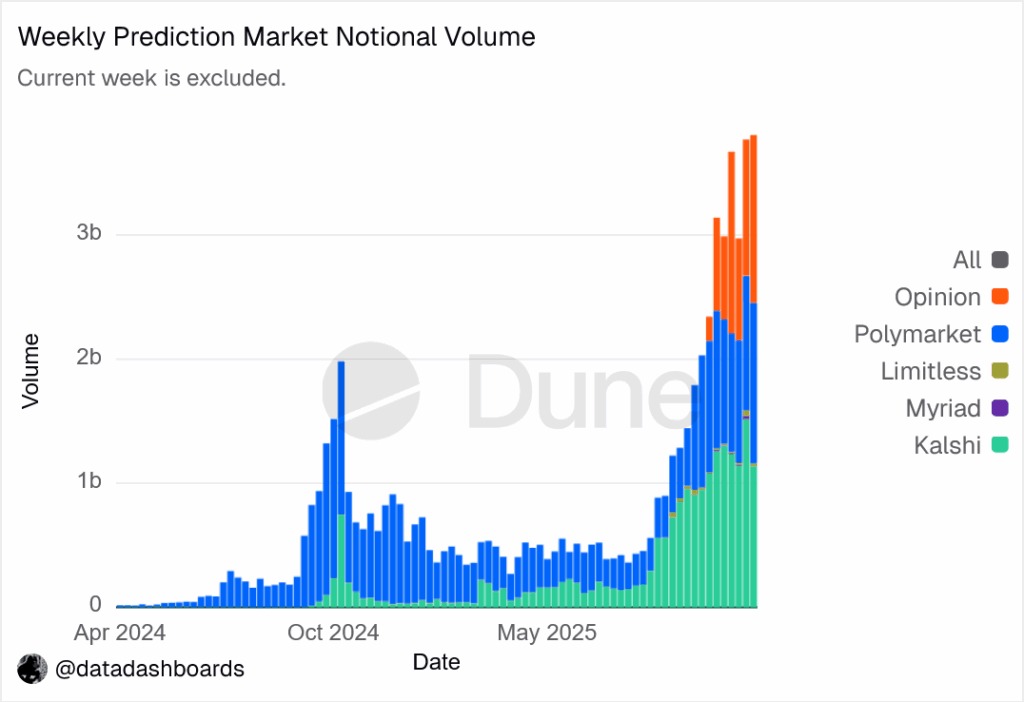
While the sector is booming in the United States, this is not the case everywhere. In Europe (and France in particular), prediction betting platforms are viewed with suspicion, with a regulatory framework that remains rather vague at this stage. Their real democratization will therefore likely require new, more explicit frameworks.