On Friday, Fitch Ratings downgraded France’s rating to AA-, lowering its debt to “medium quality.” Let’s take a closer look at this setback.
Fitch downgrades France from AA- to A+
On Friday, Fitch Ratings downgraded France’s credit rating from AA- to A+, thereby downgrading the country’s debt from “High Quality” to “Medium Quality.”
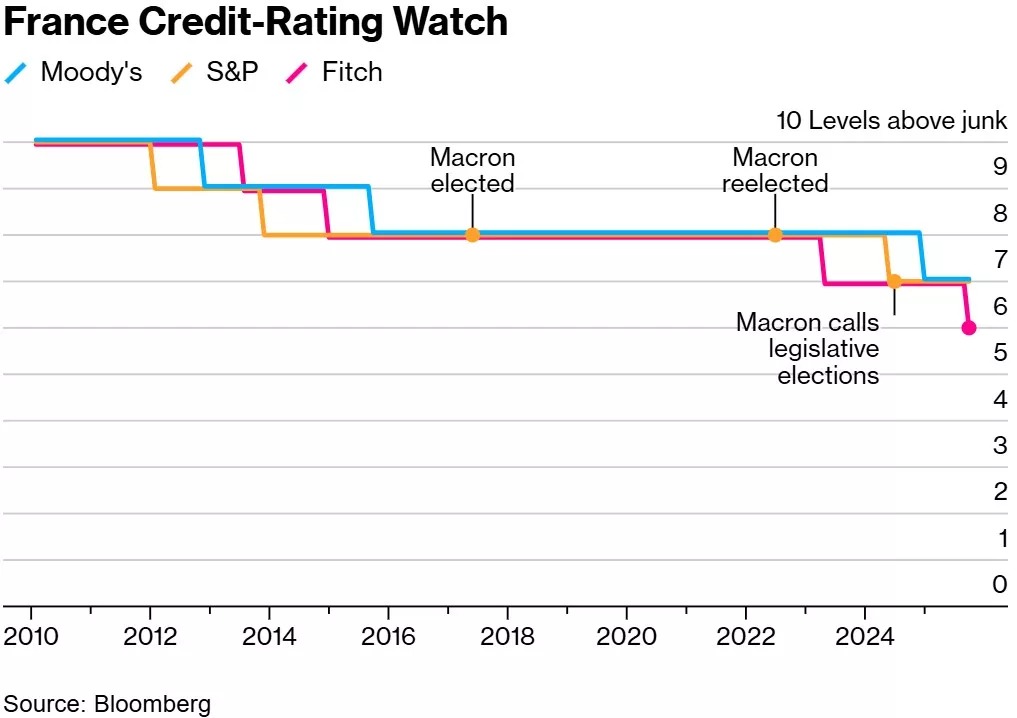
To understand what this means, let’s briefly review what these ratings signify. The world’s three leading rating agencies, Moody’s, Standard & Poor’s, and Fitch Ratings, assign ratings to countries’ debt, ranging from “Default” to “Prime Quality.” While until 2012 France was still among the highest-rated countries with the famous triple-A rating from all three agencies, these ratings have deteriorated over the years, as shown in the Bloomberg chart below:
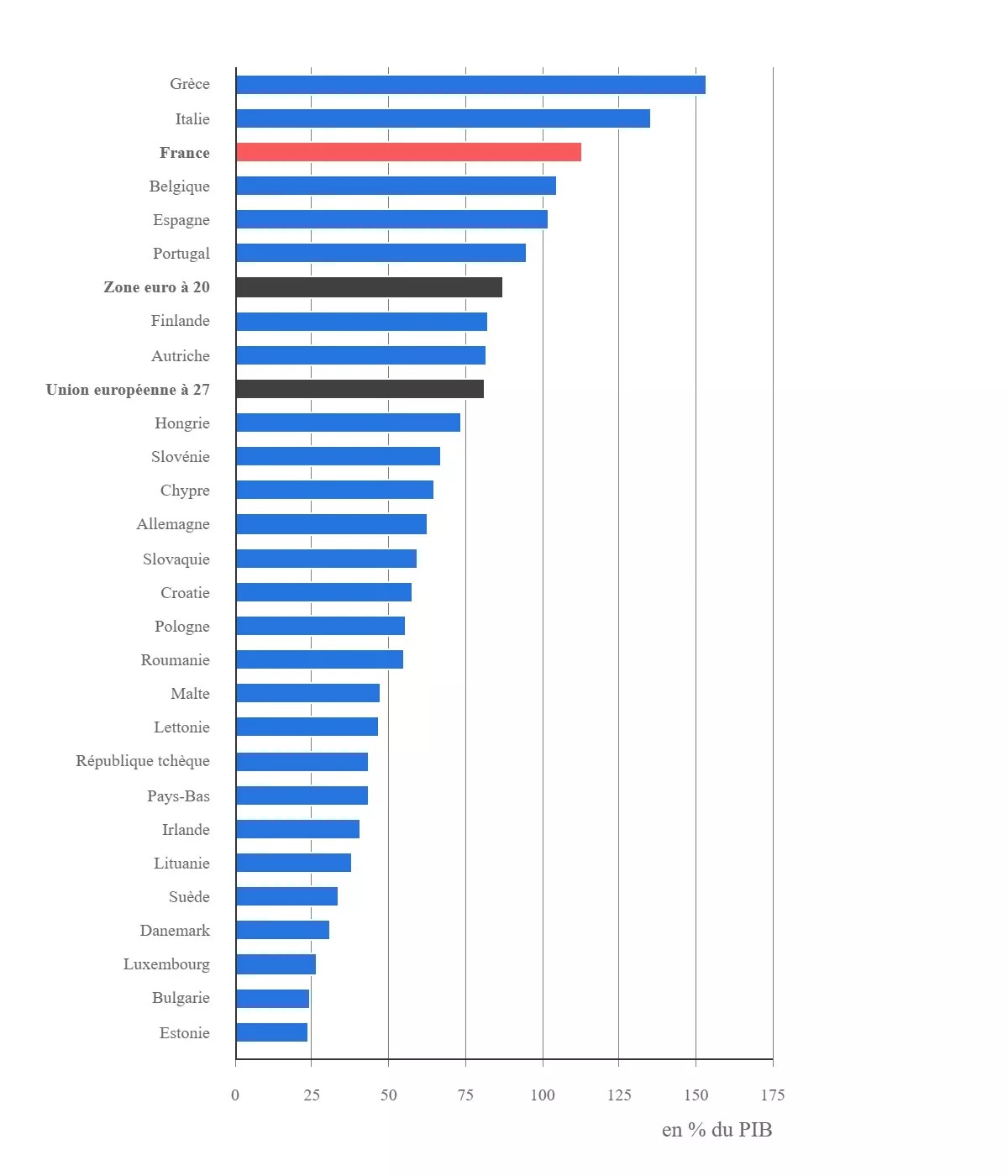
The problem with a downgraded rating is that, in the long term, governments have to borrow at higher interest rates from investors to compensate for the potential risk of default. Moreover, the government’s disastrous budget management in recent years has led France to rank third among the most indebted countries in the EU in terms of GDP percentage, at 113% in 2024:
Given the political situation in the country in recent years, with no clear majority in the National Assembly, the status quo seems to be the order of the day. For Fitch, François Bayrou’s defeat in Monday’s confidence vote has worsened the situation and “illustrates the increased fragmentation and polarization of domestic politics”:
Since the early legislative elections in mid-2024, France has had three different governments. This instability weakens the political system’s ability to ensure substantial fiscal consolidation and makes it unlikely that the overall budget deficit will be reduced to 3% of GDP by 2029, as targeted by the outgoing government.
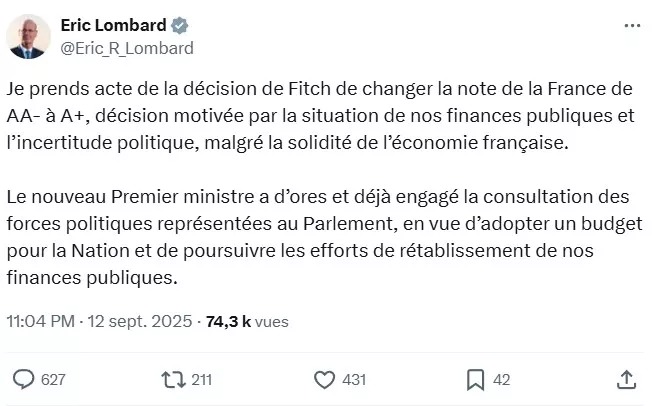
On X, Eric Lombard, the outgoing Minister of Economy, said he had taken note of Fitch’s decision, with the usual platitudes of the French political class:
While the new Prime Minister, Sébastien Lecornu, is now responsible for forming a new government, the development of the 2026 budget will need to be closely monitored, as this year’s budget was based on a deficit of 5.8% of GDP.
Today, it is worth remembering that the government’s debt stands at €3,345.8 billion, an increase of 48% since Emmanuel Macron was first elected in 2017.