
Despite its rock-solid robustness, the Bitcoin blockchain remains exposed to certain major technological developments, such as quantum computing. This is a risk that is theoretical for the moment, but one that El Salvador apparently wishes to anticipate.
Bitcoin: El Salvador anticipates quantum risk
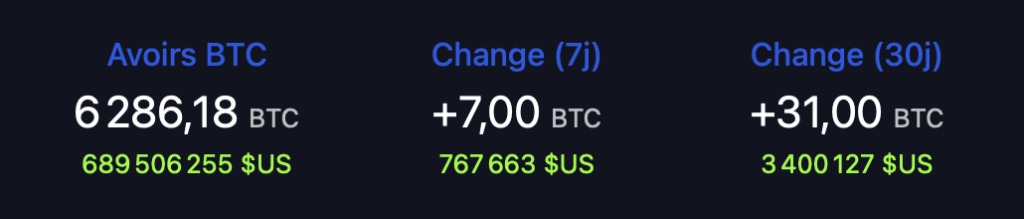
In the ever-growing list of countries in favor of a strategic Bitcoin reserve, the small Central American country of El Salvador stands out as a pioneer. Since 2022, its Bitcoin Office has been managing recurring purchases of BTC, which now has an official balance of 6,286.18 BTC.
When implementing his Bitcoin law, President Nayib Bukele announced the launch of a government Dollar Cost Averaging (DCA) operation, aimed at purchasing 1 BTC per day. This procedure appears to be continuing despite recent statements to the contrary by the International Monetary Fund (IMF), which is determined to halt this momentum.
But another risk also looms over El Salvador’s BTC holdings. This is the announced arrival of quantum computing, which could undermine the cryptographic security of its national portfolio.
Quantum computers have the theoretical ability to break public-private key cryptography using Shor’s algorithm. This cryptography underpins not only Bitcoin, but also many everyday systems such as banking, email, and communications.
Bitcoin Office
Divide and conquer
Faced with this situation, which is as worrying as it is—for the moment—theoretical, El Salvador’s Bitcoin Office has decided to take action. It has just announced that it will be dividing its BTC portfolio “among several new unused addresses as part of an initiative to strengthen the security and long-term preservation of [its] National Strategic Bitcoin Reserve.”
The reserve is being redistributed across several addresses, each containing up to 500 BTC. Limiting the funds in each address reduces exposure to quantum threats, as an unused Bitcoin address with hashed public keys remains protected.
Bitcoin Office
According to the technical explanations provided, the purpose of this operation is to deposit the digital funds in question into addresses that will then become completely inactive. As a result, without any transactions signed or broadcast on the blockchain, their public keys will become much less vulnerable.
In order to further reduce the risks, Bitcoin Office explains how the transparency previously implemented using a single address will give way to a “public dashboard” managed centrally by its service. The various addresses involved will be “publicly cataloged.”