
Overnight, the price of Bitcoin (BTC) fell again, dragging the rest of the cryptocurrency market down with it. What can we say about this new bearish trend?
Bitcoin (BTC) and cryptocurrencies stumble again
Last week, the price of Bitcoin (BTC) managed to regain the $90,000 level, but this attempt now appears to have failed, as the asset suffered a sharp drop overnight, briefly falling below $86,000:
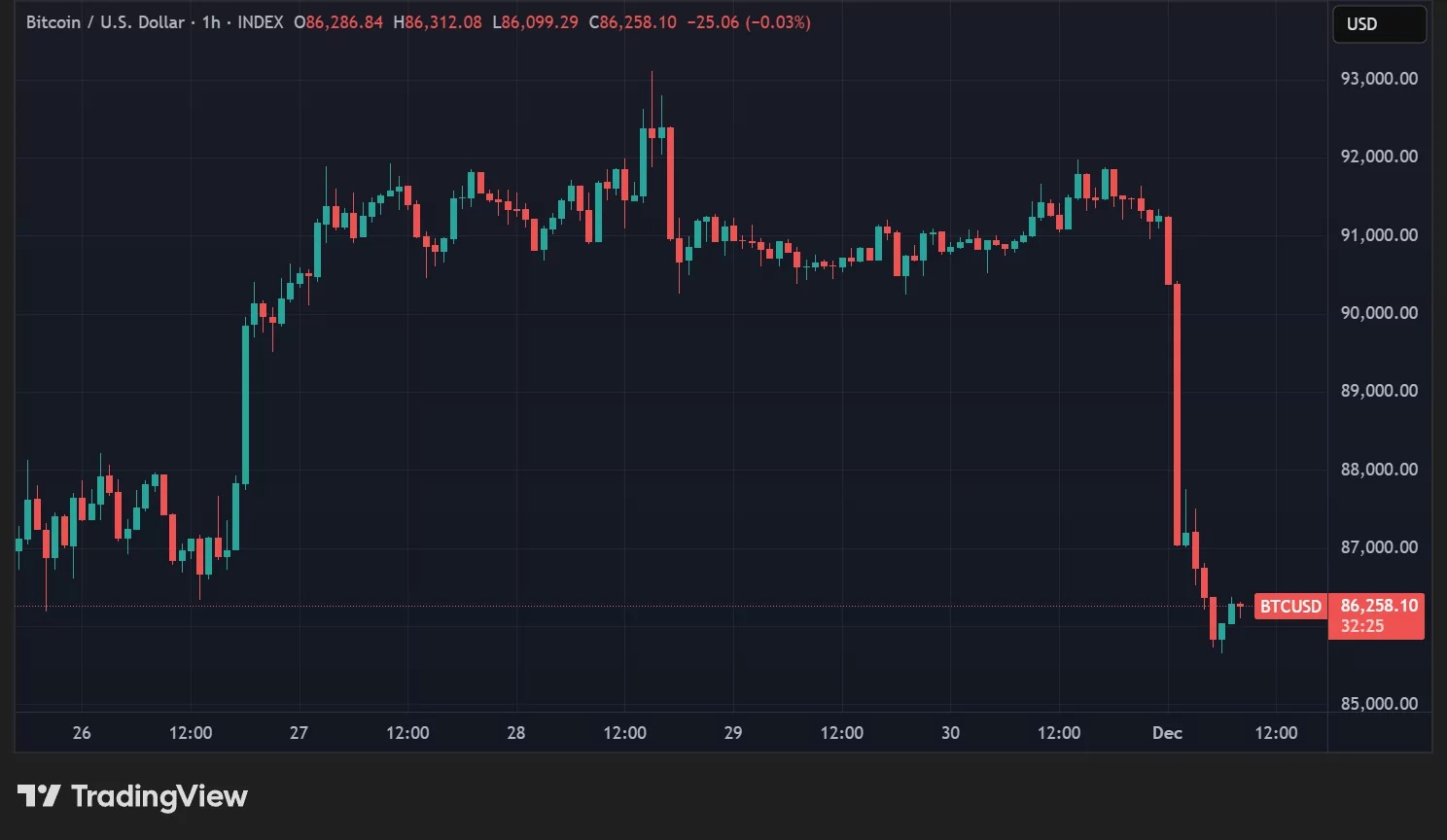
At the time of writing, one bitcoin is trading at $86,300, down 5.2% over 24 hours. More broadly, the rest of the cryptocurrency market is also feeling the pinch, with capitalization down 4.9% and the top 10 currencies losing more than 8% in some cases, such as ADA and DOGE:
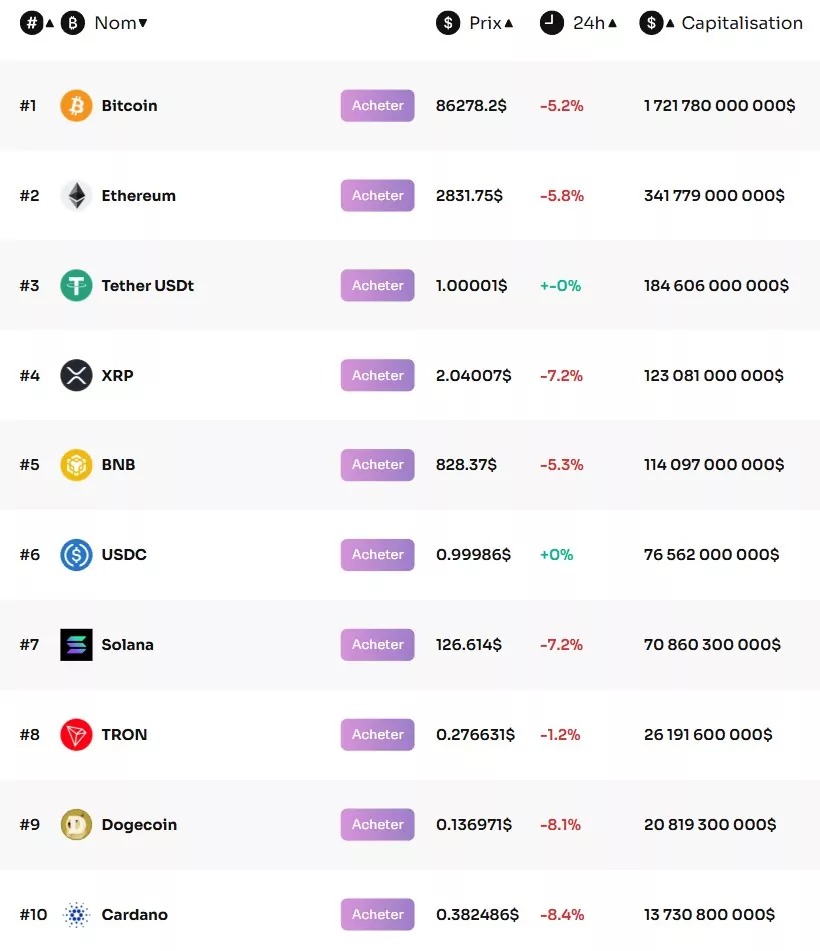
During each bearish (or bullish) leg, it is customary to look for reasons to explain the movement, and there are a few avenues that can be explored.
Probable reasons for this decline
In terms of liquidations on perpetual markets, we can note $641.5 million in positions that have been forcibly closed, and of these volumes, $567 million come from long positions. Admittedly, the amounts involved are substantial, but they are far from significant compared to what we see during waves of panic. Last Thursday, we revisited S&P Global’s warnings about Tether, which added to the prevailing gloom. Since then, Paolo Ardoino, CEO of Tether, has pointed out that Tether still has excess liquidity relative to its liabilities, with a difference of $30 billion at the end of last quarter. At the same time, the Treasury bills held by the company are said to generate $500 million in monthly profits.
On other fronts, Phong Le, CEO of Strategy, said Saturday on the “What Bitcoin Did” podcast that the company could potentially sell bitcoins if its market value fell below its net book value and it encountered difficulties raising new capital. However, he also stated, “I would not want our company to sell Bitcoin.”
In addition, the People’s Bank of China reiterated its position on cryptocurrencies on Saturday, echoing that of the country’s government:
Commercial activities related to cryptocurrencies are illegal financial activities. Stablecoins, a form of virtual currency, do not currently meet customer identification and anti-money laundering requirements effectively, exposing them to the risk of being used for money laundering, financing fraud, and illegal cross-border fund transfers.
However, these last three factors, although negative and likely to weigh on the overall climate of the ecosystem, do not seem to correspond to the timing of the decline, which accelerated from midnight Paris time.
Another explanation could lie with the Bank of Japan, as its governor, Kazuo Ueda, has hinted that rates could rise this month. In fact, the yield on 2-year Japanese bonds has now reached its highest level since 2008.
For years, the yen has been devalued against currencies such as the euro and the dollar, which has encouraged borrowing in yen to invest in foreign markets. If rates rise, this practice could become less profitable and lead to a return of capital to Japan, which may explain the market’s fears.
However, despite Kazuo Ueda’s comments, it should be noted that this possibility has been known for a long time. So, if the cryptocurrency market becomes this feverish, the current downtrend could be more than just a correction.