
The only thing growing faster than the price of Bitcoin is the number of hacks and thefts involving cryptocurrencies. In the first six months of 2025, no less than $3.1 billion was stolen. Between vicious social engineering and kidnappings, one question arises: what is the police doing?
A victim has 783 Bitcoins stolen, worth $91 million.
On Tuesday, August 19, a user had 783 Bitcoins stolen—worth $91 million at the Bitcoin exchange rate—according to information revealed by investigator ZachXBT.
The victim fell into a well-crafted trap of powerful social engineering: the thieves posed as customer service representatives for a hardware wallet, such as Trezor or Ledger. To complete the trap, they also took on the appearance of support for a centralized exchange platform.
The stolen funds were then split up, and the malicious actor made several deposits on Wasabi.
ZachXBT
After getting their hands on the loot, the criminals set about covering their tracks by making various transfers to Wasabi Wallet, a Bitcoin wallet that describes itself as “privacy-focused.” A tool “commonly used to cover their tracks,” according to Coindesk. This hack once again shines a light on crime that unscrupulously targets cryptocurrency holders. Exactly one year after a former Genesis customer was robbed of $243 million, again using a social engineering model.
Crime on the rise
Hacks and thefts in the sector are not slowing down: crypto investors lost $3.1 billion to criminals in the first six months of the year, more than in the whole of 2024.
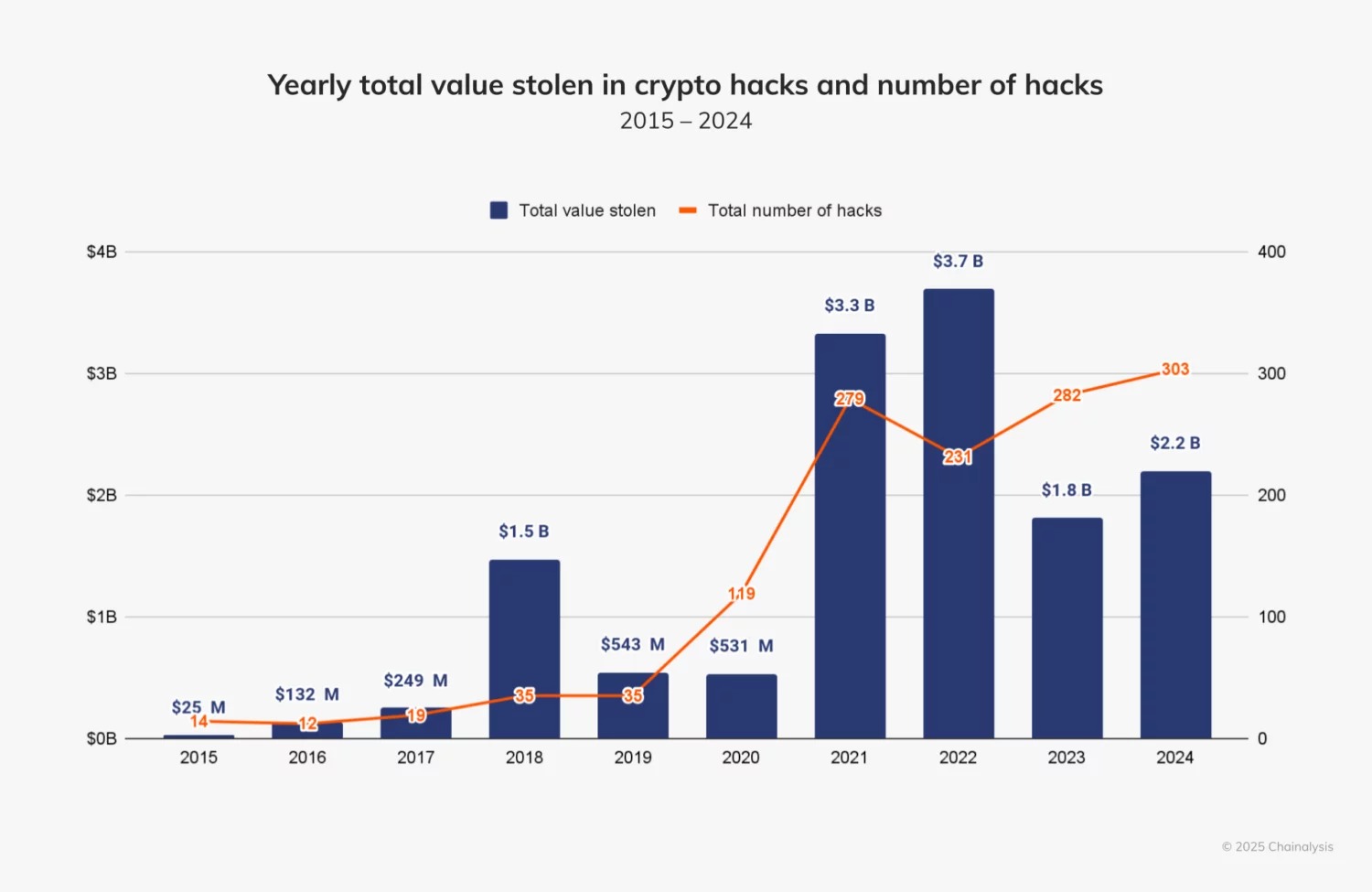
An upward trend, but figures that need to be put into perspective: with trading volumes continuing to rise and the number of users continuing to grow, the increase in criminal activity linked to this industry is only logical.
On the other hand, it would be good to know what measures the police and the justice system are taking to adapt to this paradigm shift. Criminals wasted no time in adapting to the new economy. Are the resources deployed by the public authorities up to the task?
Apart from the specialized media that relay information, much of the work is done by amateur investigators—in the non-professional sense, ZachXBT’s work is anything but amateurish.
When David Balland was kidnapped, it was an ad hoc team that intervened and froze the funds. It was put together on the spot by Nicolas Bacca, with industry specialists such as the Taskforce and key figures such as lawyer Sarah Compani.
Crypto entrepreneurs targeted by crime, but what is the police doing?
Kidnappings are legion in the world of cryptocurrencies.
As revealed in an investigation published in the newspaper Le Monde, a powerful criminal orchestrated a series of kidnappings targeting professionals in the sector.
Ransom demands and confinement with acts of torture have become the norm, all coordinated via “colleagues” who are incarcerated but have unrestricted access to iPhones from their cells.
While the mastermind behind this series of kidnappings, which deeply shocked the French crypto world, is now behind bars (for how long?), one question remains: are the pioneers of the new economy being left behind by the Republic?