
Tokenization is emerging as a central element in the growing connection between traditional finance and cryptocurrencies, facilitated by blockchain. This innovation is seen as essential to the modernization of U.S. markets—provided liquidity can keep pace.
Market tokenization within 2 years
The idea appears to be accepted by many players in traditional finance: the principle of tokenizing real-world assets (RWAs) will reshape certain sectors, ranging from the real estate market to stock exchanges and Treasury bonds.
This transformation is already well underway, driven by global asset management leader BlackRock following the launch of its BUIDL fund—which is particularly active in the booming U.S. Treasury bond market—as well as by certain banking giants eager to tokenize their clients’ deposits and transfers.
But this may only be the beginning of something much bigger, according to recent statements by the head of the U.S. SEC, Paul Atkins, on the financial news channel Fox Business. Indeed, he views tokenization as “the key to modernizing U.S. markets” in the coming years.
The next step comes with crypto-assets and market tokenization, and this will bring enormous benefits, particularly by reducing risk and making things much more predictable and transparent on-chain.
For Paul Atkins, tokenization should provide a solution to recurring issues in traditional finance—such as a lack of transparency, market accessibility, and risks related to settlement and delivery delays—to the point where it will become the dominant model within two years.
A Market Still in Search of Liquidity
However, some experts remain skeptical, such as Carlos Domingo, co-founder and CEO of Securitize—a company specializing in providing tokenization infrastructure for players like BlackRock and its BUIDL fund. The issue: theoretical accessibility that must first be backed by actual liquidity in practice.
Providing liquidity to an asset class appears to be just as important as ensuring its accessibility. There was this impression that tokenization would make illiquid assets liquid, and that hasn’t happened, because an illiquid asset remains illiquid whether you tokenize it or not.
Carlos Domingo
Currently, the tokenization market—estimated at $18 billion—focuses exclusively on highly liquid sectors, to the point of establishing the dollar as “the most successful tokenized asset” with a stablecoin market estimated at $300 billion.
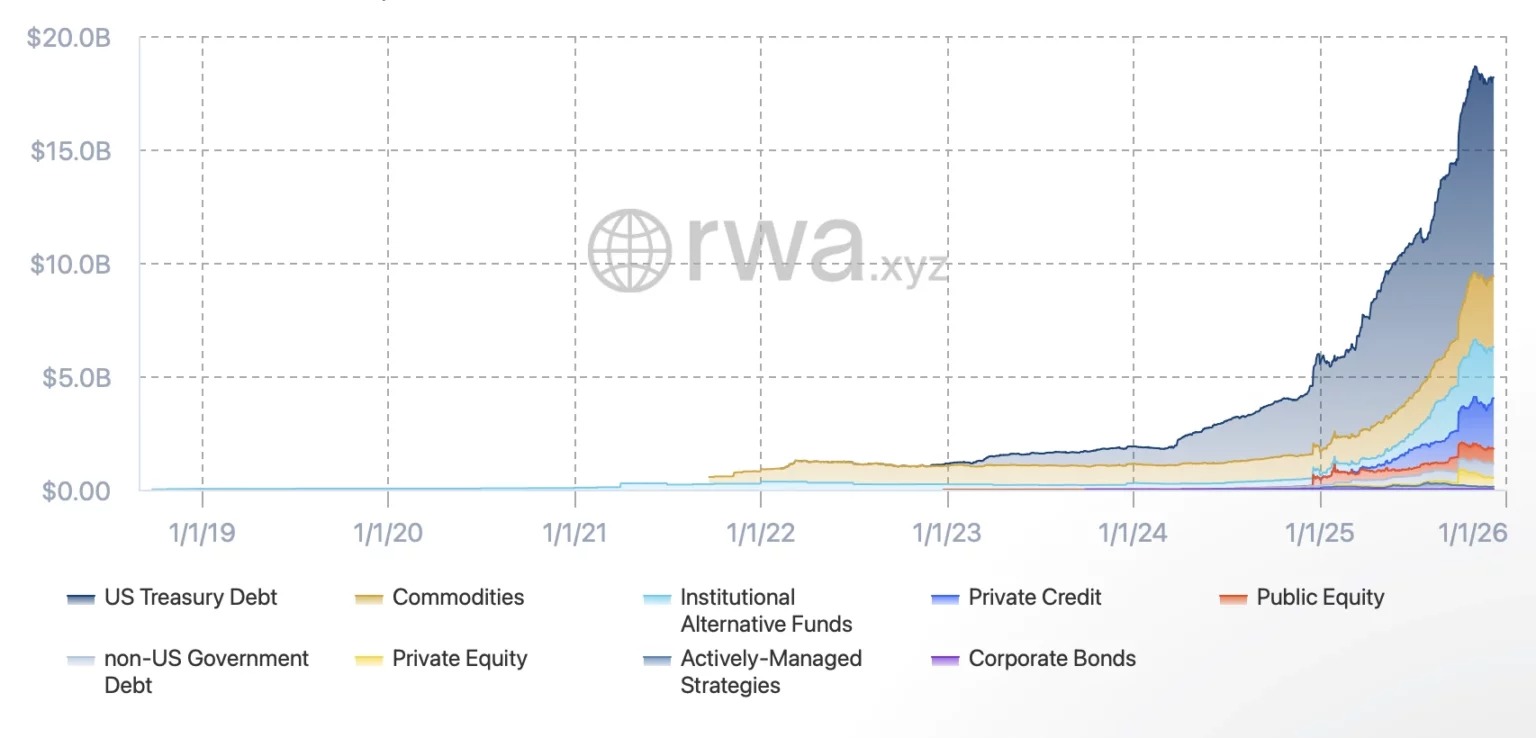
Tokenization Market Shares
At the same time, tokenized U.S. Treasury bonds have a market value of nearly $9 billion, while stocks struggle to reach $640 million.