
After weeks of doubt and uncertainty, MSCI has announced that it will not exclude Digital Asset Treasuries (DATs) from its indices. This is very good news for the sector, but it does come with certain safeguards.
MSCI will not exclude Digital Asset Treasuries (DATs) from its indices
The issue caused quite a stir at the end of last year when stock market giants such as MSCI and Nasdaq announced the possibility of removing Digital Asset Treasuries (DATs) from their indices. The reason was that cryptocurrencies accounted for too large a share of their balance sheets, but also that there was a problematic dilution of their shares in order to buy more and more.
This announcement quickly shook the entire emerging sector, which had already been battered by a sharp decline in the crypto market in the last few months of the year. This was an opportunity for the sector leader, Strategy, to step up and assert that DATs are fully-fledged “operational companies.”
Will this complaint have been heard by MSCI officials? In any case, the company has clearly decided not to implement its exclusion of Digital Asset Treasuries, according to the terms of its recent official announcement dated January 6.
MSCI has decided, at this stage, not to implement the proposal to exclude Digital Asset Treasury Companies (DATCOs) from the MSCI Global Investable Market indices as part of the February 2026 index review.
MSCI
Strategy’s MSTR stock rebounds
This is very good news for the Digital Asset Treasuries sector, especially considering that these companies’ business model essentially consists of offering exposure to the cryptocurrencies they hold through their stock market listing.
This reality is evident in real time, as following this announcement, Strategy’s MSTR stock has rebounded significantly by almost 7% at the time of writing, ahead of the US market opening this afternoon.
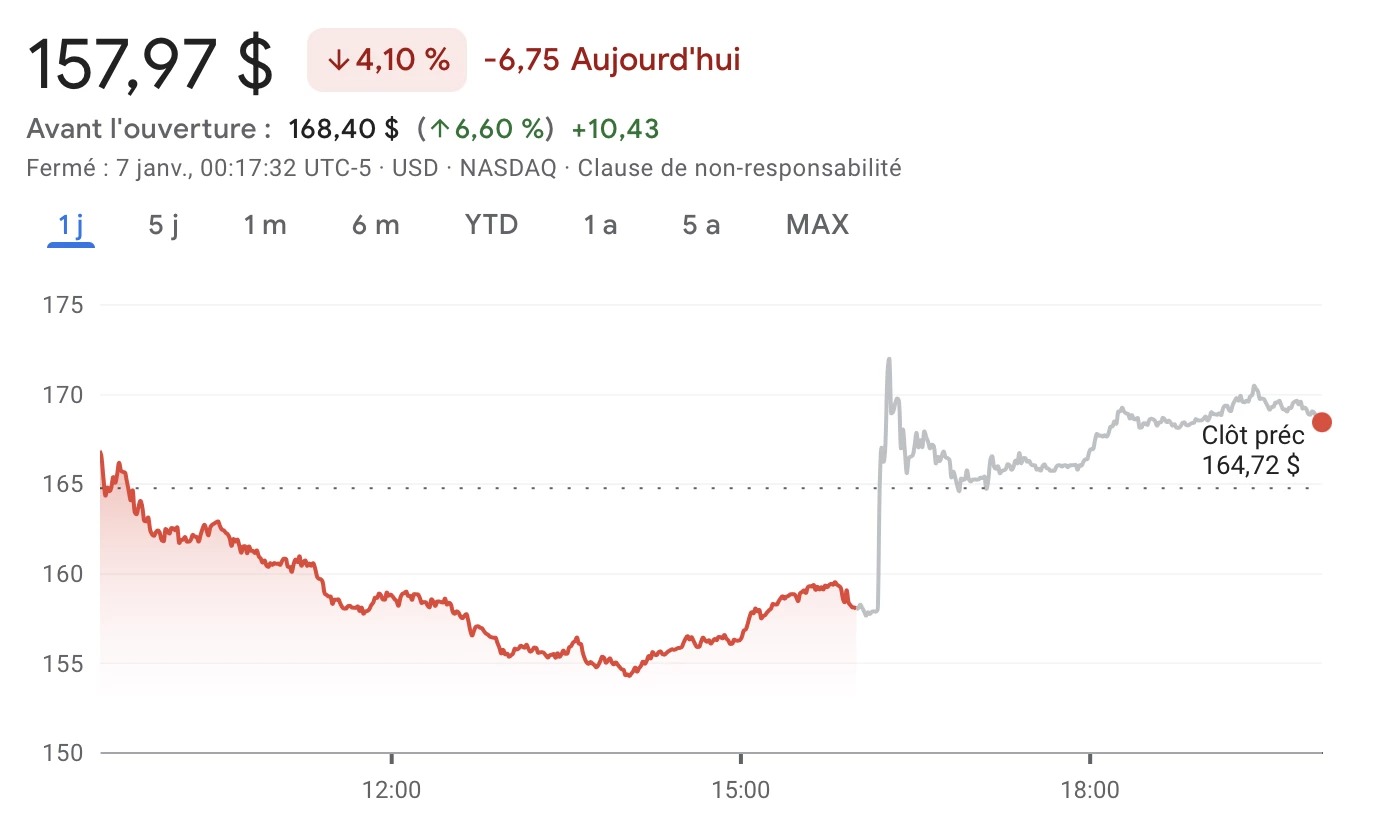
Should we expect a bullish return for Digital Asset Treasuries’ share price at the start of the year? This outlook remains to be confirmed, but it could allow Strategy to minimize the impact of its negative results, with $17.4 billion in Bitcoin losses reported for the end of 2025.
At the same time, analysts are highlighting certain specific conditions put in place by MSCI regarding these crypto treasury companies, particularly with regard to the non-inclusion of new share issues in the calculation of its indices. As a result, these transactions will not generate more incremental passive purchases when they are rebalanced.