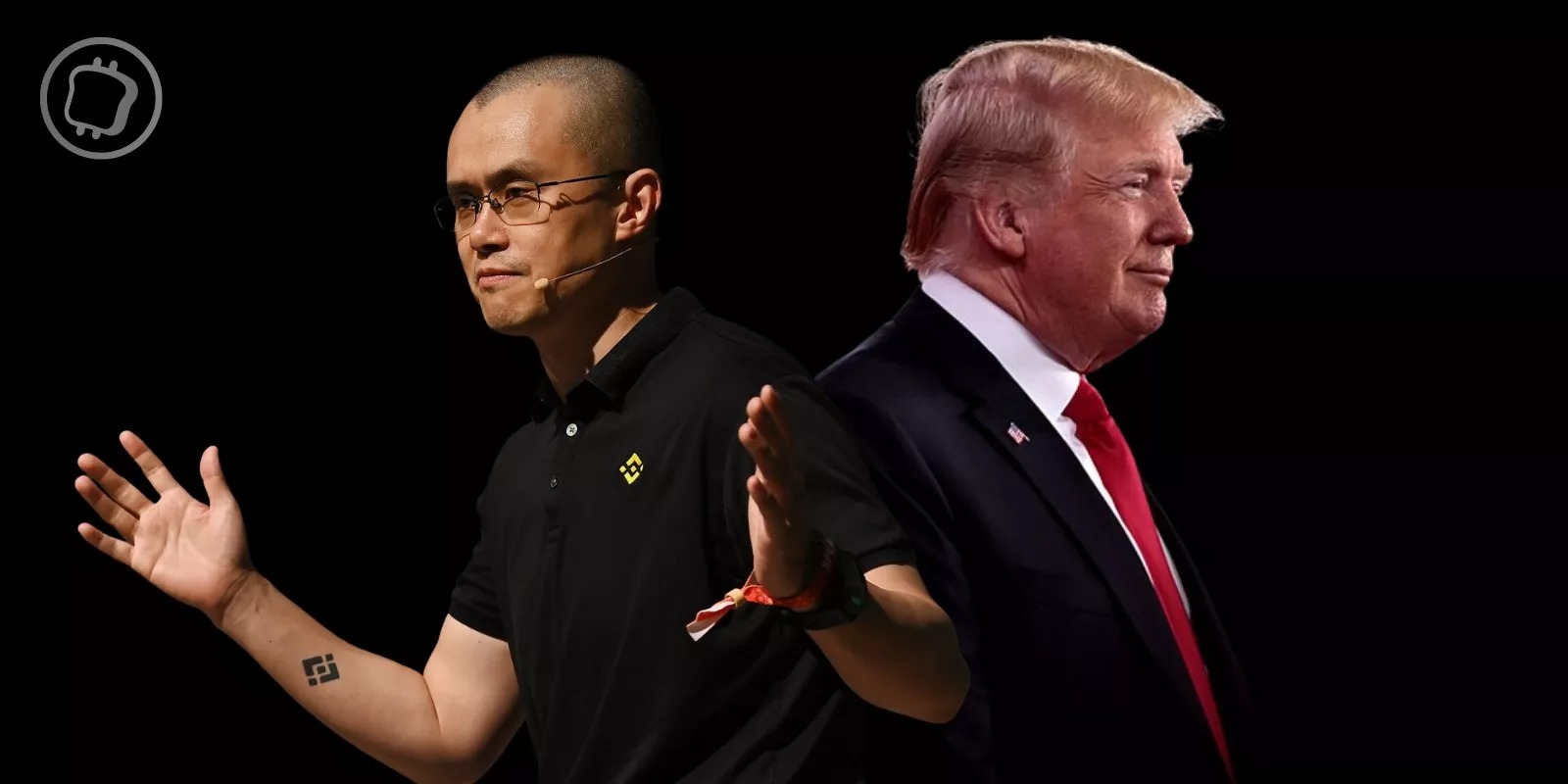
Donald Trump’s election coincided with a rise in Bitcoin, but also with the establishment of closer ties with the cryptocurrency sector, to the point of raising legitimate doubts about possible conflicts of interest.
The latest example is Changpeng Zhao’s strange involvement in the development of the USD1 stablecoin.
Since arriving at the White House, President Donald Trump has largely integrated the topic of cryptocurrencies into his political decisions. This recognition has led to a real regulatory shift, allowing stablecoins to expand like never before within traditional finance. At the same time, he has multiplied more or less dubious crypto projects. The worst example remains undoubtedly the very timely launch of his memecoin TRUMP, just days before his official inauguration. To this list we can also add his NFT collections and his family crypto project, World Liberty Financial (WLFI).
This interconnection would appear to be positive for the cryptocurrency sector, were it not regularly marred by allegations of corruption and insider trading. The latest example is a relationship considered problematic with the Binance platform and its founder, Changpeng Zhao, in the equally delicate case of the USD1 stablecoin.
A cryptocurrency pegged to the dollar, it is well positioned to take full advantage of the regulatory clarity urgently sought by the US president.
On-chain data, public announcements, and accounts from people close to the project show that Binance helped create the token, promote it, and participate in its largest known transaction.
It remains unclear whether Binance or Zhao received any payment from World Liberty in return. Bloomberg
In fact, the Binance platform is said to have provided “behind-the-scenes” assistance to the World Liberty Financial project. This involved writing the smart contract code intended to manage the USD1 stablecoin. Sources close to the matter speak of a “private” collaboration involving Changpeng Zhao. This collaboration did not stop there. In fact, it appears that this smart contract ultimately enabled a $2 billion transaction in USD1 stablecoins to be settled last May, the largest ever made with this token. The reason for this transfer involves the purchase of a stake in the Binance platform by an investment company based in the United Arab Emirates. This sum represents more than 90% of the amount of USD1 in circulation, still safely tucked away in the exchange’s wallet.
Of course, Changpeng Zhao and World Liberty Financial officials have denied everything.
Typical example of FUD. This was an investment agreement between an investor and a private company in Abu Dhabi. The transaction can be made in any currency: bitcoin, AED, USD or USD1. The choice of payer is generally left to their discretion.
Changpeng Zhao
A collective denial operation that would certainly have worked better if the founder of Binance had not announced at the same time his intention to seek a presidential pardon… from Donald Trump, in order to be able to resume leadership roles within the exchange. Suffice to say that the elements and synchronicity of this affair clearly give rise to legitimate doubt.