
In one year, the price of Bitcoin has doubled, reaching $123,000. This new record raises questions: is this simply a step in its global adoption or the peak before a cycle reversal? The macroeconomic and geopolitical context seems favorable, but the history of Bitcoin cycles calls for caution.
Bitcoin adoption is finally gaining momentum, as evidenced by its price
Since 2024, Bitcoin has been evolving in a particularly favorable economic environment, marked by accelerated institutional adoption thanks to spot ETFs. Lower interest rates, a return to accommodative monetary policies, and a clearer regulatory framework, particularly in the United States, are reinforcing its appeal as an asset that protects against inflation and government interference.
The rise in the price of BTC simply reflects the value its users place on it. For the majority of the world’s population, Bitcoin remains a speculative asset. However, for some individuals, companies, and even governments, it is the only real alternative to the traditional financial system.
For example, since 2021 in El Salvador, Bitcoin has represented a resurgence of monetary sovereignty, lost since the abandonment of the colón in 2001. Previously dependent on US monetary policy, the country is regaining a degree of autonomy thanks to Bitcoin.
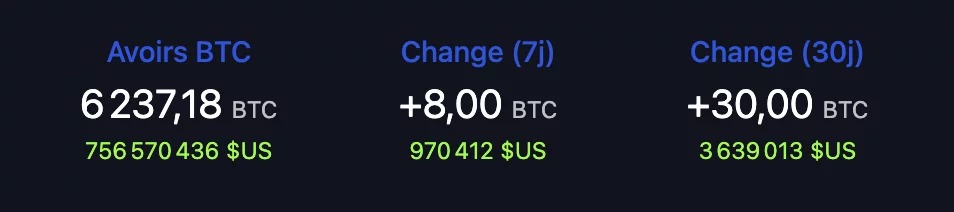
It now holds a reserve of 6,237 BTC, worth more than $750 million.
For dissident figures such as Julian Assange, Bitcoin is becoming the only way to own and exchange value. Governments and banks have extremely effective censorship powers, which they can exercise with minimal effort against individuals they dislike.
This use case extends to the 2 billion unbanked people around the world. Many of them have access to a smartphone and the internet, but banking services in their region are often inaccessible or too expensive. Under these conditions, Bitcoin is emerging as a credible alternative, offering a safer way to keep the fruits of their labor rather than keeping cash under a mattress, while protecting themselves from inflation in their local currency.
Finally, Bitcoin mining is becoming increasingly popular, particularly in states such as Texas, Japan, and Bhutan. It allows them to monetize their surplus energy, exploit unused losses, and stabilize the network, making it more resilient in the long term.
New record: $121,000 for a limit of 21,000,000 Bitcoins
At the end of last week, the price of Bitcoin broke through its previous high of January 2025, reaching $109,000.
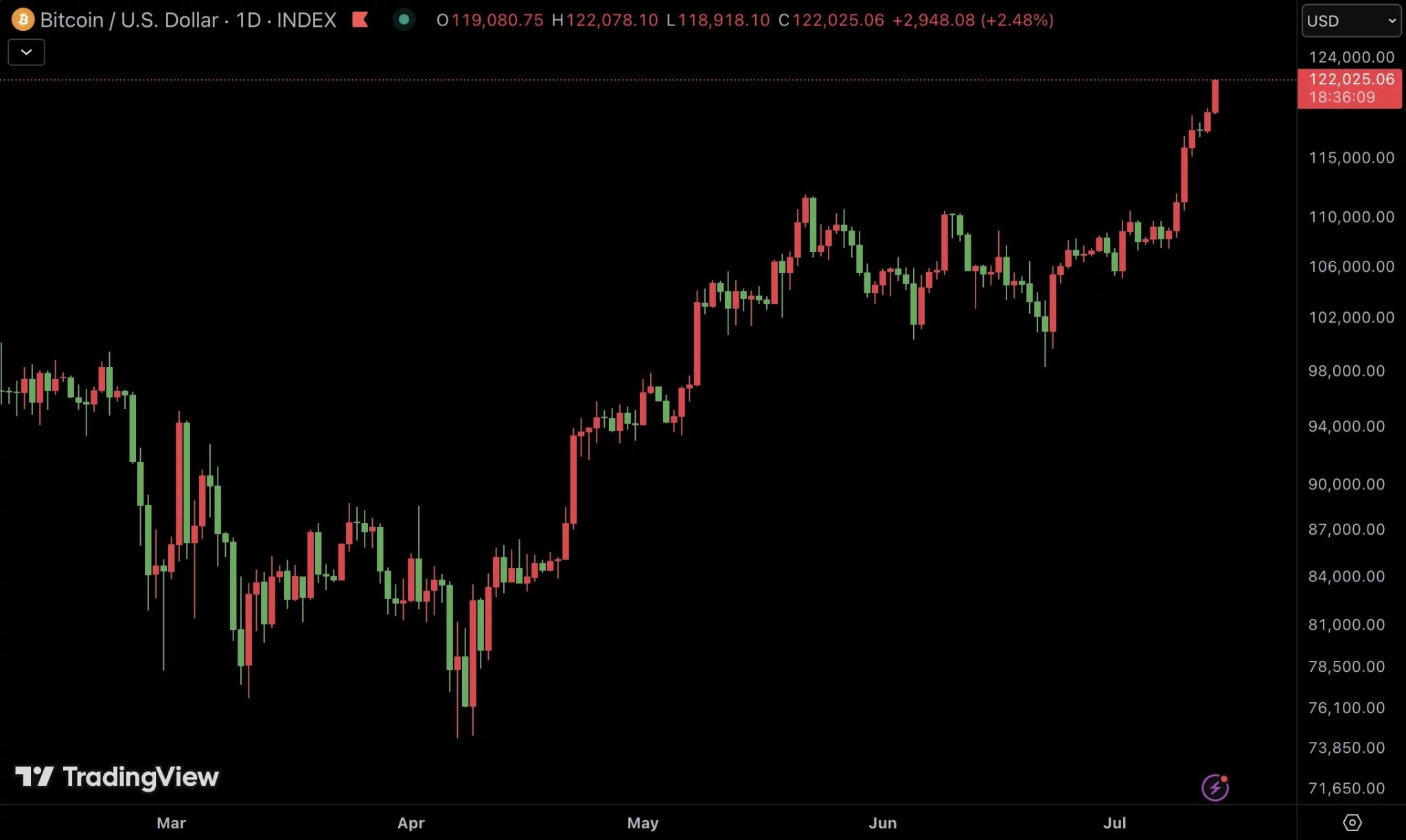
After a period of consolidation over the weekend, the upward trend resumed overnight from Sunday to Monday, pushing the price above $123,000. However, this new all-time high (ATH) is only seen in dollars, a currency that has weakened against other currencies since the beginning of the year. In comparison, against the euro, the price of BTC remains 2% below its all-time high of around $106,000. Not only is BTC still 11% below its January ATH (40.76 ounces of gold per BTC), but it also remains 3.5% below its 2021 peak. Currently, one bitcoin is trading at 36.15 ounces of gold.