It was brief, but for a few moments, the price of Bitcoin exceeded its previous record high of $111,980, and this was met with general indifference. This rise was driven in particular by BTC ETFs and bitcoin treasuries.
A record amid general indifference
What is most striking is not so much the price itself as the silence surrounding it. In 2021, every Bitcoin peak made the headlines on the news, in financial newspapers, and even in family conversations. Today? Radio silence. The mainstream media hardly mention it, except when there are (too many) kidnapping cases.
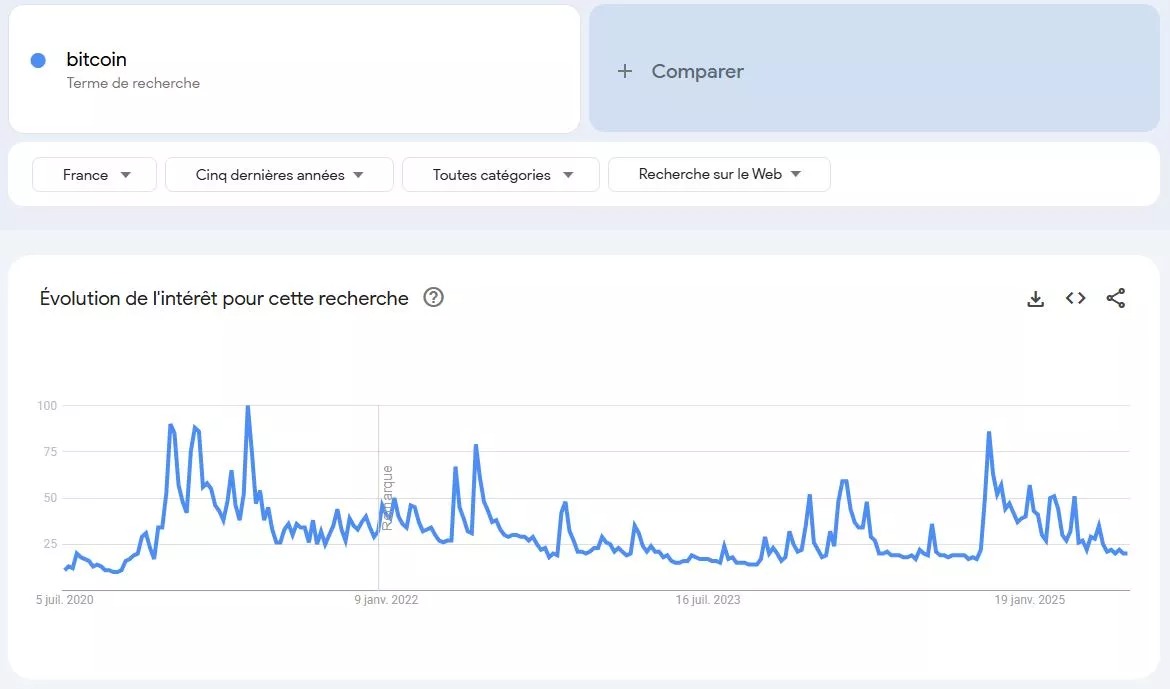
Why? Perhaps because this time around, the rise is no longer driven by the general public but by institutional purchases, which are quieter and more subdued. Growth is being fueled by ETFs and corporate cash reserves, far removed from the popular excitement of the previous bubble, as shown by this graph of Google searches in France for the word “bitcoin.”
ETFs and Bitcoin Treasuries: the real drivers
If Bitcoin is reaching new heights, it owes much of this to the wave of spot Bitcoin ETFs. Since their approval in the United States, giants such as BlackRock and Fidelity have been holding impressive amounts of BTC for their clients. More than 1.2 million bitcoins, including 700,000 in BlackRock’s iShare Bitcoin Trust (IBIT) ETF.
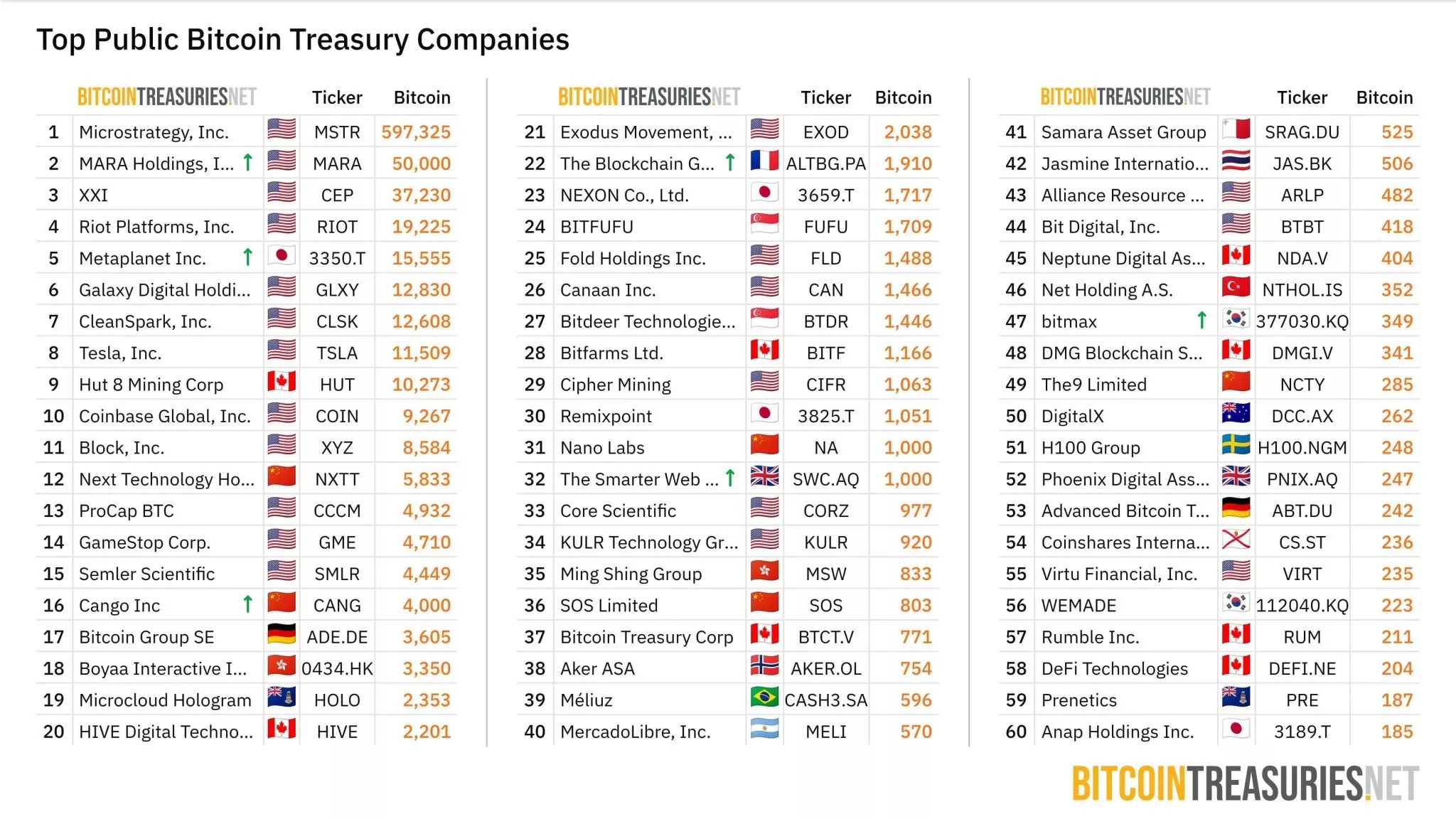
At the same time, “Bitcoin Treasuries,” companies that choose to hold Bitcoin on their balance sheets, are reinforcing this momentum. Every day, a new publicly traded company announces that it is raising funds to launch a Bitcoin treasury, such as the French company Sequans and The Blockchain Group.
According to Bitcoin Treasuries, 143 publicly traded companies hold more than 852,000 bitcoins.
In euros, no ATH yet
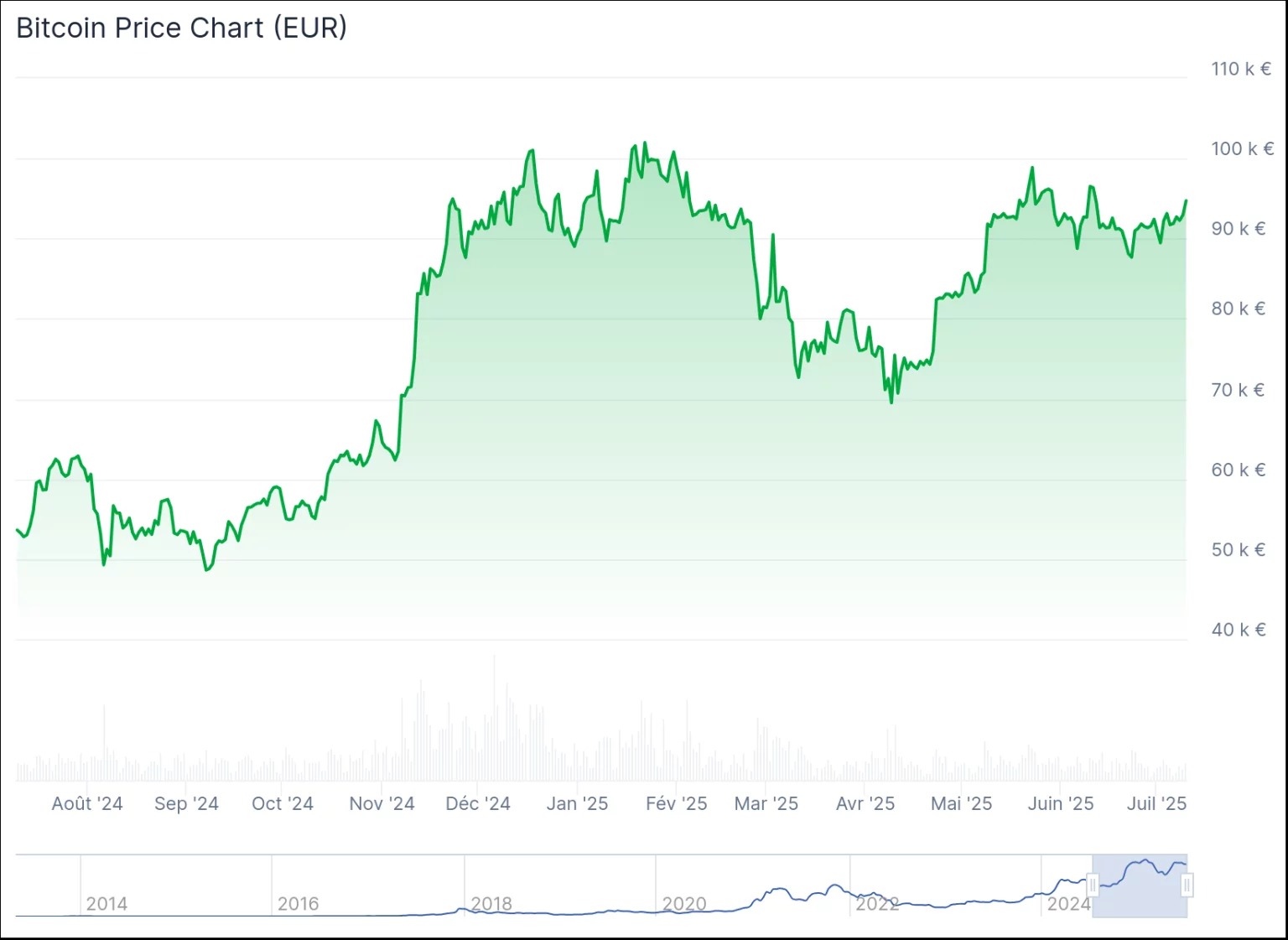
In euros, Bitcoin has not yet broken its all-time high. Why? Because the dollar has weakened against the euro in recent months.
Bitcoin’s ATH in euros is €102,000 and its current price is hovering around €95,000.