
The constantly evolving and highly competitive blockchain sector shines a spotlight on certain projects, to the obvious detriment of other, less popular ones. This decline in interest is affecting the Avalanche ecosystem, which is seeking a new lease on life with its upcoming Granite upgrade.
Avalanche: A Blockchain in Search of Activity
Blockchains evolve in step with advancements and use cases applied to the cryptocurrency ecosystem, as was the case in 2020 with the launch of Avalanche, which aimed to provide an effective solution to the congestion issues faced by the market leader, Ethereum.
This blockchain quickly gained significant adoption, to the point where it accounted for 6.5% of the total value locked (TVL) in the decentralized finance (DeFi) sector in February 2022, alongside iconic players such as Solana (2.5%) and the BNB Chain (7%).
But things have changed significantly since then, to the point where the Avalanche blockchain’s TVL has plummeted by 90% from its December 2021 peak to $11.5 billion, with a current estimated value of $1.26 billion—representing just 1% of the DeFi market.
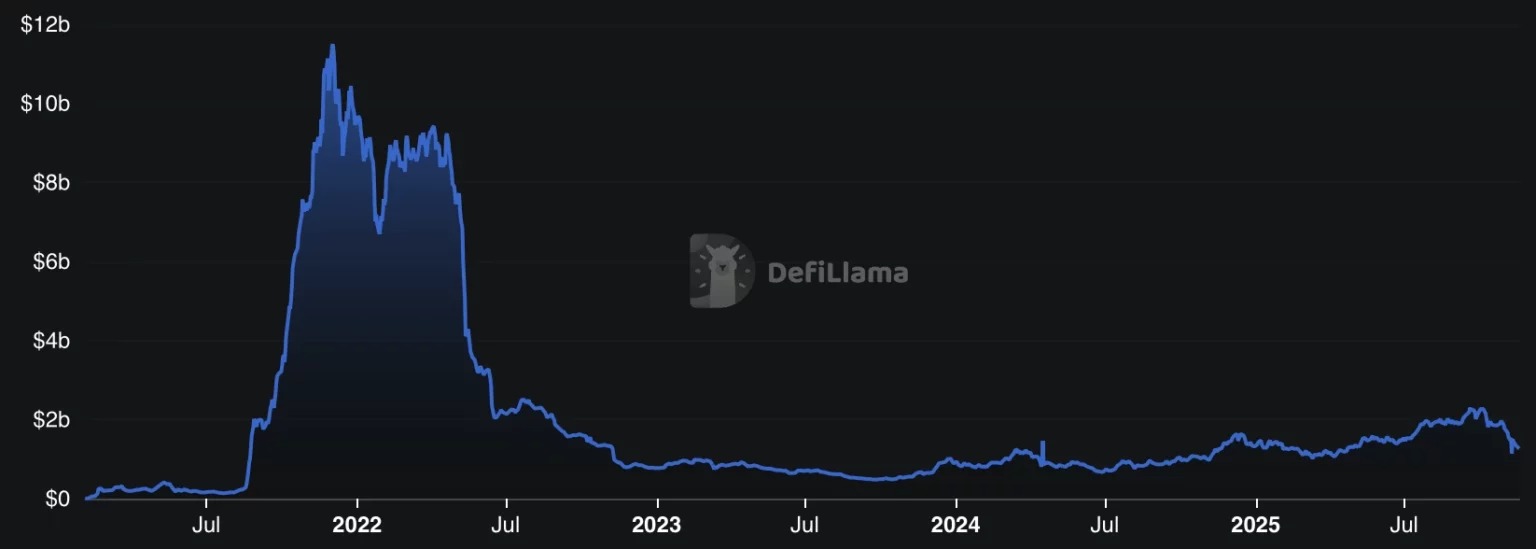
Avalanche blockchain TVL
In the face of this notable decline in interest, its developers continue to roll out major updates in an effort to revitalize its ecosystem, such as the upcoming “Granite” upgrade announced for November 19.
On the agenda: “3 revolutionary improvements that will make the network faster, more secure, and much easier to use.”
Granite Upgrade Coming Soon
In practice, this Granite upgrade will introduce three key changes (ACP) to the Avalanche blockchain, which are:
- More stable cross-chain messaging;
- Biometric authentication;
- Dynamic block times.
The first enhancement in this upgrade involves more efficient cross-chain messaging, capable of reducing computational costs while also ensuring better transaction finality (fewer failures) and more reliable multi-chain dApps.
At the same time, more dynamic management will allow validators to adjust block times based on network conditions, bringing them down to less than a second. This change should enable instant transactions for swaps and DeFi transactions.
Finally, data security will be ensured through the implementation of biometric authentication designed to simplify the user experience.