
A winter storm with extreme conditions is currently hitting the United States, putting its power grid under severe strain. In this context, Bitcoin miners have decided to unplug their machines, leading to a significant drop in its hashrate. We take stock of the situation…
US Bitcoin miners adapt to winter storm
The United States is currently facing a winter storm of rare intensity, with polar-like temperatures causing more than a dozen deaths in recent days. This situation is putting a strain on the country’s power grid as it struggles to meet national demand.
In this particular context, Bitcoin miners are deciding—or are being strongly encouraged—to implement a shutdown strategy, which consists of disconnecting some of their machines in order to lighten the load on the grid. And since the United States is home to the largest players in this industry, this inevitably has an impact on its hashrate.
This situation was highlighted by Ki Young Ju, founder of the on-chain analysis platform CryptoQuant, on the X network, with a notable drop of more than 30% in computing power over the last few days, causing it to fall below the 700 exahash per second (EH/s) level on January 25.
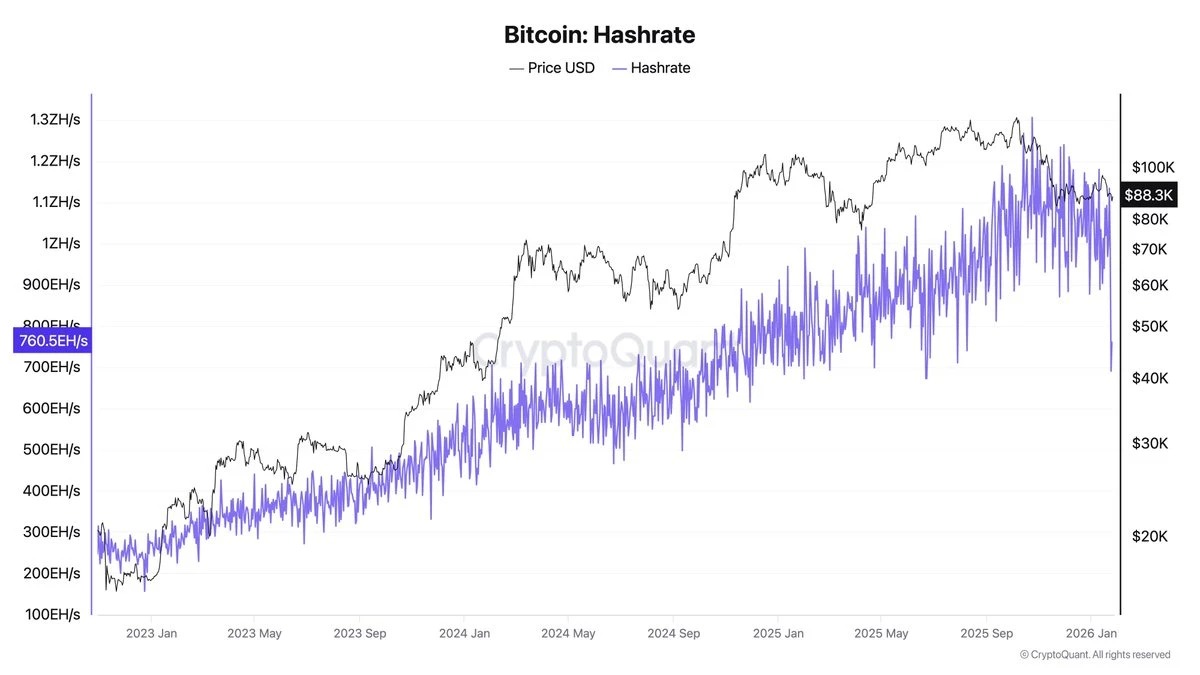
Faced with this historic storm, the Bitcoin blockchain is operating at a slower pace, following a significant overall drop in its hashrate for all of its US players, to the point of increasing its block production time to more than 12 minutes—compared to an average of 10 minutes in a normal situation—and greatly reducing BTC production.
The hashrate of the leader FoundryUSA falls by 60%
This decline in the computing power allocated to the Bitcoin blockchain particularly affects certain players in this industry, such as the leader FoundryUSA, which has seen its hashrate fall significantly by around 60% since the end of last week, or approximately 200 EH/s on its own.
Other American players in the sector are also experiencing notable declines, such as Luxor, which has seen its hashrate drop from 45 EH/s to less than 20 EH/s over the same period.
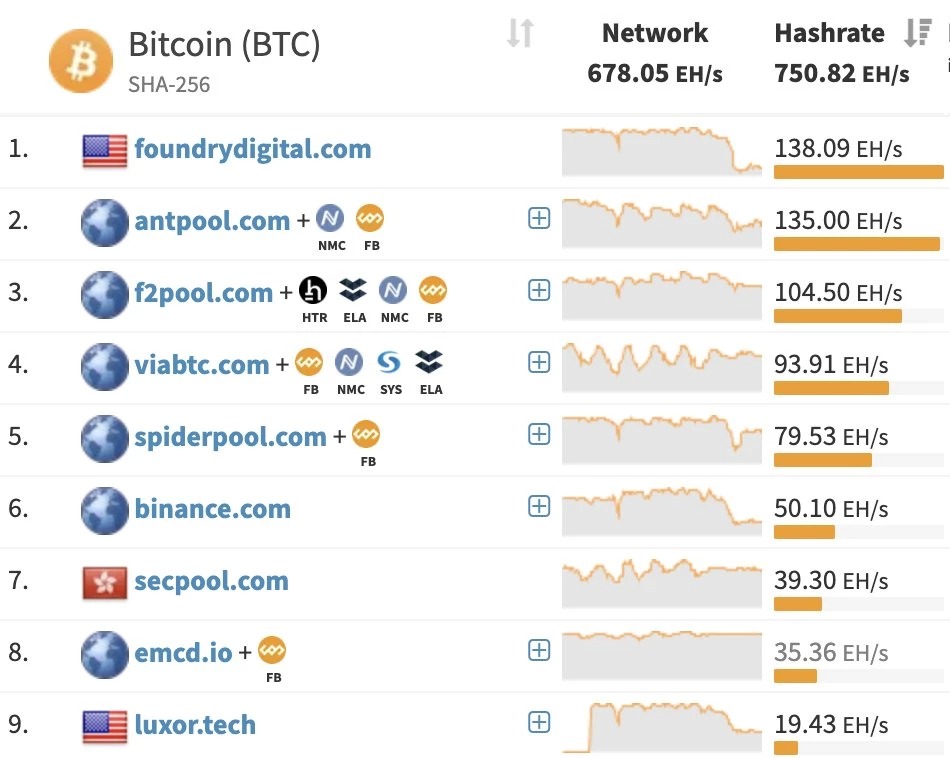
However, the resilience of the Bitcoin blockchain is already beginning to take effect, with computing power showing a return to growth above 900 EH/s over the last few hours and a readjustment of the difficulty already underway.
This extreme situation demonstrates the ability of the Bitcoin mining industry to quickly adapt its energy consumption to the state of the network and the amount of electricity actually available, thus becoming the main players in its stabilization and increased profitability.