
As BTC attempts to establish a new bullish push, the short-term momentum remains constructive but fragile. The zone between $101,000 and $120,000 is home to significant supply that could slow the price’s ascent.
Attempted bullish recovery
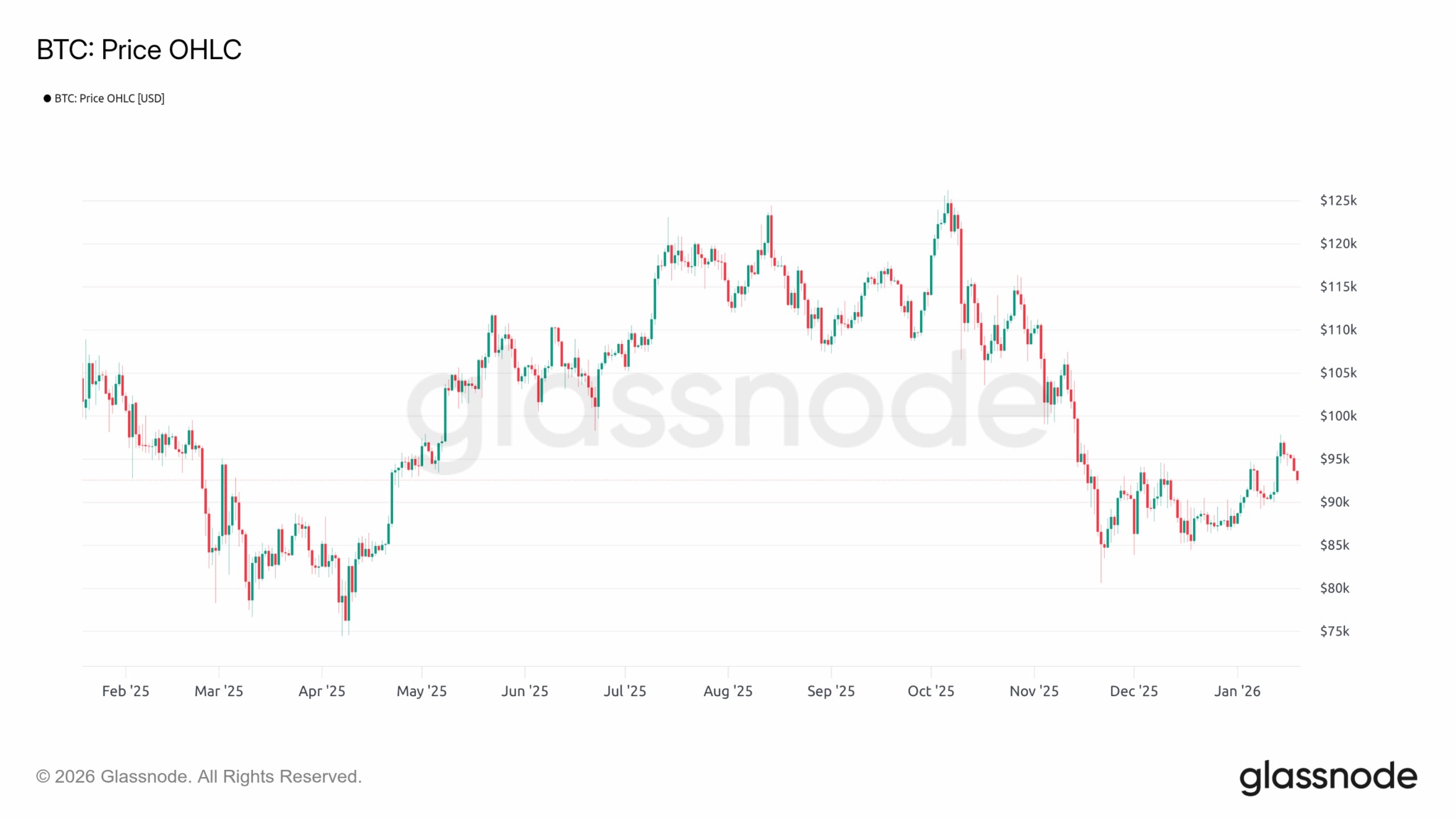
As the BTC price actively attempts to break through the $95,000 resistance level, it appears to be encountering some difficulties. Several rejections are slowing its price rise, although the overall trend remains bullish in the short term.
At the same time, there are signs of significant spending, suggesting that some investors are choosing to exit the market without waiting any longer.
Will this selling pressure be enough to hinder BTC’s recovery?
Price targets
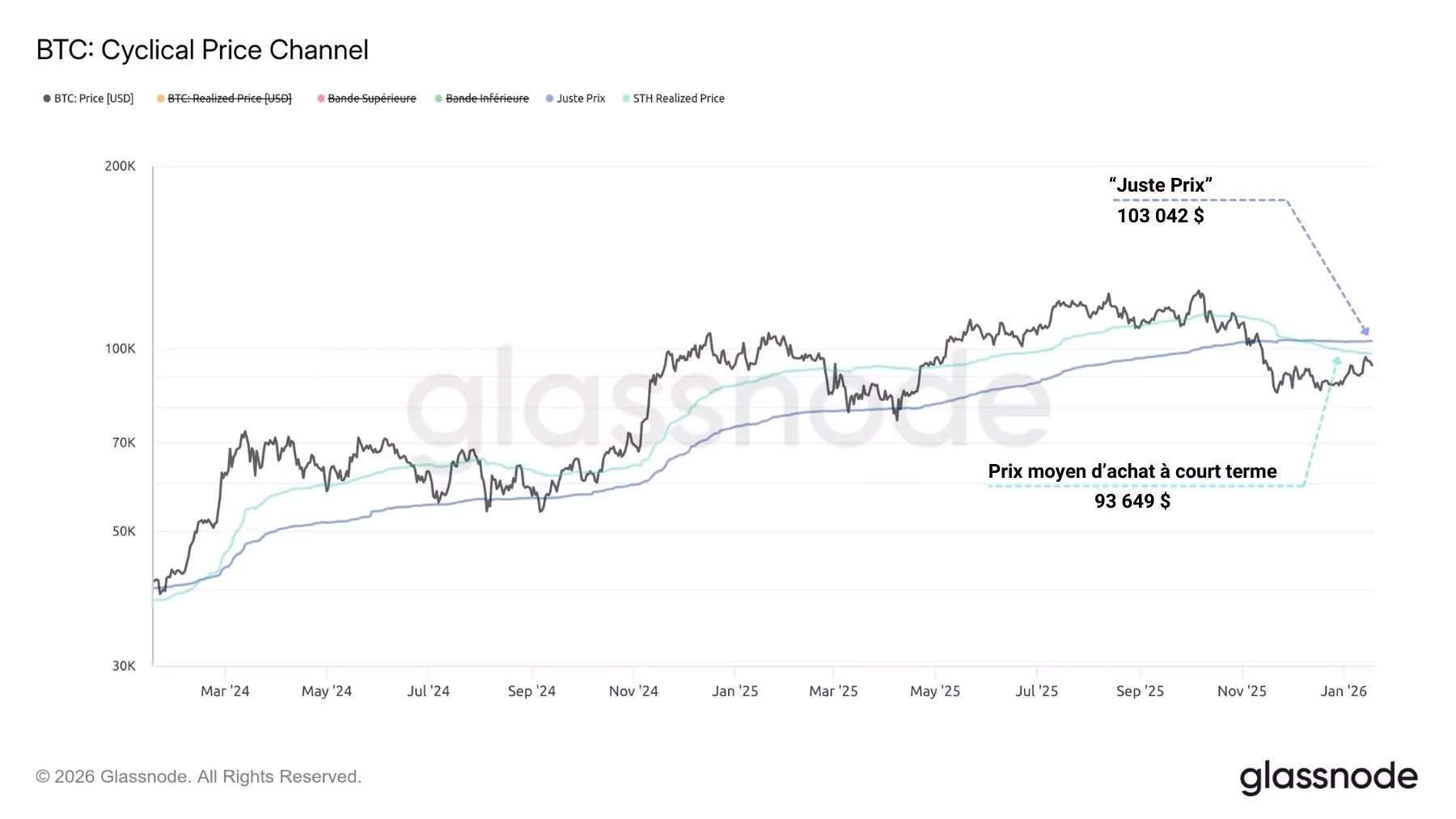
For the first time in the 2023–2025 bull cycle, the BTC price is trading below two key price levels:
- the “Fair Price,” which reflects the average purchase price of non-dormant BTCs;
- the short-term average purchase price, corresponding to the average cost of recently accumulated BTC.
By falling below these thresholds in November 2025, BTC entered bear market territory before consolidating above $80,000.
The current challenge is to determine whether the market will manage to break through these two levels on the upside in order to reestablish a healthy uptrend, or whether they will act as resistance levels capable of blocking BTC’s recovery.
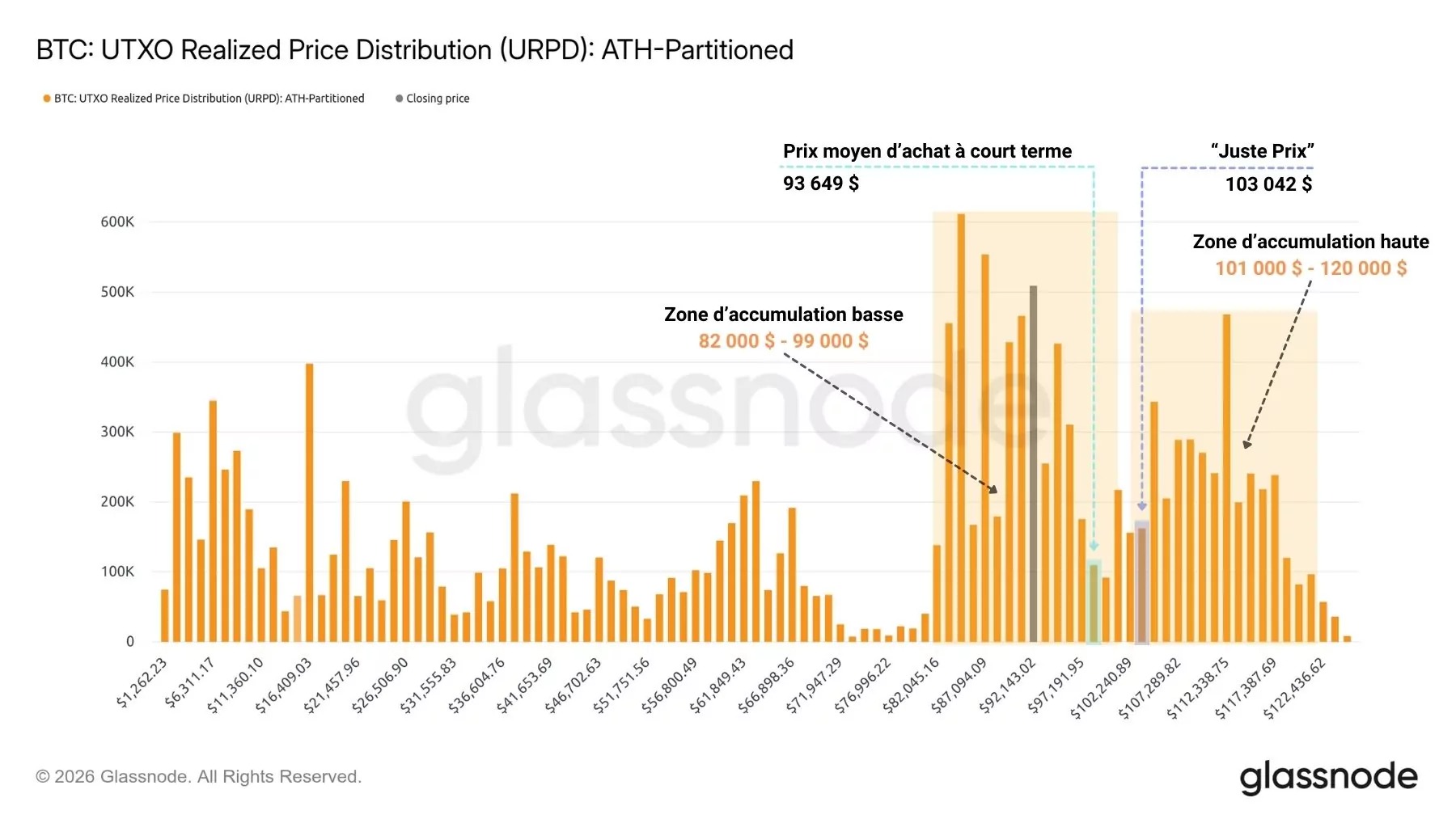
Thanks to the URPD, which records all BTC purchase prices during their last movement, it is possible to draw up an accurate topography of the supply in circulation.
This metric highlights areas where large amounts of BTC have been accumulated or distributed.
Currently, two major accumulation clusters can be identified:
- between $82,000 and $99,000, corresponding to the low accumulation zone formed after the April–May 2025 correction;
- between $101,000 and $120,000, corresponding to the high accumulation zone, formed at the end of 2025, trapping the latest entrants in a state of unrealized loss, prompting them to take losses.
It should be noted that the short-term average purchase price and the “Fair Price” are located precisely at the boundary between these two supply blocks.
The BTC price will need to break through these levels and re-enter the cluster between $101,000 and $120,000 in order to maintain bullish momentum in the coming weeks.
However, it is highly likely that BTC’s rise through this accumulation cluster will take time, as this area represents a potential supply zone where some investors will seek to offload their holdings in anticipation of a dead cat bounce scenario.
Selling behavior
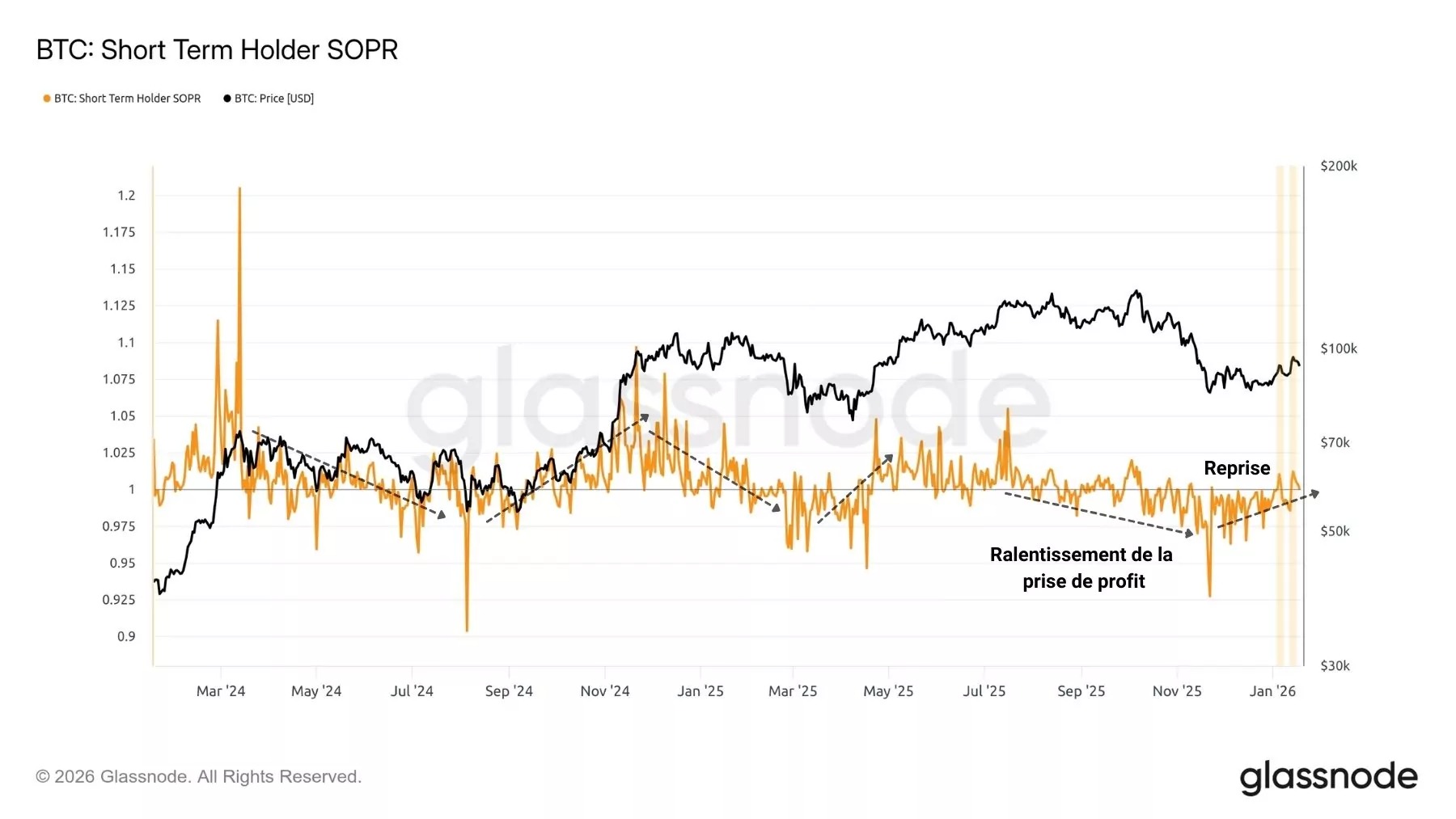
It is essential to note that this potential selling behavior has already been evident since BTC attempted to break above $95,000, indicating that some investors are currently divesting their positions.
Indeed, the STH-SOPR, an indicator of the profitability of short-term investors’ spending, has recorded two new profit-taking peaks, coinciding with the two attempts at a bullish push by BTC observed during January.
While the return of this indicator above 1 is a very constructive signal regarding the psychological and financial conditions of short-term investors, it also indicates that each recent rise has been exploited to secure quick profits.
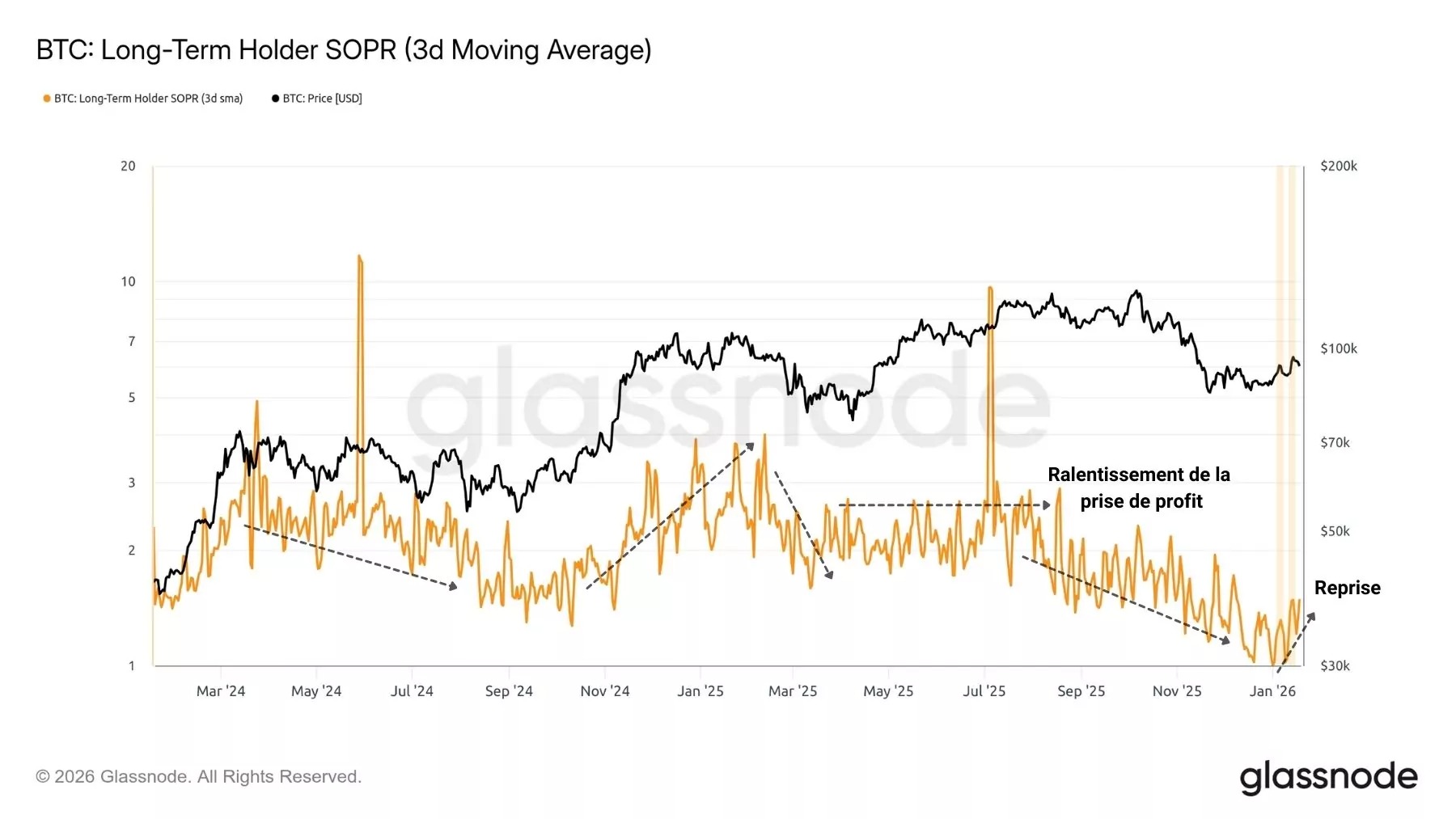
A similar observation can be made for long-term investors, whose return on expenditure also rose again in January.
Here again, profit-taking behavior appears to be in line with the two recent BTC bull runs.
This means that long-term investors have also taken advantage of the current momentum to lighten their positions, a signal that does not reflect an optimal level of confidence.
A real battle thus seems to be brewing in the order books, pitting buying pressure against profit-taking, to determine the direction of the short-term trend.
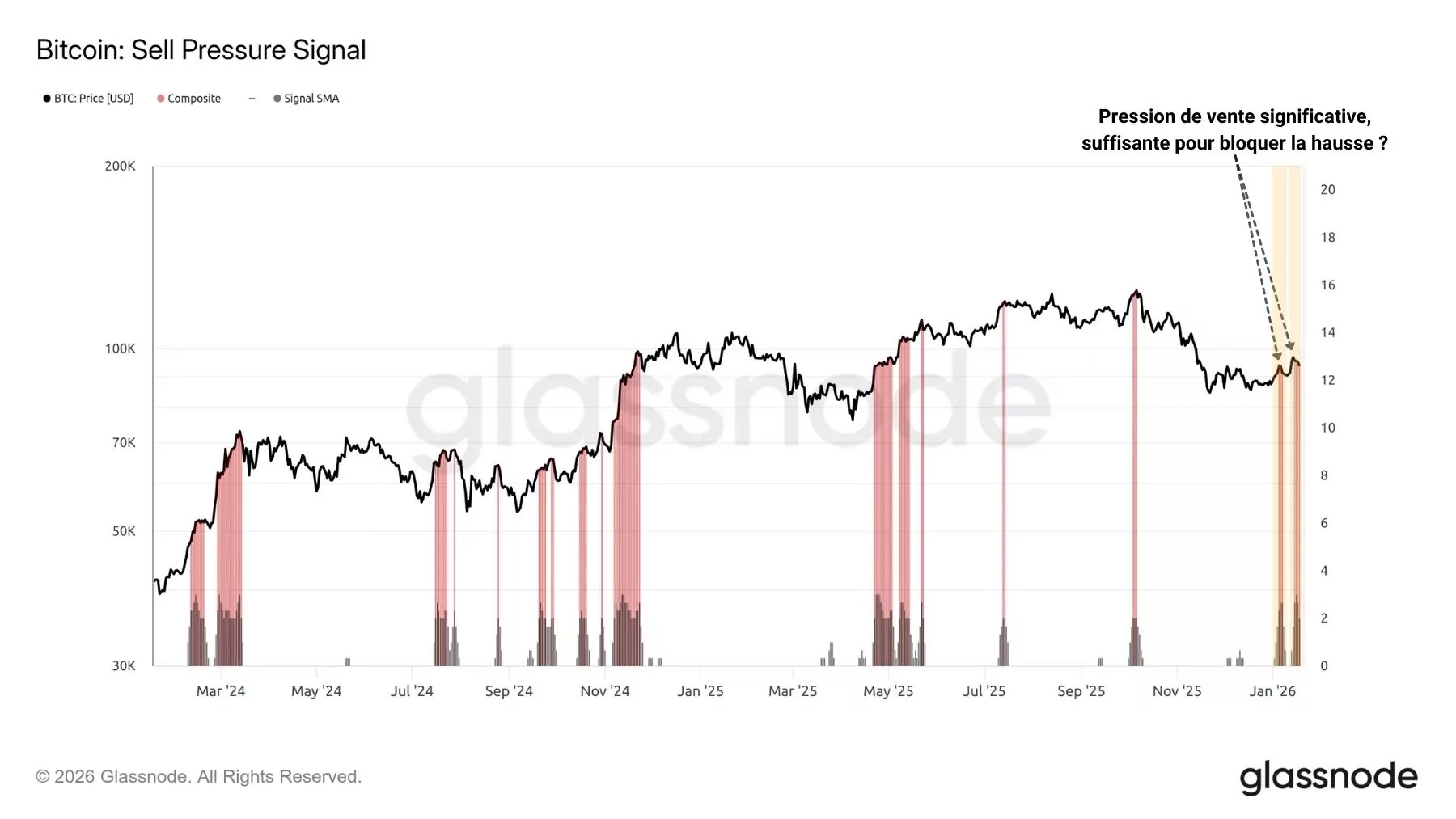
To illustrate this point, the on-chain model presented below aggregates several data points related to investor profitability and spending behavior to identify periods when selling pressure intensifies (in red).
Two distinct signals of significant selling pressure can be clearly observed: when BTC hit a ceiling around $95,000, and then when it attempted to break through.
This data confirms that significant sales volumes were expressed at these levels, contributing to a slowdown in the local trend and a price correction.
Such behavior has been observed many times in the past and frequently precedes periods of consolidation or even deeper corrections.
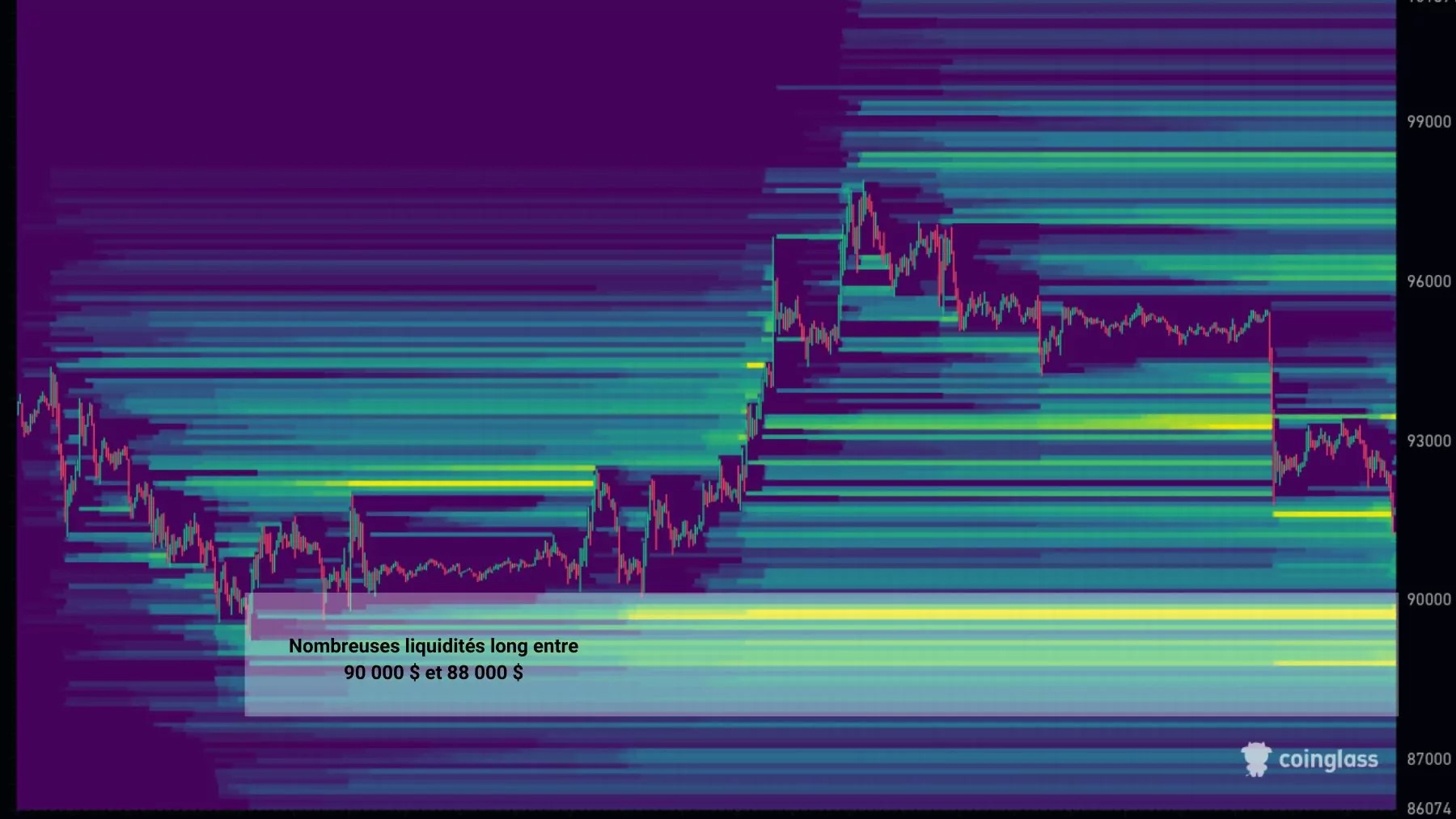
Finally, let’s mention the recent liquidations of long positions on the derivatives markets, which have also contributed to the BTC correction observed in recent hours.
With a lot of long liquidity having accumulated below the price since mid-January, this has generated an excess of speculative risk that the uptrend could have done without.
The market currently seems to be seeking this liquidity around the $90,000 mark, below which there is a significant accumulation of liquidity that it would be preferable to avoid revisiting in order to preserve viable upward momentum.
Summary of this on-chain analysis of Bitcoin (BTC)
As BTC attempts to break through the key resistance level of $95,000, the short-term momentum remains constructive but fragile.
While the on-chain structure suggests potential for a recovery, the data shows that each bullish attempt is accompanied by significant profit-taking, both among short-term investors and long-term holders.
The $101,000 to $120,000 zone now represents a major hurdle, with significant supply likely to slow the price’s ascent.
In the short term, the balance between buying pressure and selling behavior will be decisive: either the market manages to absorb this supply and restart a sustainable upward momentum, or a phase of consolidation, or even a deeper correction, could take over.