Société Générale, the world’s 25th largest bank, is diving headfirst into the decentralized credit market—lending, $130 billion in September 2025—with Morpho and two other French companies. Thanks to this, France has risen to the top spot in European decentralized finance.
France leads Europe in decentralized finance
SG Forge already made history in 2023 with the launch of two stablecoins. Named CoinVertibles euro (EURCV) and dollar (USDCV), they are the first to have been issued by a European financial institution regulated under MiCA.
Stablecoins occupy a “central” place in Société Générale – FORGE’s approach. These particular cryptocurrencies mimic the exchange rates of traditional currencies such as the euro or the dollar.
To guarantee their parity, each “blockchain euro” is backed by a “physical euro” in the issuing company’s vaults, often via Treasury bills. In other words, debt; these “blockchain currencies” indirectly finance governments.
They therefore play a geopolitical and economic role that goes far beyond the cryptocurrency market.
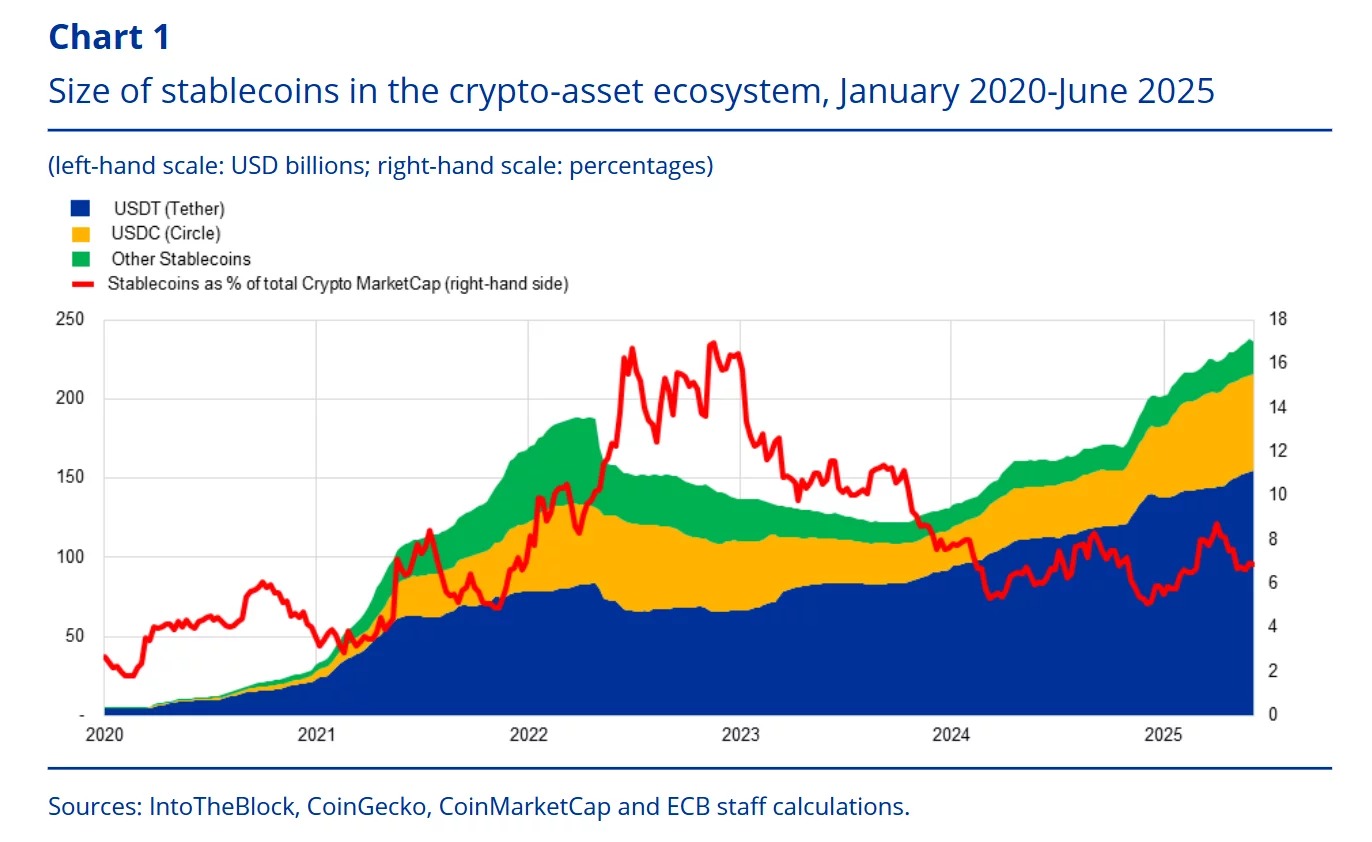
In order to compete with the dollar’s monopoly in this ecosystem (97% dominance), it wasn’t enough to create a stablecoin: it also had to find users.
SG Forge killed two birds with one stone by connecting its stablecoins to decentralized finance.
It gives European stablecoins a raison d’être (and a market), and opens the doors of decentralized finance to European institutions. All within a 100% regulated, French, and MiCA-compliant framework.
When contacted by TCN, Société Générale said it was “proud” to be leading a project with French roots alongside world-class Web3 and financial players. According to the bank, this “unprecedented” project marks a new step forward in the relationship between traditional finance and the crypto world.
The French connection of DeFi: SG Forge, Morpho, MEV Capital & Spiko
The Channel Tunnel of decentralized finance. SG Forge and Morpho have joined forces with other French companies with the aim of “exploiting global liquidity and offering users the best possible rates,” says Merlin Egalite, co-founder of Morpho.
It all starts with SG Forge. Customers deposit euros and receive stablecoins. The “modified” money can now access decentralized finance. It is sent to a lending service, Morpho. On Morpho, lenders provide cash and earn returns; borrowers receive cash and pay fees.
This company is one of the most developed lending services (protocols) in the world. Thanks to this, SG Forge customers’ money circulates well, and lenders are easily connected with borrowers around the world.
To further optimize this connection, the SG Forge x Morpho duo has called on a third French company, MEV Capital. This company is responsible for various tasks, including optimal capital allocation and risk management. This is known as a curator.
To borrow money, collateral must be deposited. This can take the form of Bitcoin, Ether, or shares in tokenized money market funds (USTBL & EUTBL) issued by Spiko, a fourth French company.
The lending system allows borrowers to obtain cash without selling their cryptocurrencies. Lenders, meanwhile, generate returns without any effort. And these returns are higher than those offered by traditional finance, as there are no intermediaries in decentralized finance.
This 100% French initiative opens the door for European financial institutions to a new form of finance that is faster and more profitable. All this while complying with European MiCA regulations.
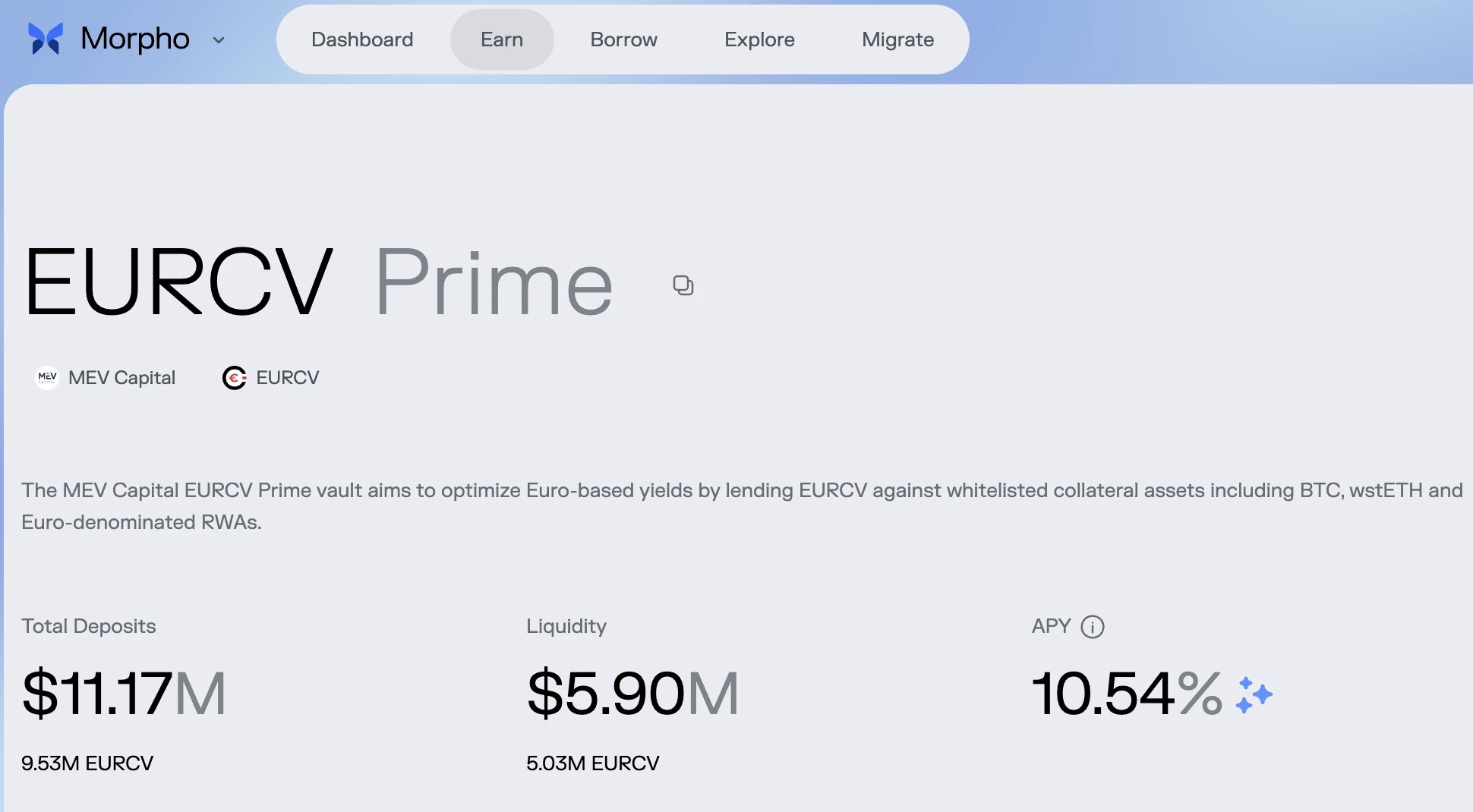
Currently, the annual return for those who deposit EURCV stablecoin on Morpho exceeds 10%.
SG Forge’s euro stablecoin has a huge potential here: to become the European gateway to decentralized finance. And, by the way, to highlight the quality and complementarity of French Web3 solutions.
This initiative confirms Société Générale – FORGE’s “innovative” approach. A strategy constantly driven by the desire to offer new-generation cryptoassets that comply with regulations and promote transparency, security, and scalability, according to the French bank.
Significant consequences for French decentralized finance
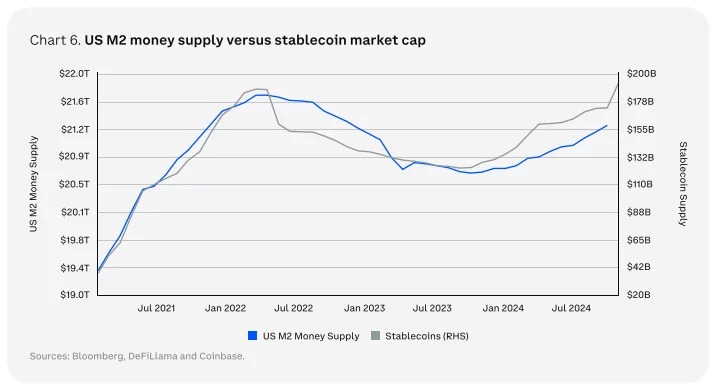
The stakes are high in this gargantuan market. According to a Coinbase report published in December 2024, the stablecoin sector alone is worth $193 billion and could reach $3 trillion within five years.
For its part, the lending industry is now worth $130 billion, with Morpho accounting for nearly $11 billion—making it the world’s second-largest player.
We believe that DeFi [decentralized finance, editor’s note] will become the backend of global finance, and it’s great to see a major European institution like SG Forge leading the way.
Paul Frambot, CEO and co-founder of Morpho
The decentralized finance market is worth trillions. This is not small change, but a considerable slice of the global economic pie. Such a huge market is whetting appetites, from Silicon Valley billionaires to governments and banks.
The fact that SG Forge is transferring part of its loan portfolio to the blockchain sends a strong signal: banks can now enter decentralized finance and its globalized markets in a simple and seamless way.
Paul Frambot, CEO and co-founder of Morpho
Today, thanks to Société Générale – FORGE, Morpho, Spiko, and MEV Capital, France can boast of being the most advanced European nation in the DeFi lending market.
Institutional investors are rushing into DeFi
A giant leap forward. The finance of the future will be decentralized. Faster and cheaper, it is already attracting the world’s largest financial institutions. They sense the tide turning.
Securing France’s place in this ecosystem will prevent our country from being downgraded. What’s more, the trust placed in Morpho, MEV Capital, and Spiko by Société Générale sends a powerful signal: these solutions are not reserved for obscure circles of insiders.
These are functional, regulated, and secure financial products. Today, decentralized finance is no riskier than traditional markets. If institutional clients in Europe are benefiting from this revolution, why should citizens be deprived of it?