Following the SEC’s decision to drop the proceedings it had initiated against it in 2020, Ripple is back in the crypto spotlight with its offering for institutional investors. However, the poor security rating recently awarded to its XRP Ledger blockchain could well cast a shadow over this comeback.
XRP Ledger: a controversial blockchain
Before becoming the symbol of the cryptocurrency sector’s regulatory battle against Gary Gensler’s SEC, Ripple occupied a unique position in a crypto ecosystem largely opposed to interconnection with traditional finance and banking institutions.
This development strategy could now be described as visionary, given the current evolution of the sector in these specific directions. It is an opportunity to bring its blockchain, known as XRP Ledger, which has been operational since 2012, back into the spotlight.
From its launch, this blockchain quickly attracted the attention of observers due to its lack of decentralization. This requirement was sacrificed in favor of what Ripple’s founders presented at the time as a means of “providing a better alternative to Bitcoin.”
This historic ambition has just come up against a recent in-depth review conducted by the analysis firm Kaiko to determine the performance of 15 leading blockchains in various use cases, such as the tokenization of institutional financial products and the deployment of decentralized applications (dApps).
The result obtained by XRP Ledger is far from satisfactory.
The exercise was recently conducted by analysts at Kaiko as part of a quarterly review of the performance of today’s leading blockchains. The assessment was based on notable differences between these ecosystems in the areas of governance, integration, liquidity, operational efficiency, and security.
Blockchains differ significantly in these areas, which impacts their suitability for use cases ranging from institutional financial products to decentralized applications. Our ranking serves to help market participants, developers, and institutions better understand the platforms they are considering for deployment.
Kaiko
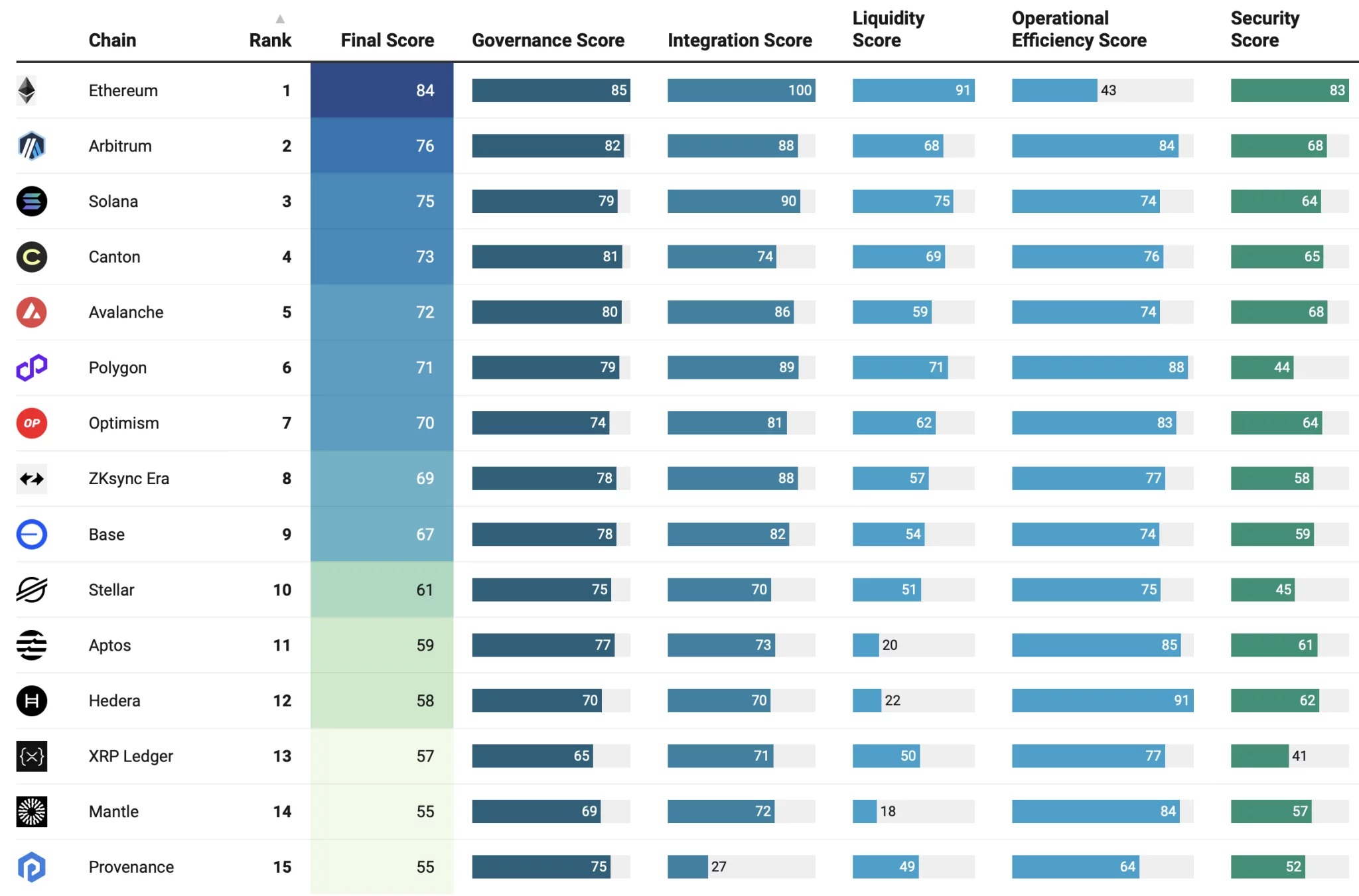
Clearly, this ranking is not going to help Ripple’s blockchain. It has the worst score in the security category and is also among the lowest in terms of integration and governance scores. Adam Morgan McCarthy, the main issues highlighted for the XRP Ledger blockchain are the hacking of one of its software packages last April, a poor Nakamoto coefficient—a measure of the threshold of compromise—and too few validators (190, including 35 unique nodes by default capable of reaching consensus).