
While Bitcoin peaked above $124,000 just a few days ago, the current period seems to be one of strategic retreat to the $115,000 level. This situation is largely associated with a set of macroeconomic signals that are considered unfavorable.
BTC returns to the $115,000 level
Each new historic high for Bitcoin is accompanied by a more or less violent and prolonged downward trend. This logic does not seem to have escaped the recent surge in BTC above $124,000 recorded last week.
Indeed, this record high, set on August 14, has been accompanied by a significant drop of more than 7% over the last seven days, pushing the price of BTC below the $115,000 level at the time of writing.
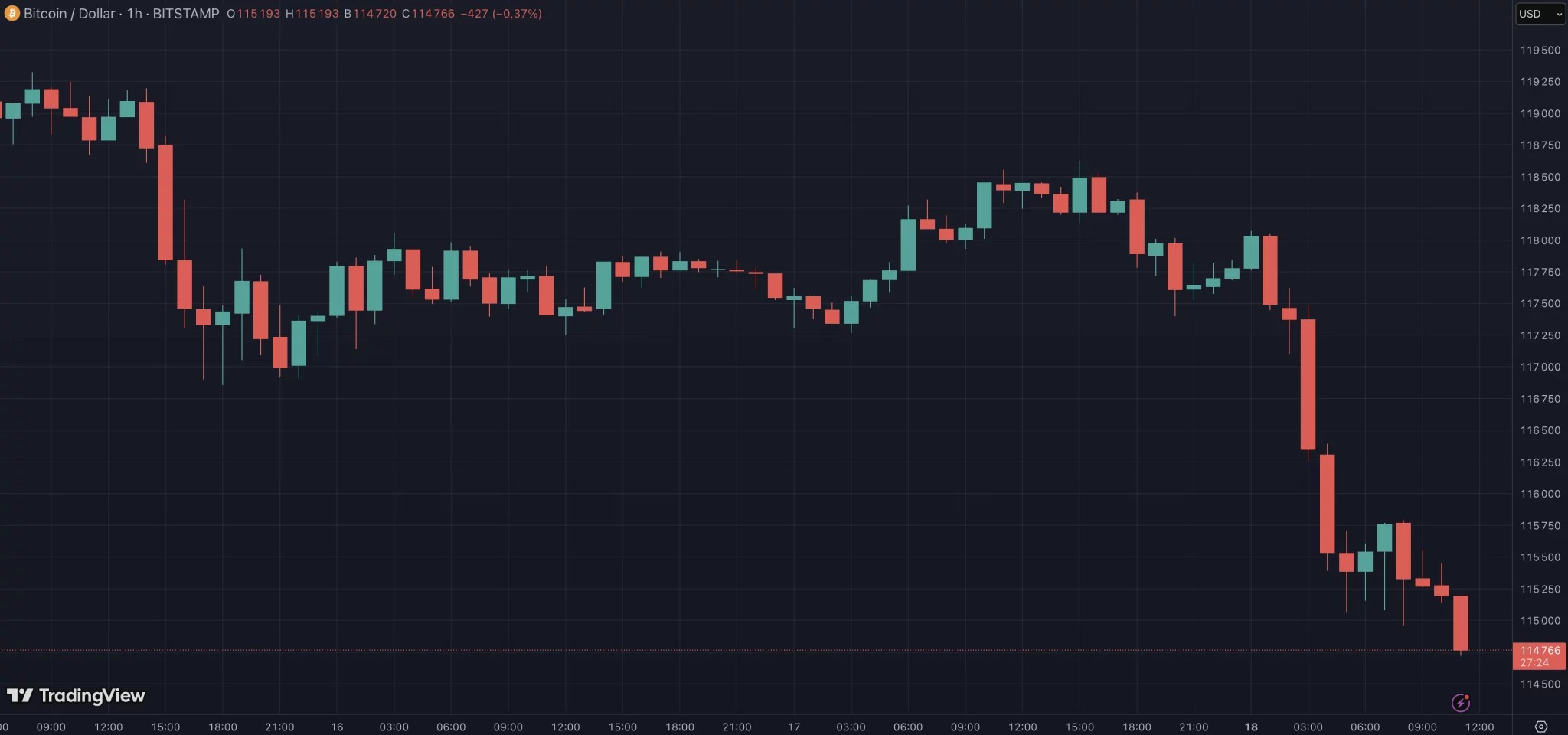
Faced with this downward momentum, the $112,000 resistance level stands as the first hurdle to overcome before we can start thinking about a return to $110,000 or lower. At the same time, the top 10 cryptocurrencies are feeling the pinch, with Ethereum (ETH), Ripple (XRP) and Solana (SOL) down 5% on average over the last 24 hours.
Despite this situation, the overall sentiment among crypto investors remains neutral, with a score of 56 on the CoinMarketCap Fear & Greed Index. However, the macroeconomic environment in the US, which is considered unfavorable, is prompting traders to remain cautious.
A macroeconomic environment unfavorable to Bitcoin?
August seemed to start on a positive note for Bitcoin prices, following the release of a lower-than-expected US consumer price index (CPI). This was an opportunity for BTC to reach a new ATH, before the July producer price index spoiled the party with higher-than-expected growth.
This situation is highly unfavorable for a Fed interest rate cut in September, even though Donald Trump continues to pressure Fed Chair Jerome Powell to initiate this move, which is considered beneficial for household consumption… and exposure to the cryptocurrency market.
For Vincent Liu, chief investment officer at Kronos Research, this situation is triggering an effective pullback by traders, “who are waiting for clearer signals on the macroeconomic and crypto fronts before returning to the market.” Despite everything, the current decline in BTC appears to be more a case of capital rotation than a real questioning of investor confidence, particularly in the spot Bitcoin ETF market. In this context, the upcoming Jackson Hole symposium, bringing together the Fed’s top officials this week, could prove to be a key factor in determining the US Federal Reserve’s future course. It may be an opportunity to soften the blow of the recent statement by US Treasury Secretary Scott Bessent regarding a “budget-neutral” strategic reserve of Bitcoin that may not involve—at least in the immediate future—the purchase of BTC by the US government.