
In 2024, 9.6% of salaries are expected to be paid in cryptocurrencies in the blockchain industry. We take a closer look at these figures, which represent a 220% increase in one year.
Crypto companies are expected to pay three times more salaries in cryptocurrencies in 2024
On Tuesday, Pantera Capital published the results of a study showing that the share of cryptocurrency-based compensation is expected to more than triple in 2024, rising from 3% to 9.6%:
In 2024, the percentage of people paid in cryptocurrencies tripled, rising from 3% in 2023 to 9.6% this year. This growth highlights an upward trend in digital asset-based compensation and broader access to stablecoin platforms.
It should be noted, however, that the well-known investment fund focused its study on the blockchain sector and that 99% of the 1,600 respondents are professionals from the crypto community. The sectors covered are varied, ranging from decentralized finance (DeFi) to gaming, with projects at different stages of growth. In terms of geography, 30% of respondents are located in the United States, with the rest more or less evenly distributed around the world. Among the respondents, we also find that nearly 73% are men, which more or less echoes the disparities regularly observed within the ecosystem.
When it comes to cryptocurrencies used for remuneration, stablecoins are by far the most popular:
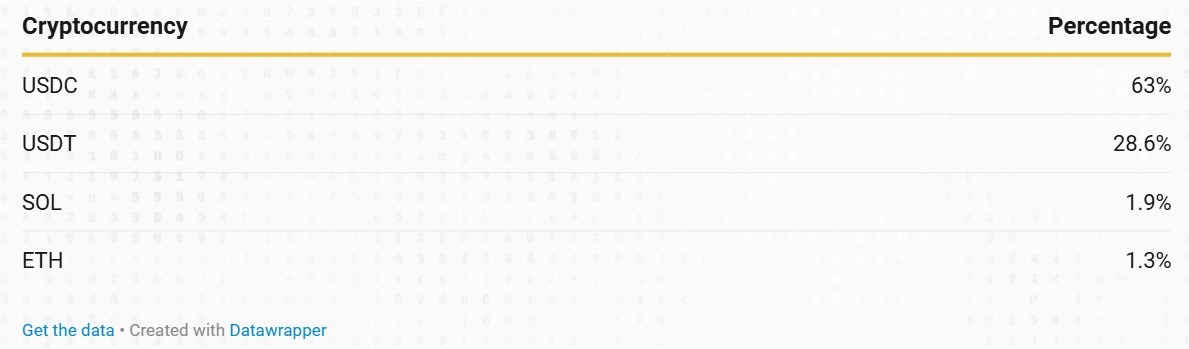
What may come as a surprise is that USDC is used more than twice as much as USDT, even though the latter has more than 2.5 times the market capitalization of its competitor. The Pantera team has found an explanation for this:
Although USDT is the most traded stablecoin in terms of volume, USDC leads the way in terms of employee desired compensation. We initially thought this was due to the more Western focus of our survey. After further analysis, we found it interesting that none of the major payroll service providers in the industry (Deel, Remote, Rippling) offer USDT for payroll.
While these figures unfortunately remain concentrated in the crypto sector and do not allow for comparison with other industries, the upward trend is still interesting. With the market already experiencing sharp rises in 2024, it will be necessary to observe developments over the years to identify a trend, particularly after the next bear market.