
The Ethereum blockchain is known for its central position in the cryptocurrency ecosystem, but also for its often high and complicated fees. The EIP-7999 proposal could provide a streamlined solution to this situation. We explain everything.
Ethereum: a constant battle over transaction fees
The management and cost of transaction fees are essential data in the blockchain sector. This is a reality that Ethereum has been particularly confronted with during its historic rise, when congestion led to fees spiraling out of control.
This has been a central issue in its development, leading to numerous strategic decisions, including the current implementation of its layer 2 ecosystem designed to absorb a significant portion of this on-chain activity.
At the same time, the Dencun update initiated in March 2024 introduced several essential proposals (EIPs), leading to a significant reduction in average gas fees for routine transactions, estimated at 95% over this period.
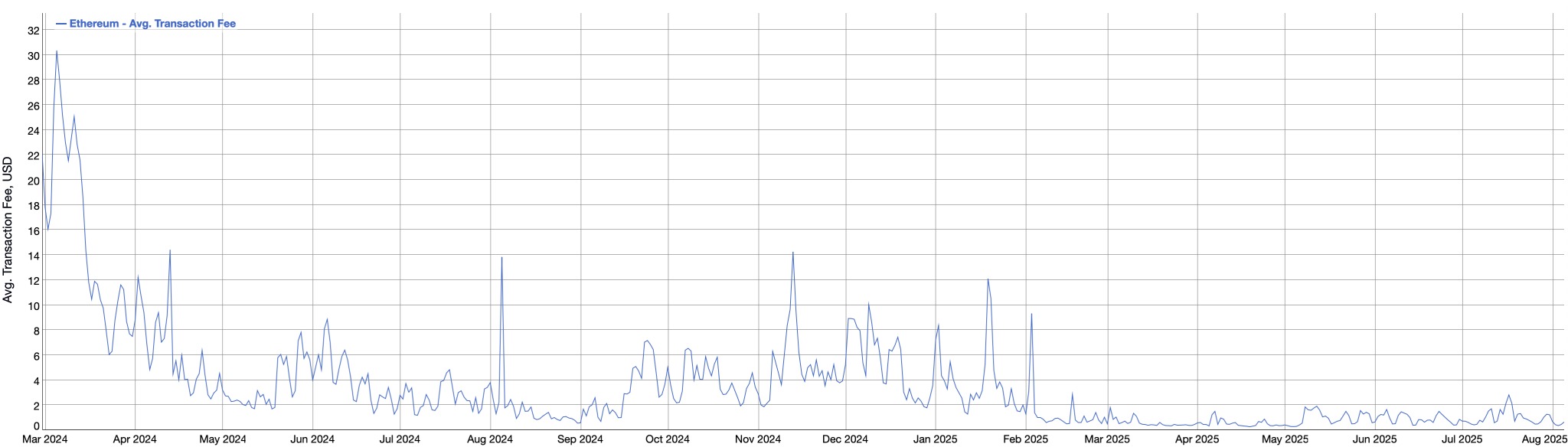
Despite these major advances, managing transaction fees remains difficult for users of the Ethereum blockchain. That is why developer Anders Elowsson has joined forces with his co-founder Vitalik Buterin to propose the implementation of a “unified multi-dimensional fee market.” What does this mean?
A consistent representation of transaction fees
The proposal published earlier this week—still awaiting community approval—is codenamed EIP-7999. The stated goal is to “enable more efficient use of capital by formalizing a representation consistent with the one users have when interacting with Ethereum.”
A unified market for multidimensional fees is introduced, in which each transaction specifies the maximum amount in ETH it is willing to pay to be included, via a single max_fee field. When accepted, the protocol ensures that the transaction can cover the gas cost for all dimensions, treating this max_fee as fungible between different resources.
Anders Elowsson
In practice, this means that users of the Ethereum blockchain will be able to specify a single maximum transaction fee for several different types of operations, making their management both simpler and more predictable. This EIP-7999 involves the implementation of a single fee update mechanism, reserve pricing, and fee stabilization when the gas limit changes.
The weekly total of fees generated over the last 12 months by the Ethereum blockchain — estimated at $760 million — represents a 16% market share of all available layer 1s, allowing it to claim second place in the sector. First place goes to the Tron (TRX) blockchain with $3.4 billion, which has been very much in the spotlight since the announcement of the imminent launch of the Plasma blockchain dedicated to the USDT stablecoin. Could this be an opportunity to reshuffle the cards in the sector?