
The arrival of stablecoins in traditional finance is shaking up a payment sector that has been dominated by a few giants. This situation could well thwart the plans of Visa and Mastercard.
Giants Visa and Mastercard face the rise of stablecoins
The year 2025 could go down in the annals of the cryptocurrency sector as the year stablecoins really took off outside their ecosystem. The main driver of this momentum is none other than the recent adoption of the GENIUS Act regulatory framework in the United States.
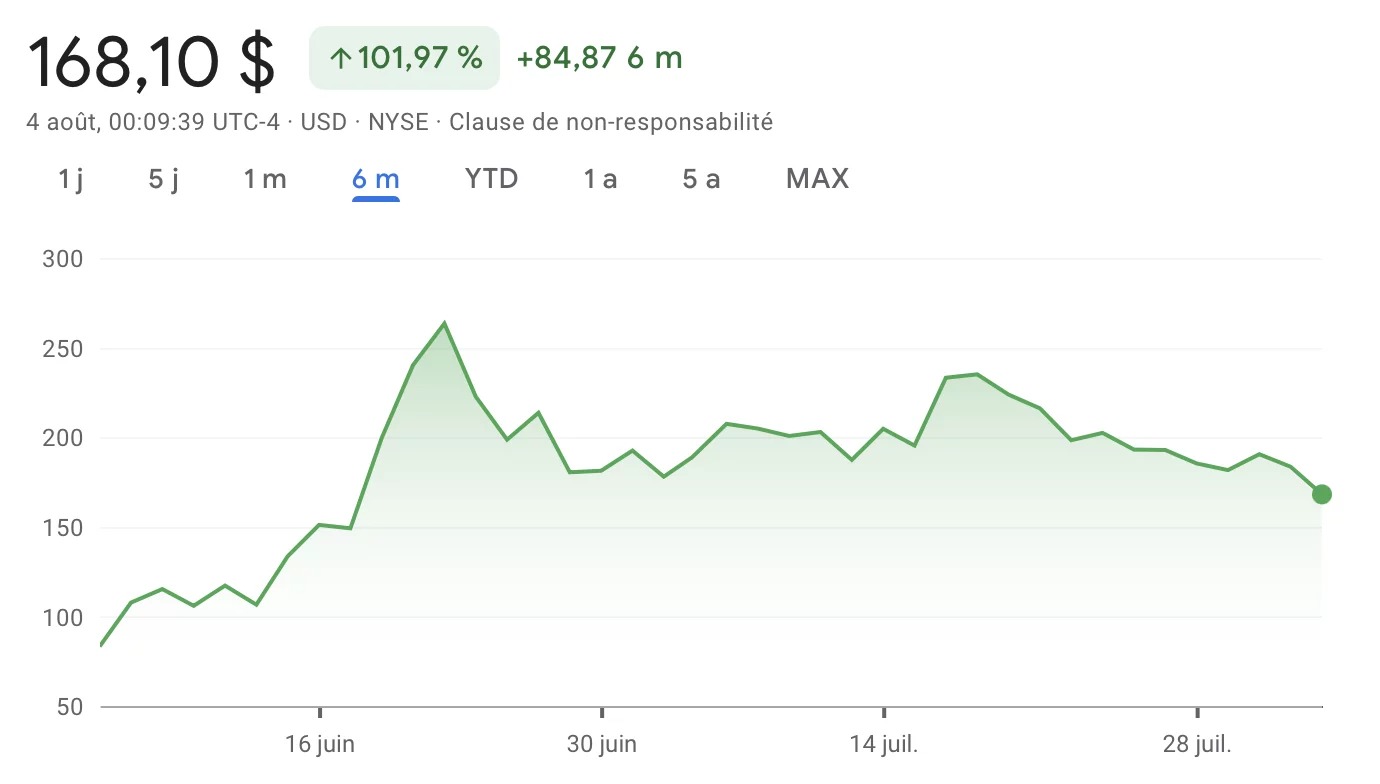
At the same time, industry giant Circle, issuer of the USDC stablecoin, made a very popular IPO among investors last June. Proof of this is the upward trend of its CRCL share price, which has risen by more than 100% for an estimated market capitalization of $40 billion.
This favorable environment for the growth of the stablecoin market, which some analysts already estimate to be worth more than $2 trillion, is clearly not good news for payment giants such as Visa and Mastercard. And with good reason, as these two companies currently handle more than 70% of purchases made in the United States.
When they recently published their quarterly results, the CEOs of these two companies apparently did not fail to downplay the threat posed by the current explosion of these digital currencies indexed to the US dollar. What’s more, their results remain positive, with net profits of 8% for Visa ($5.3 billion) and 18% for Mastercard ($3.7 billion), but this has not stopped observers from talking about an unprecedented weakening of their business model.
A payment sector in flux
Is the dominance of the current payment giants under threat? This seems to be the case, given the evolution of the sector following the unprecedented acceleration in the adoption of stablecoins by banks and retailers since the introduction of the GENIUS Act framework.
This historic regulatory opening now makes it possible to envisage payments that do not require traditional and indispensable intermediaries such as Visa and Mastercard. The obvious risk is an acceleration of the already ongoing decline in the fees they charge on each transaction, while at the same time reducing their traditional profitability.
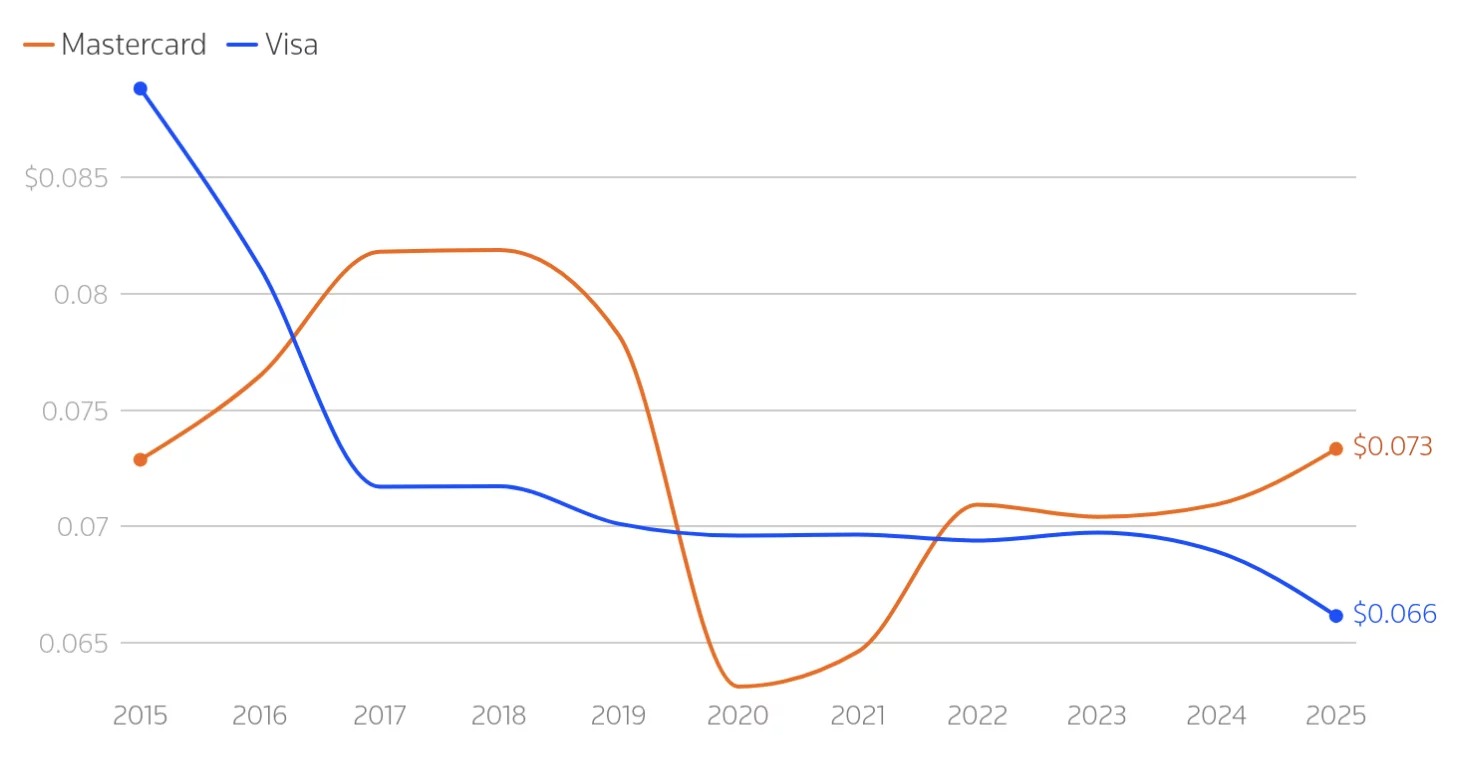
This situation has been widely anticipated by Visa and Mastercard for several years, with the strategic and gradual integration of payment procedures involving cryptocurrencies or options such as stablecoins, as well as diversification of their activities into consulting and other ancillary services.
At the same time, Mastercard’s executive vice president and head of global policy, Jesse McWaters, is trying to downplay the shift by explaining how “stablecoins must be integrated into systems that people trust, that protect users, resolve disputes, and operate transparently across borders and platforms.” “
Or how to try to position yourself as an intermediary in a market that doesn’t need one.