
As US Bitcoin ETFs continue to grow in popularity, they have surpassed $50 billion in cumulative net inflows. We take a look at this remarkable performance in just a year and a half of existence.
Bitcoin ETFs exceed $50 billion in inflows
Since their launch in January 2024, US spot Bitcoin ETFs have been a huge hit with institutional investors, as evidenced by BlackRock’s IBIT, which surpassed 700,000 BTC under management this week.
On Wednesday, a new milestone was reached, as these ETFs surpassed $50 billion in cumulative net inflows, supporting the recovery that began in April after a few months of slowdown:
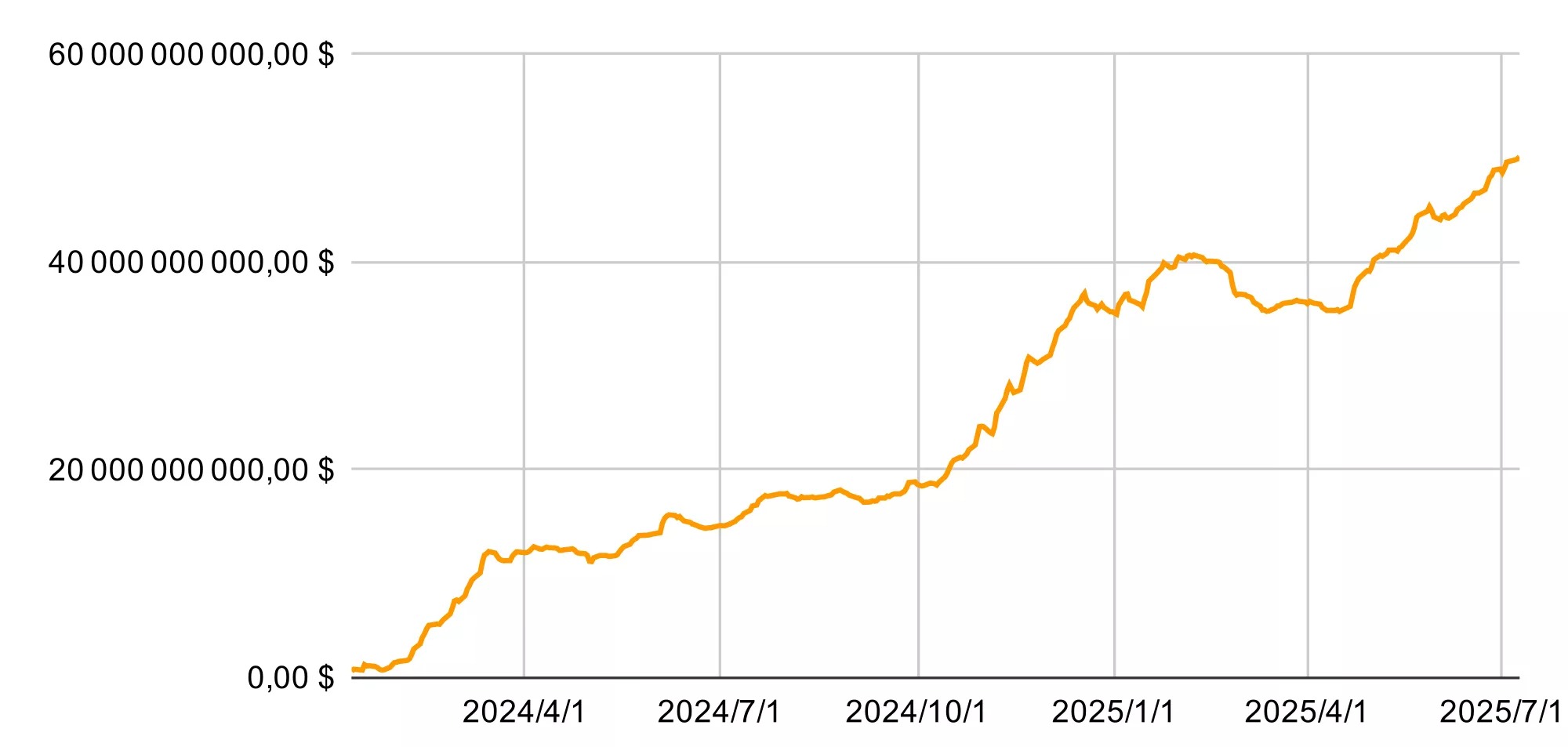
In concrete terms, at least two factors influence these famous net inflows. Obviously, there is the daily balance between purchases and sales, which can be negative, neutral or positive; but there is also the evolution of the BTC price.
Today, these Bitcoin ETFs claim approximately $139.4 billion in net assets, equivalent to 1,258,395 bitcoins:
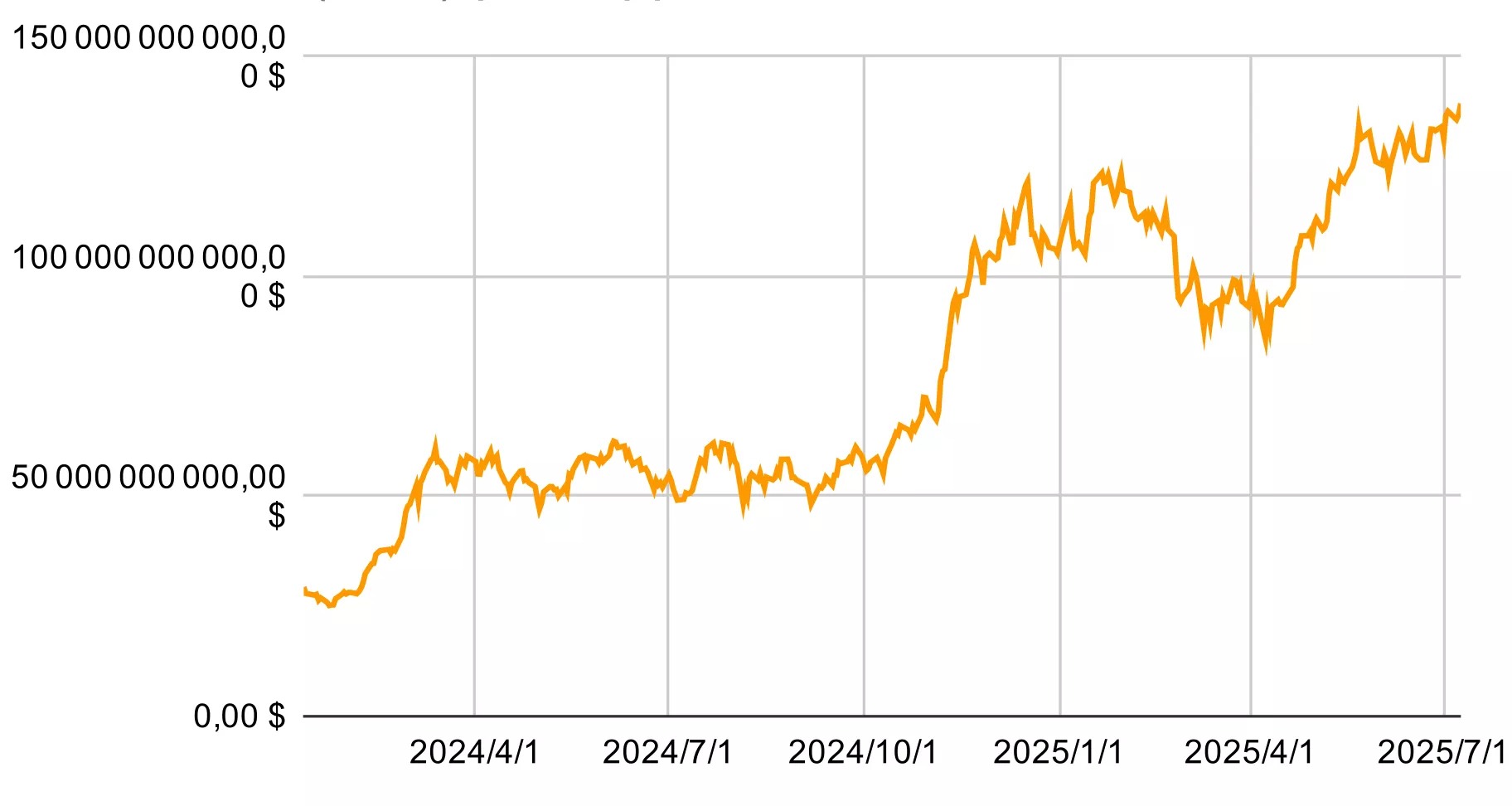
Unsurprisingly, IBIT is the best performer and the main barometer for these Bitcoin ETFs. It alone accounts for 55.7% of these ETFs.
Another interesting fact is that IBIT has accumulated $53 billion in net inflows. The fact that this figure is higher than the total for its category is mainly due to the poor performance of Grayscale’s GBTC, which has seen $23.34 billion in net outflows.
To understand this disappointment, it should be remembered that before becoming an ETF, GBTC was an unlisted fund and was therefore a benchmark for institutional investors. However, the arrival of competitors such as BlackRock when ETFs were approved shook things up with much lower fees, 1.5% compared to 0.25%.
At the time of writing, bitcoin is trading at $111,000, up 2% over 24 hours.