
In October, decentralized exchanges (DEXs) reached a new all-time high (ATH) in trading volume. This comes amid significant volatility in the crypto market. A closer look at the numbers.
DEXs hit an ATH in trading volume in October
Earlier this morning, we looked at the particularly notable performance of stablecoins amid this uncertainty in the crypto market. Beyond this asset class, another sector performed exceptionally well in October: decentralized exchanges (DEXs).
And for good reason: while the tokens associated with these DEXs did not particularly stand out, trading volumes reached a monthly all-time high (ATH) in October, totaling $614.27 billion:
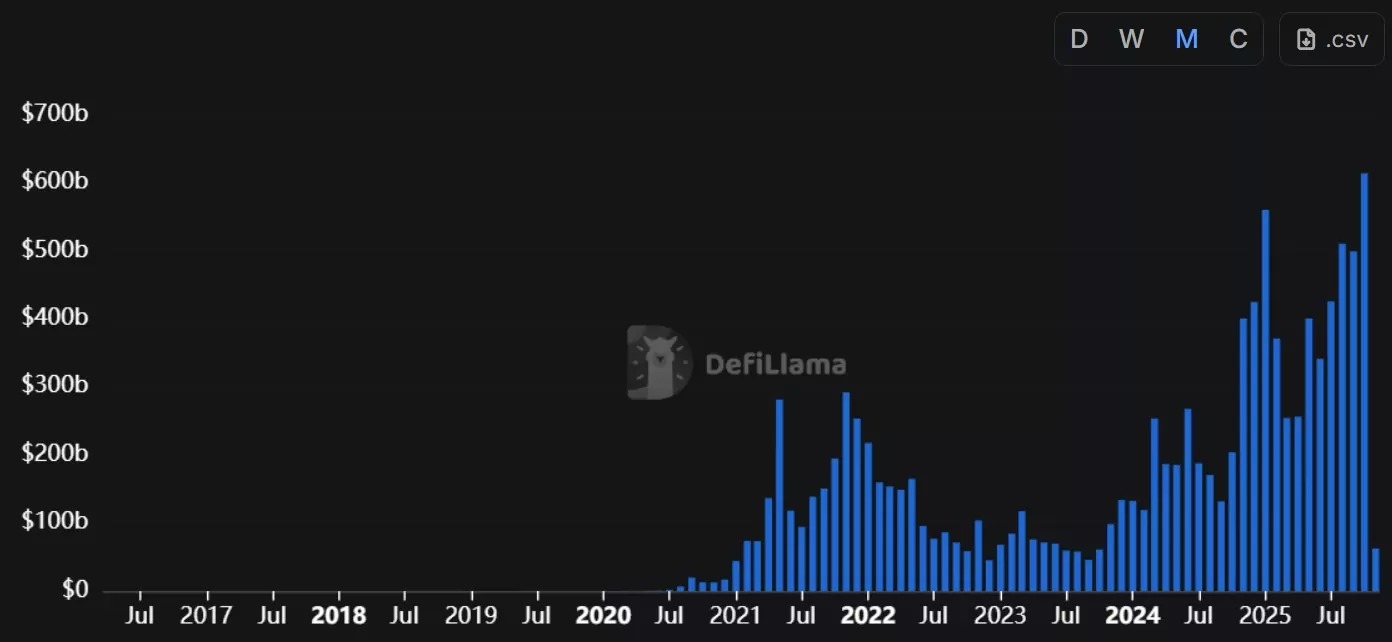
Monthly DEX Volumes
According to DefiLlama data as of October 31, the cumulative volume of DEXs was $11.15 trillion. In this regard, it is worth noting that October accounted for 5.5% of the historical volume.
In the protocol rankings, Uniswap (UNI) leads the pack, with nearly $70 billion in volume ahead of PancakeSwap (CAKE), its closest competitor:
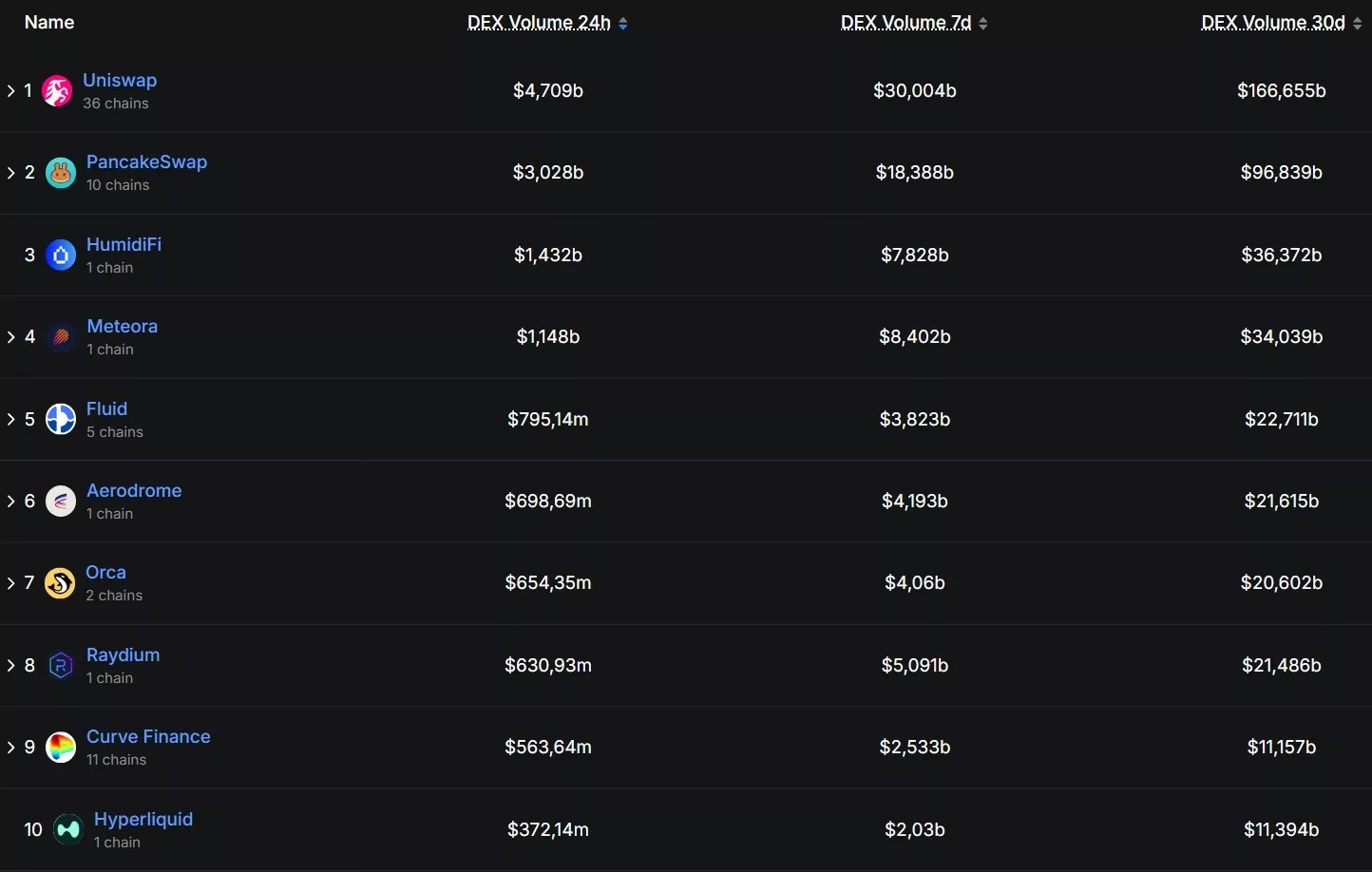
Ranking of the top DEXs by volume
Still on the topic of Uniswap, the platform also achieved an all-time high (ATH) in trading volume in October. With nearly $170.9 billion, this represents 27.82% of the activity generated by all DEXs during the month of October.
As significant as they are, these figures are nevertheless not easily comparable to the activity of centralized platforms. For Binance, for example, CoinGecko data reports that the spot volume over the past 24 hours was $31.57 billion. In just one day, this is already higher than what Uniswap achieved over the past 7 days.
While certain sectors rely heavily on optimism in the crypto market, it is worth noting that DEX activity can surge during both bull and bear markets. Since October saw both a BTC all-time high and a major market-wide crash, it makes sense that this volatility benefited DEXs.
Nevertheless, DEXs can suffer during periods of market uncertainty, as is typically the case during lulls in the middle of a bear market.