
Despite claiming it could outperform the market, Strategy is currently posting returns that are well below those of Bitcoin—which are already negative—over the past year. This situation is causing the returns of pension funds that bought MSTR shares to plummet.
Pension funds lose big on Strategy
Strategy and its compulsive accumulation of Bitcoin, which began in 2020, occupies a unique place within the cryptocurrency ecosystem, with founder Michael Saylor regularly shifting from the role of an unparalleled strategist to that of an enlightened maximalist depending on whether the price of BTC is rising or falling.
Is it necessary to explain which camp he currently falls into, with Bitcoin having just reclaimed the $70,000 level? Especially when considering the significant collapse of MSTR stock since its last peak in July, now nearing 70%.
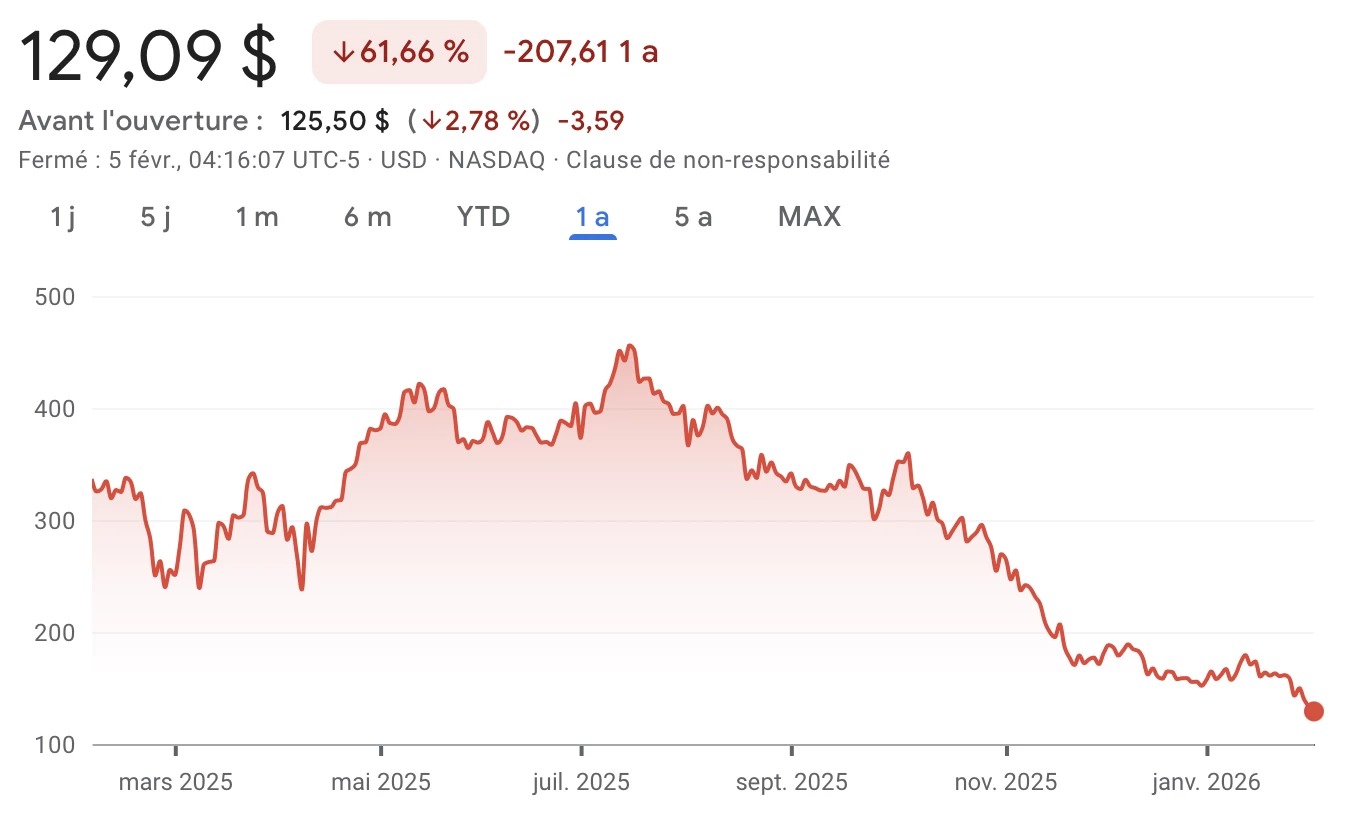
Strategy’s MSTR stock is down more than 60% over the past year
And while Strategy claims to have a safety net with over $2 billion in cash reserves, some of its investors are seeing red. The situation is all the more critical when it comes to U.S. pension funds that have bet on MSTR stock.
This observation, made by the crypto media outlet DLNews, highlights 11 such entities that had committed a total of $577 million—approximately 1.8 million MSTR shares—at the time of the official announcement of their investments. Enough to weigh heavily on their balance sheets…
A simply bad strategy, or just poorly timed?
According to data available on the Fintel platform, this overall investment currently shows an unrealized loss of $337 million—which remains theoretical until the position is liquidated—representing a 60% decline for 10 of these identified funds.
These losses raise questions about the relevance and reliability of Digital Asset Treasuries (DATs) as investment vehicles and indirect exposure to the crypto market. It even makes one wonder whether these pension funds’ strategies were simply bad, or just poorly timed.
This situation primarily affects public-sector pension funds, with investments in Strategy shares representing a tiny fraction of their portfolios. As a result, the retirees in question are unlikely to see their payments disappear due to these poor results.
At the same time, could this situation undermine the push recently expressed by SEC Chairman Paul Atkins to open up 401(k) retirement funds to crypto investments? Because this model is based on a very different principle: beneficiaries only receive any potential profits.
This is enough to reignite the never-ending debate about our pay-as-you-go pension system, which, in its current form, may never benefit people under the age of 50.