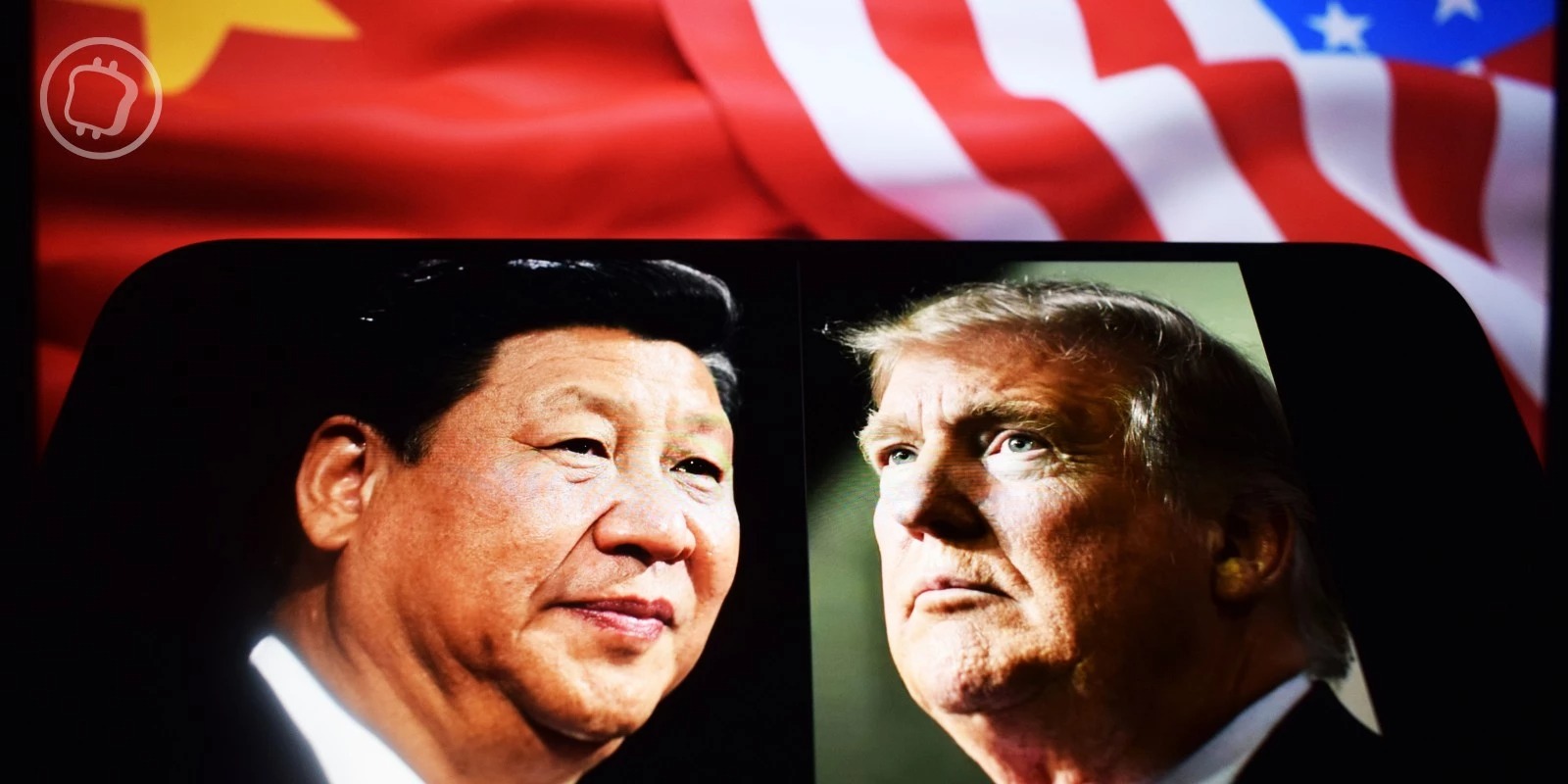
Trade tensions between the United States and China appear to be easing. Donald Trump has softened his rhetoric, hinting at the possibility of an agreement, which has allowed markets to rebound after record sell-offs.
The tariff war continues and the markets fear it
In recent days, financial markets have experienced high volatility. After reaching a new all-time high, the S&P 500 has finally fallen 3.16% since Thursday. The cryptocurrency market, meanwhile, has suffered a veritable bloodbath, recording the most violent day in its history with nearly $20 billion in liquidations.
During the crash, some cryptocurrencies literally fell to zero, such as the ATOM token. Between Thursday and Friday, the price of Bitcoin fluctuated by more than 15%, compared to 23% for Ether. Despite this turbulence, the crypto market rebounded, recovering more than half of its losses.
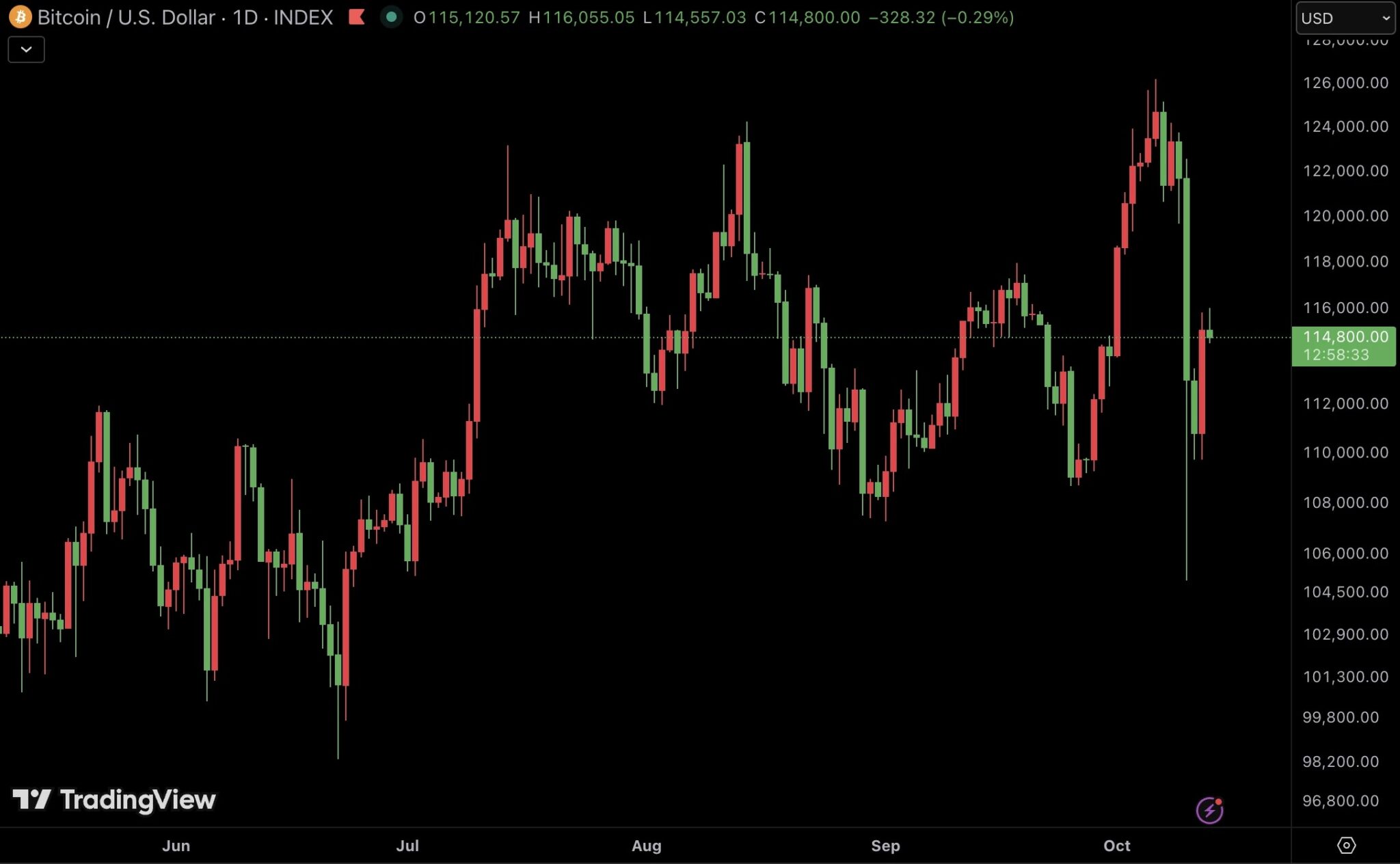
This crash was mainly due to geopolitical escalation between the United States and China.
In response to the tariff war reignited this year by Donald Trump, Beijing announced restrictions on materials essential to the manufacture of electronic components, batteries, and advanced technologies, in retaliation for US sanctions.
In response, Donald Trump threatened to impose 100% tariffs on Chinese imports and restrict the export of strategic software, triggering sharp movements in the markets.
Trump’s strategy to gain acceptance for his tariff policy
But today, tensions between the US and China appear to be easing, offering a moment of respite for the markets.
Donald Trump has softened his tone, stating that “everything will be fine,” suggesting that he may not carry out his threats and that an agreement will be reached.
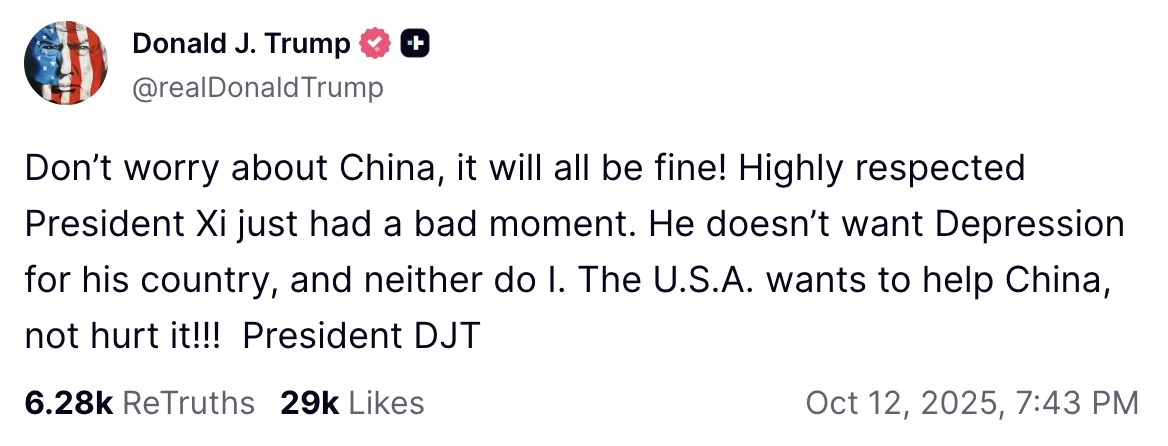
Don’t worry about China, everything will be fine! The highly respected President Xi has simply had a difficult time. He doesn’t want his country to go into depression, and neither do I. The United States wants to help China, not hurt it!!! – President Donald J. Trump
For his part, Vice President JD Vance spoke of constructive discussions with the Chinese government and praised the relationship between Trump and Xi Jinping.
Since his return to the White House, Donald Trump seems to be applying a well-honed strategy to advance his trade policy.
It all starts with a threatening message on social media, which sows doubt in the markets. He follows up with the announcement of a sharp increase in tariffs, causing prices to fall. Once panic has set in, he suggests that an agreement is possible, triggering a rebound. A member of his team, in this case the Vice President, steps in to reassure investors, while rumors of negotiations circulate. Finally, Trump announces a “deal” and then starts the cycle again with another country.
Trump had already used this method earlier this year with the European Union. He is using it again with China, one of the last trading partners with which agreements have not yet been finalized.