
Tether is currently attempting to counter the numerous regulatory rejections issued against its stablecoin USDT, for example by dedicating a blockchain to it, called Plasma. This decision could quickly prove to be cataclysmic for the Tron (TRX) ecosystem.
Plasma: the blockchain that could destabilize Tron (TRX)
In the rapidly developing stablecoin sector, the USDT version of the leader Tether paradoxically appears to be a real regulatory outsider. However, it continues to break records, with a market capitalization now close to $165 billion. This is a complicated context in which its CEO, Paolo Ardoino, is stepping up initiatives and developments in emerging markets. At the same time, he is trying to find a place in a US market now largely focused on its direct competitor Circle (USDC).
In order to address the situation, the Bitfinex platform—which has played a major role in Tether’s history—announced last June its intention to launch a blockchain called Plasma, compatible with Bitcoin and the Ethereum Virtual Machine (EVM). Its goal? To offer an environment specifically designed to optimize the use of the USDT stablecoin, with zero transfer fees. The recent public sale of its XPL token was a resounding success, raising a total of $323 million. An imminent launch that promises great things for USDT, but also a major challenge to the economic model currently applied to the Tron (TRX) blockchain, the largest home for USDT in the entire cryptocurrency ecosystem.
This alarming finding was recently highlighted by analysts at investment bank Sygnum in a comprehensive report on the crypto outlook for the third quarter of this year.
Tron’s revenue dominance comes almost exclusively from its disproportionate share of USDT transfers, which now exceed those of Ethereum and Solana. This dominance could be undermined by the launch of Tether’s Plasma blockchain, scheduled for this quarter.
Sygnum
A loss of revenue with cataclysmic consequences
In order to fully understand the potential impact of the Plasma blockchain launch, it seems important to visit the “Transparency” page of Tether’s official website, which is dedicated to publishing its reserves and the current distribution of the USDT stablecoin.
Currently – and for several years now – the Tron blockchain ranks first in this ranking with 82.6 billion USDT in circulation within its ecosystem, representing almost exactly 50% of its available supply. This amount allows it to handle 60% of all transfers related to this stablecoin, thanks to its negligible fees.
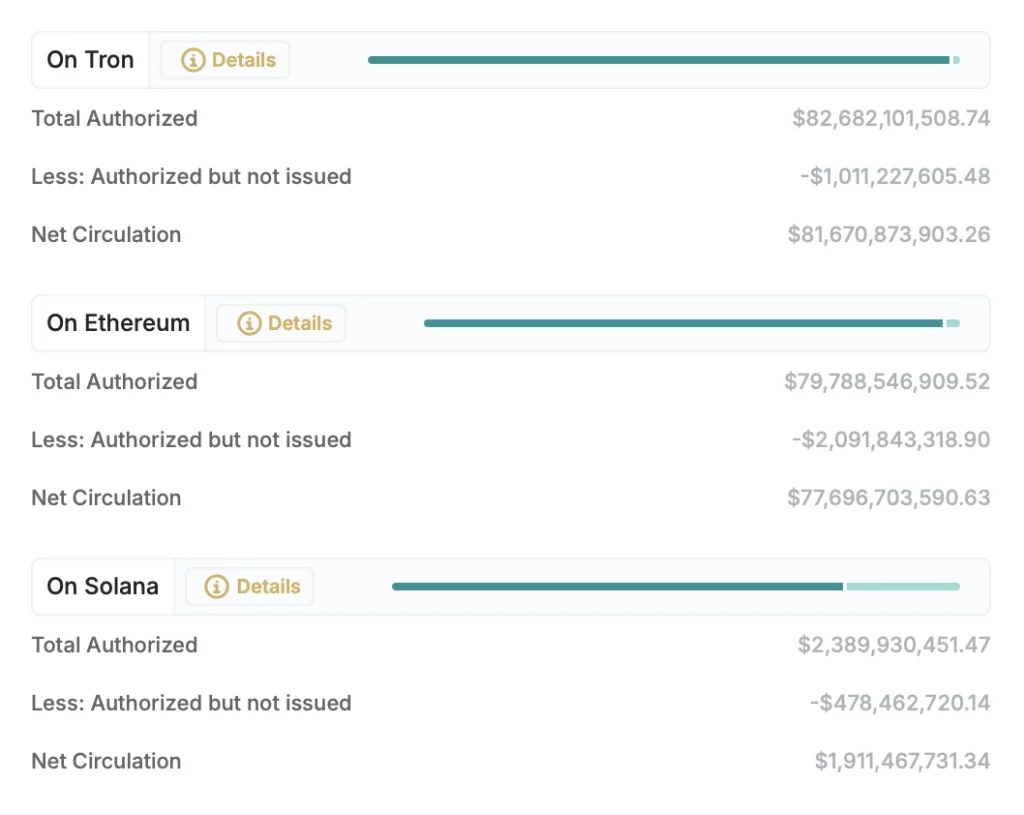
This is why an imminent move of these USDT fortunes to the native, fee-free Plasma blockchain could quickly become a major problem for the amount of revenue generated by the Tron blockchain.
At the same time, analysts at Sygnum Bank are discussing the recent launch of the corporate treasury set up by Tron Inc. This fund could soon involve a massive purchase of TRX estimated at $1 billion. It is difficult to know whether this new dynamic will help soften the blow of the possible departure of USDT.