
The RealT real estate tokenization project is facing a temporary restraining order from the city of Detroit, as part of proceedings initiated in early July. What does this mean?
The city of Detroit continues its proceedings against RealT
The principle of real-world asset tokenization (RWA) applies to many areas, both economic and financial. It is, for example, a way of redrawing the boundaries of ownership in the real estate sector, making it more accessible.
This innovative proposal is largely dominated by the RealT project. However, this momentum has just been dealt a major blow by legal action brought by the city of Detroit, following the discovery of properties that it described in early July as “unquestionably harmful to the health, safety, or welfare of the public.”
Despite RealT’s explanations that responsibility lies with “several unscrupulous property management companies,” the city of Detroit seems determined to pursue the matter. This is evidenced by the recent filing of a temporary restraining order against the company, according to the explanations provided in its official statement.
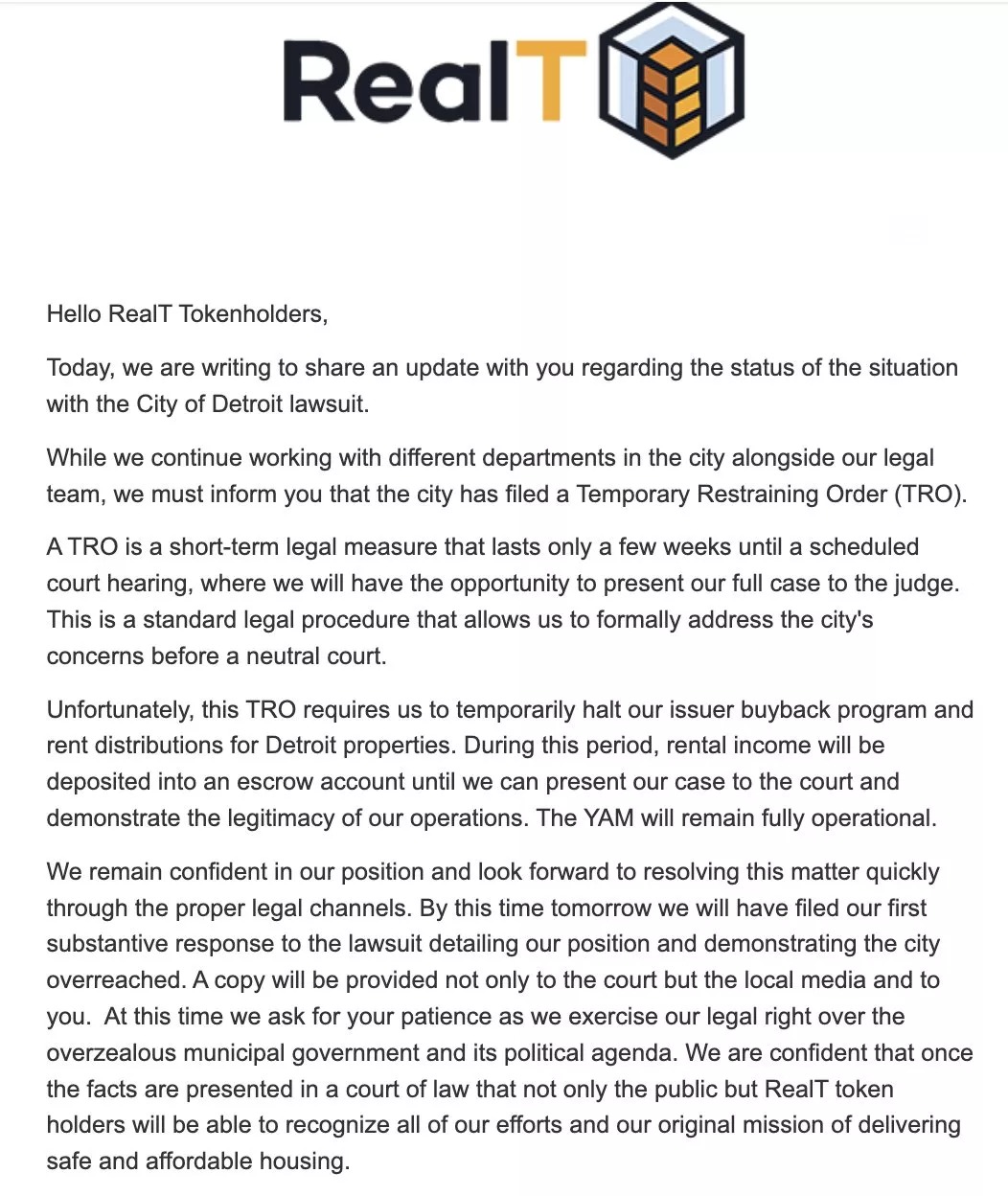
As we continue to work with various municipal officials alongside our legal team, we must inform you that the city has filed a temporary restraining order. This is a short-term legal measure, valid for only a few weeks, until a court hearing is scheduled, at which time we will have the opportunity to present our entire case to the judge.
RealT
A temporary restraining order that poses a problem
According to RealT’s statement, this case seems to be heading for the courtroom. At the same time, this temporary restraining order will have a direct impact on its business in the city of Detroit, where it is very well established. This is very bad news for its investors and property owners. This official proceeding means that the activities involved in the complaint must cease. As a result, RealT is required to “temporarily suspend [its] buy-back program and the distribution of rent for properties located in Detroit.”
In addition, rental income generated during this period will be “deposited in an escrow account” pending the presentation of the case to the court. The aim is to “demonstrate the legitimacy of RealT’s operations,” according to the terms of its press release.
Despite everything, RealT officials remain confident, hoping for a quick resolution to the case. Their defense strategy appears to be to “demonstrate that the city overstepped its rights” in this case. This is a case to watch closely.