
The nation-state model, defined by borders and territorial sovereignty, is facing the emergence of a new paradigm: Network States. This thesis, supported by a growing technological community, proposes to separate governance from geography. Between private cities and decentralized protocols, discover how this concept outlines a form of sovereignty based on voluntary membership rather than birth.
The structural shift in traditional institutions
The modern state fulfills historical functions of security and infrastructure management. However, in the digital age, the speed of human coordination exceeds that of administrations. This phenomenon leads to institutional inertia: while exchanges are instantaneous and global, political reforms remain slow and localized.
This gap encourages some actors to explore parallel systems. Rather than seeking to reform existing structures from within, the approach is to circumvent geographical constraints by moving capital and governance to more agile digital environments.
What is a Network State? From community to state
Theorized by Balaji Srinivasan, former Chief Technology Officer at Coinbase, the Network State is not just an online community. According to its formal definition, it is a highly aligned entity that relies on crowdfunding to acquire territories around the world, connected by a digital network.
Unlike the traditional model, where the state occupies a territory to administer a population, the Network State reverses the logic:
- Moral alignment: It begins with a “startup society” sharing a single mission (health, digital freedom, etc.);
- Proof of consensus: The community proves its capacity for collective action online;
- Physical anchoring: It uses its resources to create an archipelago of physical anchor points (co-working spaces, habitats, special zones);
- Recognition: The ultimate goal is to obtain diplomatic recognition from existing states by becoming a sovereign contractual entity: its political “operating system” is chosen by consent.
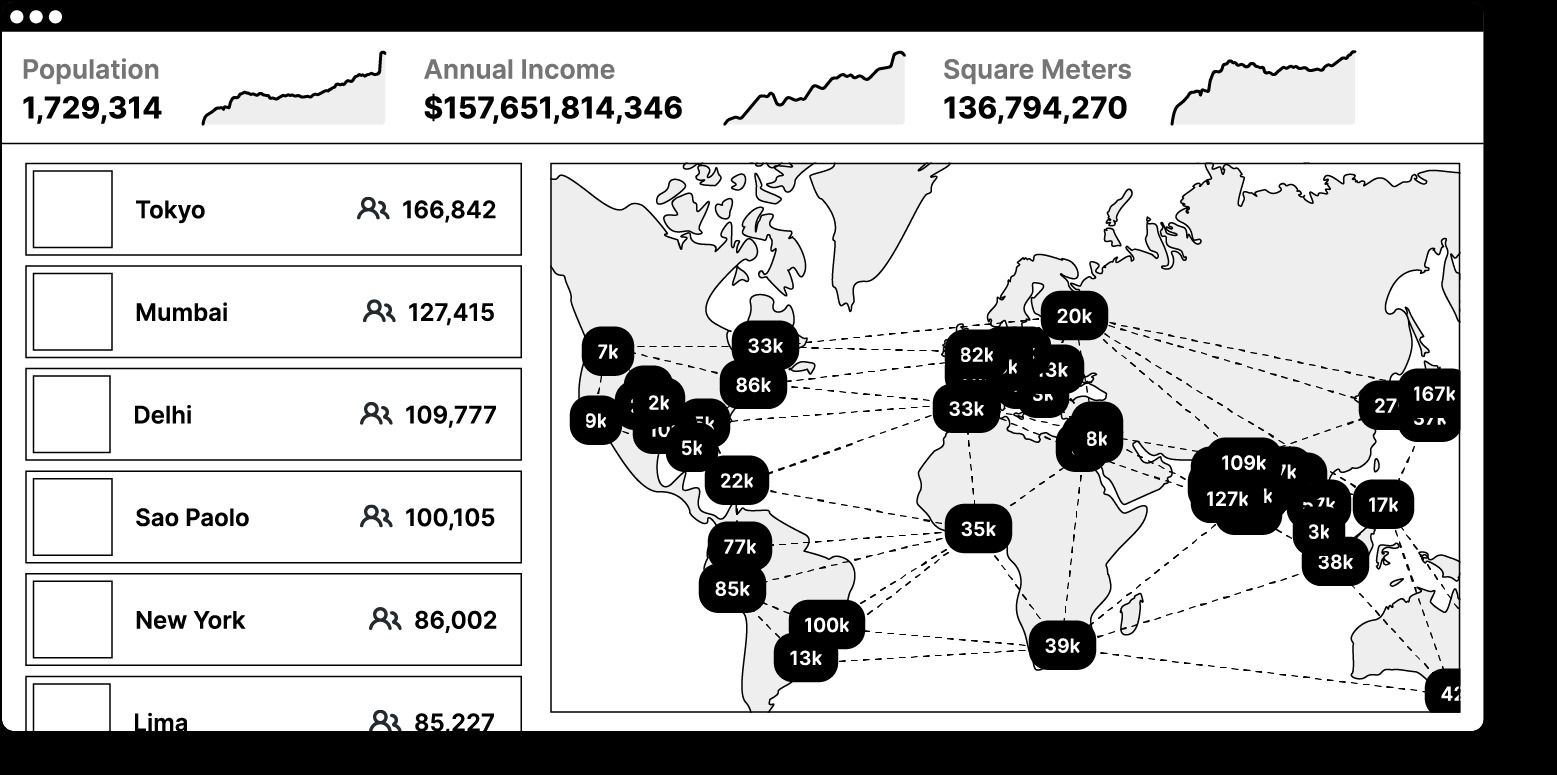
Alongside the relative weakening of the centrality of states, new centers of power are emerging. Entrepreneurs managing global communications infrastructure now act as de facto sovereign entities. They are no longer mere service providers, but the guarantors of protocols on which the freedom of expression and exchanges of millions of individuals depend. The arrest of Pavel Durov, CEO of Telegram, in France in August 2024, is symptomatic of this balance of power. The state attempted to apply territorial law to an actor whose infrastructure is global and largely decentralized in its use. This event showed that “network barons” do not negotiate like ordinary citizens: they can internationalize a legal conflict, mobilize global communities, and pit the law of code (cryptography) against the law of the land. This is a sign that power is no longer measured solely in terms of border control, but in terms of control over protocols.
Blockchain as a coordination infrastructure
To exist sustainably, a networked society must free itself from the monetary and administrative monopoly of the state. This is where blockchain comes in as a layer of decentralized trust.
It enables the management of property registers, voting systems, and transactions without intermediaries. Projects such as Zuzalu use Ethereum, for example, to manage proof of presence or internal governance systems. Blockchain offers an automated and transparent legal framework that is independent of national judicial systems.
Physical experiments: from Zuzalu to Prospera
The concept of the Network State is beginning to take shape through various prototypes:
- Zuzalu: A two-month communal living experiment in Montenegro, initiated by Vitalik Buterin. It served as a proof of concept for the social, technological, and medical coordination of a digital community in the real world.
- Prospera: Located in Honduras, this special economic zone has its own legal and fiscal framework. It represents an attempt to integrate private governance within a national territory. Although it is under legal pressure from the Honduran government, it remains one of the most advanced physical archipelagos of the movement.
- Praxis: A project to build a physical city for a community that is already structured online. The goal is to create a permanent hub for technology and science players, functioning as a modern city-state.
The Bitcoin Society: Éric Larchevêque’s vision
Within this ecosystem, Éric Larchevêque (co-founder of Ledger) offers a concrete approach to monetary sovereignty with The Bitcoin Society (TBSO). According to its official website, TBSO defines itself as the world’s first listed company to combine a “Bitcoin Treasury Company” model with a “Network Society” activity.
The central idea is not simply to own an asset, but to structure a true collective economic force:
A long-term monetary standard: For TBSO, Bitcoin is considered a “civilizational asset” and a shield against the erosion of traditional (fiat) currencies. The goal is to convert so-called “weak” currencies into “strong” currencies to protect the community’s capital.
Power aggregation: The stated objective is to bring together tens of thousands of members (entrepreneurs, savers, builders) to represent a financial power capable of dialoguing on equal terms with institutions and influencing global regulatory debates.
A virtuous circle of sovereignty: The model is based on three pillars. First, the accumulation of a war chest in bitcoins via the traditional financial system (listed company). Second, the use of this capital to offer tools for education and the defense of entrepreneurial freedom. Finally, the creation of premium clubs to support members in their financial independence. Relying on the security of the Bitcoin protocol, this networked society aims for total financial autonomy, decoupled from the monetary policies of central banks. It is an attempt to formalize sovereignty through code and financial independence rather than through traditional taxation.
Conclusion: Towards orderly decentralization
The emergence of Network States does not mean the sudden disappearance of traditional states, but the end of their monopoly. We could move from a world where citizenship is a geographical assignment to a world where it becomes a protocol choice.
The power of a nation would soon no longer be measured by its surface area in square kilometers, but by its decentralized GDP: the wealth and coordination capacity of its members, whether they are in Lisbon, Buenos Aires, or Singapore.
However, the challenge remains immense. As the Prospera project has shown, states will not stand by and watch their own obsolescence.
The transition to such a model would be marked by an intense struggle for individual sovereignty. In the 21st century, the real revolution may no longer be about voting for a new leader, but about choosing the system of rules within which we wish to protect our savings, exchange our ideas, and build our future.