Hylo is a decentralized finance protocol built on Solana, with a very clear ambition: to create a stable, robust, and accessible infrastructure for managing capital in any market conditions. Find out what steps you need to take to become eligible for a potential Hylo airdrop.
What is Hylo?
Hylo is a decentralized finance protocol built on Solana, with a very clear ambition: to create a stable, robust, and accessible infrastructure for managing capital in any market conditions. Where many DeFi applications rely on a few isolated mechanisms, Hylo combines several complementary building blocks: a stablecoin, a savings system, and a yield-bearing asset to form a coherent whole where each component reinforces the others.
At the heart of this architecture is hyUSD, an over-collateralized stablecoin designed to remain liquid and reliable, even in times of volatility. To obtain it, users deposit eligible assets as collateral, then mint hyUSD against a position that is continuously monitored and adjusted by the protocol. The idea is not just to provide a simple digital dollar, as there are already many in the ecosystem, but to build an asset that is truly backed by diversified reserves and capable of maintaining its peg in difficult conditions.
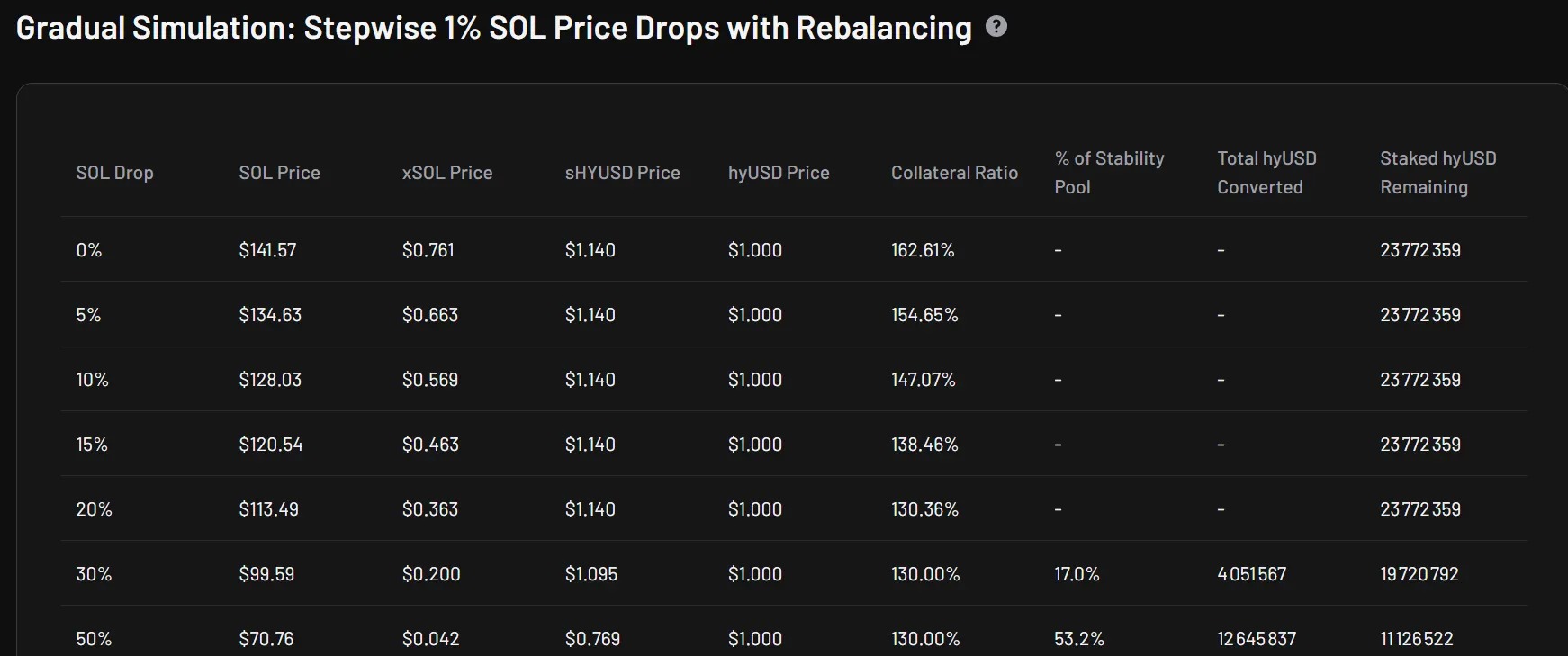
Two essential products revolve around hyUSD: sHYUSD and xSOL. The first corresponds to the deposit of hyUSD in the “Stability Pool.” This mechanism allows users to earn a return while contributing to the strength of the protocol. If a major market event puts pressure on collateral, the Stability Pool acts as a buffer, ensuring the system’s sustainability. Users are compensated for this role, making sHYUSD a form of savings with a return adjusted to the protocol’s actual risk.
The second product, xSOL, follows a different logic: offering increased exposure to the price of SOL without using traditional leverage. As with hyUSD, users mint xSOL from a deposit and receive an equivalent share in xSOL in exchange. This product is more suited to profiles that are willing to absorb higher volatility in exchange for greater potential.
Finally, Hylo completes this ecosystem with liquid staking (hyloSOL), which allows SOL to be converted into productive assets while fueling the various mechanisms of the protocol. The aim is to create a circular economy where each component fuels the next:
- A solid stablecoin for the monetary base → hyUSD
- A stability pool to strengthen resilience → sHYUSD
- An amplified asset to capture Solana’s growth → xSOL
- Staking solutions to streamline capital inflows → hyloSOL
The goal behind Hylo is therefore twofold. First, to offer high-performance DeFi products that are understandable and accessible to as many people as possible, without excessive technical complexity, and to build an infrastructure that can withstand any scenario (the more volatile the markets become, the more Hylo’s internal architecture must hold up and adapt). The ambition goes far beyond a simple stablecoin or lending protocol; it is a comprehensive framework for managing capital in a flexible, liquid, and resilient manner.
How to farm the Hylo airdrop?
Useful links:
- Website
- X account
- Discord server
Farming Hylo is simple, even if the ecosystem may seem complex at first glance. The general logic is as follows: use the protocol’s products to accumulate XP, while finding a balance between yield, stability, and market exposure.
Set up your wallet and access the dApp
All you need is a Solana, Phantom, Backpack, or Solflare wallet with SOL for fees. Once connected to the Hylo dApp, you have access to the different modules: hyUSD, sHYUSD, xSOL, and LSTs. This is where the farming strategies begin.
Use the code JC3YNL to get a 5% boost on your points (XP).
Minting hyUSD: the gateway
Most users start by minting hyUSD, which forms the basis of many strategies. By depositing an asset as collateral, you generate hyUSD that can be used throughout the ecosystem. According to the documentation, minting hyUSD earns 5XP per dollar per day.
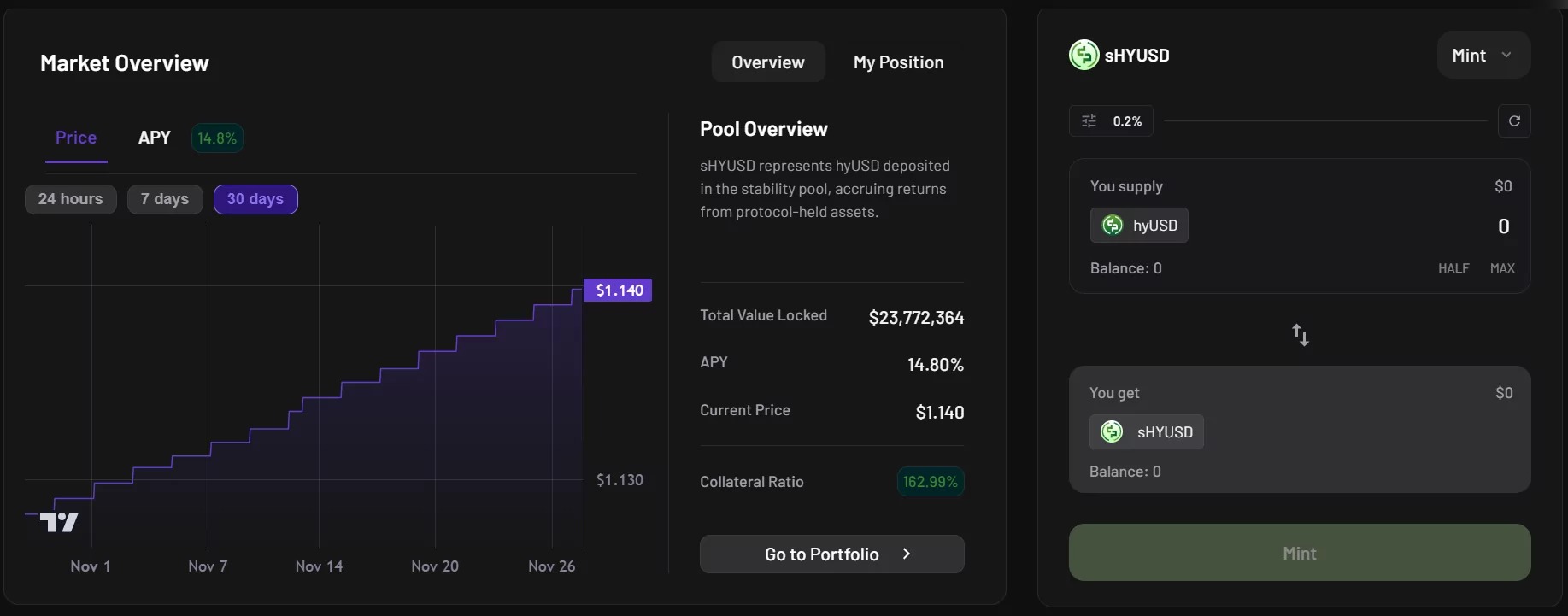
Once hyUSD is in their wallet, some choose to deposit it in the Stability Pool, which transforms it into sHYUSD. This operation immediately begins to generate a return, while directly contributing to the strength of the protocol. In the event of a market shock, the Stability Pool absorbs some of the stress and maintains overall balance. Users are rewarded for this role, making sHYUSD a central strategy in Hylo farming.
Minting xSOL: the mix of volatility and reward
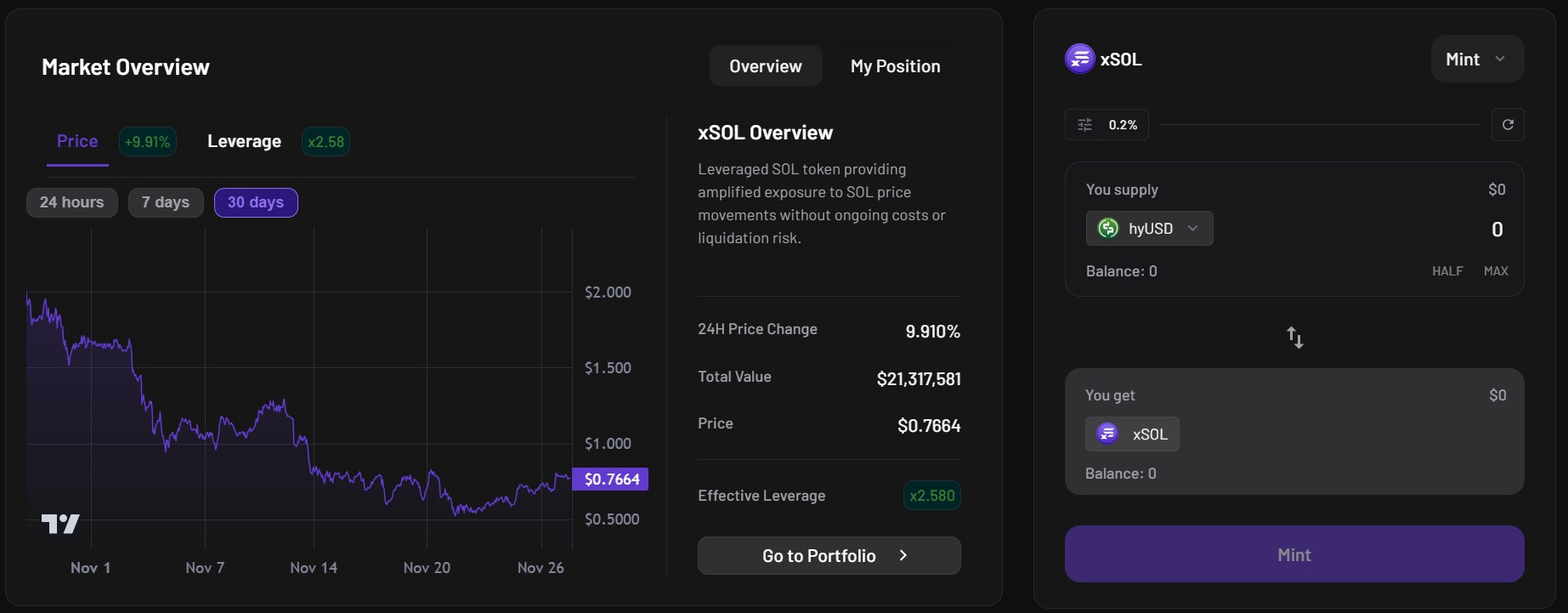
For those willing to accept more risk, minting xSOL remains one of the most attractive options. The protocol offers amplified exposure to SOL, without liquidation, with automatic risk management. xSOL is naturally more volatile: it allows you to capture more performance when SOL appreciates, but it also accentuates variations when the trend reverses. xSOL offers the highest XP gain on the platform, with users currently receiving 20XP per dollar per day.
Liquid staking
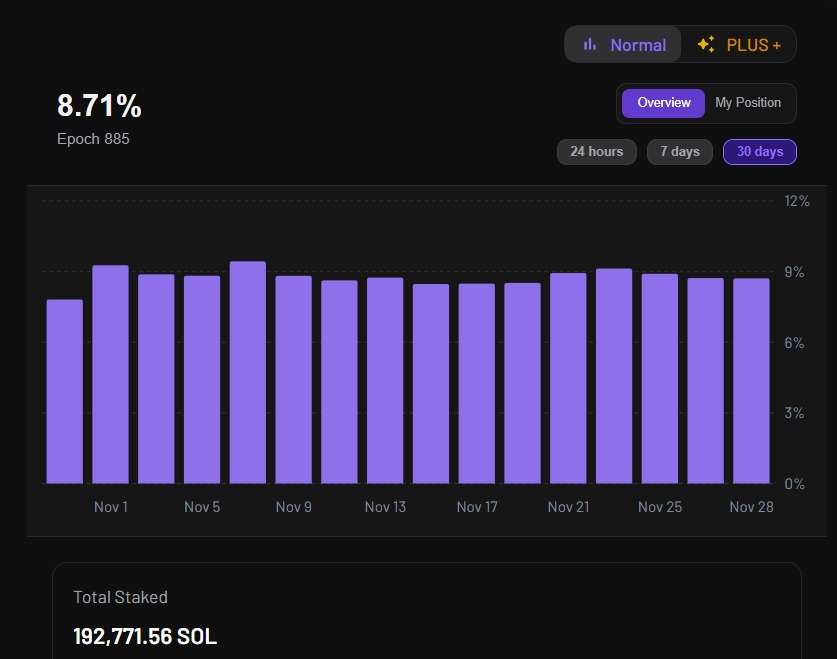
Liquid staking can be an excellent alternative for maximizing farming in the Hylo ecosystem. With average returns of around 8.70 and 9.40, hyloSOL is a product that should not be underestimated.
Currently, there are more than 2,000 holders of this token. The dashboards are updated daily, so this data is reliable and gives an idea of how this asset is being used. To obtain it, simply mint hyloSOL from a token such as SOL, for example.
Combining strategies
Most users adopt a hybrid approach: a stable base in hyUSD, a deposit in sHYUSD for yield, and opportunistic exposure via xSOL. This combination allows users to participate in all aspects of the protocol: stability, yield generation, and calculated risk-taking. Everything remains flexible: no positions are locked, and adjustments can be made based on the market or changes in the Season.
Tracking and referrals
The protocol dashboard allows you to track your XP and collateral status. Hylo also offers a referral system: those who share their link can accumulate additional points based on the activity of their referrals. This is not essential for farming, but it is an interesting addition for those who have a community or create content.
XP and Crowns
As you will have understood, as in a classic airdrop, XP is earned through the use of products, some of which, such as xSOL, are more advantageous due to their better returns. It is possible to combine assets to establish strategies and thus reduce risk while increasing exposure. However, there is one aspect that seems crucial but has not yet been revealed to users: “crowns.”
According to the documentation, crowns are distributed for every third XP earned, and their purpose will be revealed before the end of the points campaign. If we engage in speculation, we can imagine that they will play a crucial role in the final order, such as significant boosts, rank reshuffles, or increased rewards.
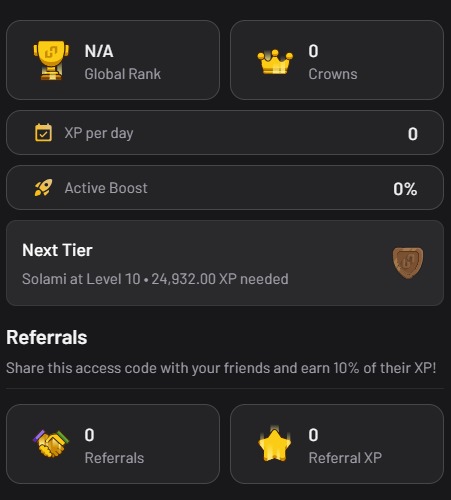
These crowns are a way to encourage users to use the protocol more and more in the hope of increasing their allocation, which, incidentally, has not yet been revealed.
Why might Hylo’s airdrop be interesting?
Since the launch of Season 0, Hylo has been attracting growing interest. This is not due to artificial inflation of rewards, but because the protocol has implemented an XP system that closely resembles a preparatory phase before a possible TGE. Nothing has been officially confirmed, but the economic design of the campaign, the nature of the products, and the way XP is awarded suggest that they could serve as the basis for a future distribution. The main interest, for now, is therefore the strategic accumulation of XP. Each action produces points: minting hyUSD, depositing in the Stability Pool, minting xSOL, staking via LSTs, or even activity via referrals. Deposits reinforce stability, commitments in xSOL increase the systemic risk assumed, and actions in sHYUSD support Hylo’s ability to absorb volatility. We are therefore moving closer to a model in which XP could be used as a basis for evaluating effective contribution. This positioning creates an interesting opportunity: today’s most active users could find themselves among the best placed if Hylo ever confirms the launch of a token. And since Season 0 is primarily used to test the behavior and robustness of the system, this phase differs from traditional campaigns in its pragmatic approach: Hylo rewards uses that truly strengthen its infrastructure, not those that exploit loopholes to artificially maximize a score. Naturally, XP optimization also creates a competitive dynamic. Minting xSOL is often considered the most profitable method, especially for users who are very bullish on SOL. Conversely, those seeking stability favor hyUSD and sHYUSD, which offer an excellent risk-return ratio. Together, these constitute a range of strategies for positioning oneself ahead of a possible announcement.
In short, the Hylo opportunity is not just a “points farm”: it is a pre-TGE phase where the protocol observes and learns, while users can accumulate XP that may one day be valued. On November 27, 2025, the CEO officially announced in a podcast produced by Phase Labs that season 1 is coming:
“Season one is coming, it will be very important, start staking up guys.”
Conclusion: what should we take away from Hylo?
The Hylo protocol is one of the most promising on paper in the Solana ecosystem. In a market that is constantly plunged into uncertainty, having a tool dedicated to risk management could soon become essential if investors become aware of the permanent risk hanging over the crypto market.
As for the campaign, it is important to keep in mind that nothing has been made official. Even though the platform benefits from an organization and display conducive to farming and ranking, no TGE has been announced. It is therefore recommended, as a first step, to stay tuned to announcements on Hylo’s Twitter account so as not to miss anything important, but also not to put all your eggs in one basket.