Built on Base, Farcaster is a SocialFi platform that some consider the Twitter of Web3. And rightly so, since the platform is a social network that gives users full control over their identity, data, and content, without the risk of censorship. However, the app has recently pivoted to highlight its built-in crypto wallet in order to grow its active user base. Find out the steps to follow to become eligible for a potential Farcaster airdrop.
What is Farcaster?
Farcaster has established itself as one of the most active crypto platforms today, but not really for the reasons we imagined just a few months ago. Long touted as the “Twitter of Web3” built on Base, the project ultimately underwent a major pivot: after more than four years of a social-focused strategy, the team admitted that the social network had never found its audience or its place.
Paradoxically, it was the arrival of their integrated wallet—quietly launched earlier this year—that changed the trajectory: it is this feature that has seen the strongest adoption, the most solid retention, and the most natural usage.
This repositioning doesn’t erase Farcaster’s social DNA, but it redefines its role. From now on, Farcaster positions itself first and foremost as a super-app wallet enriched with a social layer.
SocialFi is no longer the product, but an accelerator: casts, follows, reactions, and channels continue to exist, but serve primarily to amplify wallet usage, connect users with one another, and offer a unique testing ground for the mini-apps being developed on Base.
SocialFi
SocialFi platforms draw inspiration from traditional social networks (Instagram, X, Reddit, Snapchat…), but incorporate DeFi principles: data ownership, portable identity, on-chain interactions, and the ability to integrate native economic mechanisms.
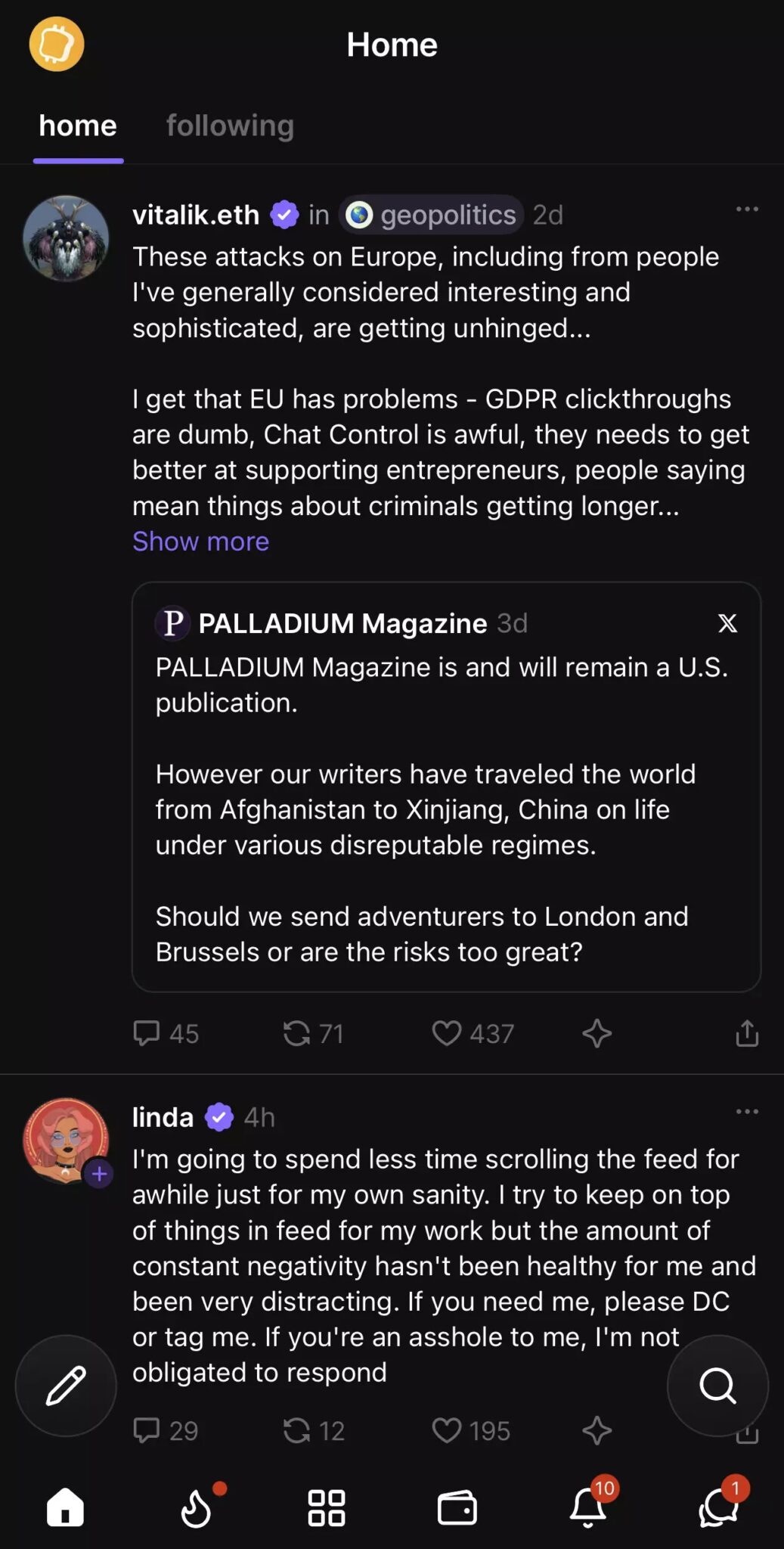
Farcaster homepage
Farcaster’s homepage remains familiar, with its “casts”—the equivalent of tweets—and community channels. But what truly sets the platform apart today is no longer this social layer; it’s the entire ecosystem that has grown around the wallet: financial mini-apps, trading tools, low-fee swaps, integrated alerts, NFT minting, on-chain analysis… Farcaster has become a multifunctional hub for exploring Base without leaving the app.
In line with this expansion strategy, the creation of Snapchain further reinforces this new direction. It is a chain dedicated to the fast, decentralized recording of social interactions (casts, likes, follows), enabling the protocol to maintain scalability while supporting the expected growth of its wallet + social ecosystem.
What airdrop opportunity for Farcaster?
Farcaster is no longer focused on a SocialFi approach but on rapid wallet adoption. A wallet is a simple way to generate strong on-chain activity—swaps, transfers, minting, token creation, and the use of mini-apps—all of which are economic signals that protocols value during a TGE (token launch). The wallet-first pivot enhances the appeal of farming, as it rewards natural, everyday usage.
But another common issue when discussing airdrops is the lack of liquidity. Having funds spread across some twenty different protocols presents a problem in terms of accessibility, but also—and more importantly—in terms of portfolio size. This is where Farcaster becomes interesting: you can farm without fees, simply by using the app and its wallet. It’s important to note that, since this airdrop hasn’t yet received widespread media coverage, the potential allocations for early users could be particularly attractive.
It’s also worth noting that Farcaster acquired Clanker in mid-October, a tool that allows users to create and launch tokens directly via casts. Clanker is already generating tens of millions of dollars in fees on Base, and its arrival in the Farcaster ecosystem suggests that future reward mechanisms, or TGE, could value not only social engagement but also the economic interactions created through these new tools.
Killing two birds with one stone on Base
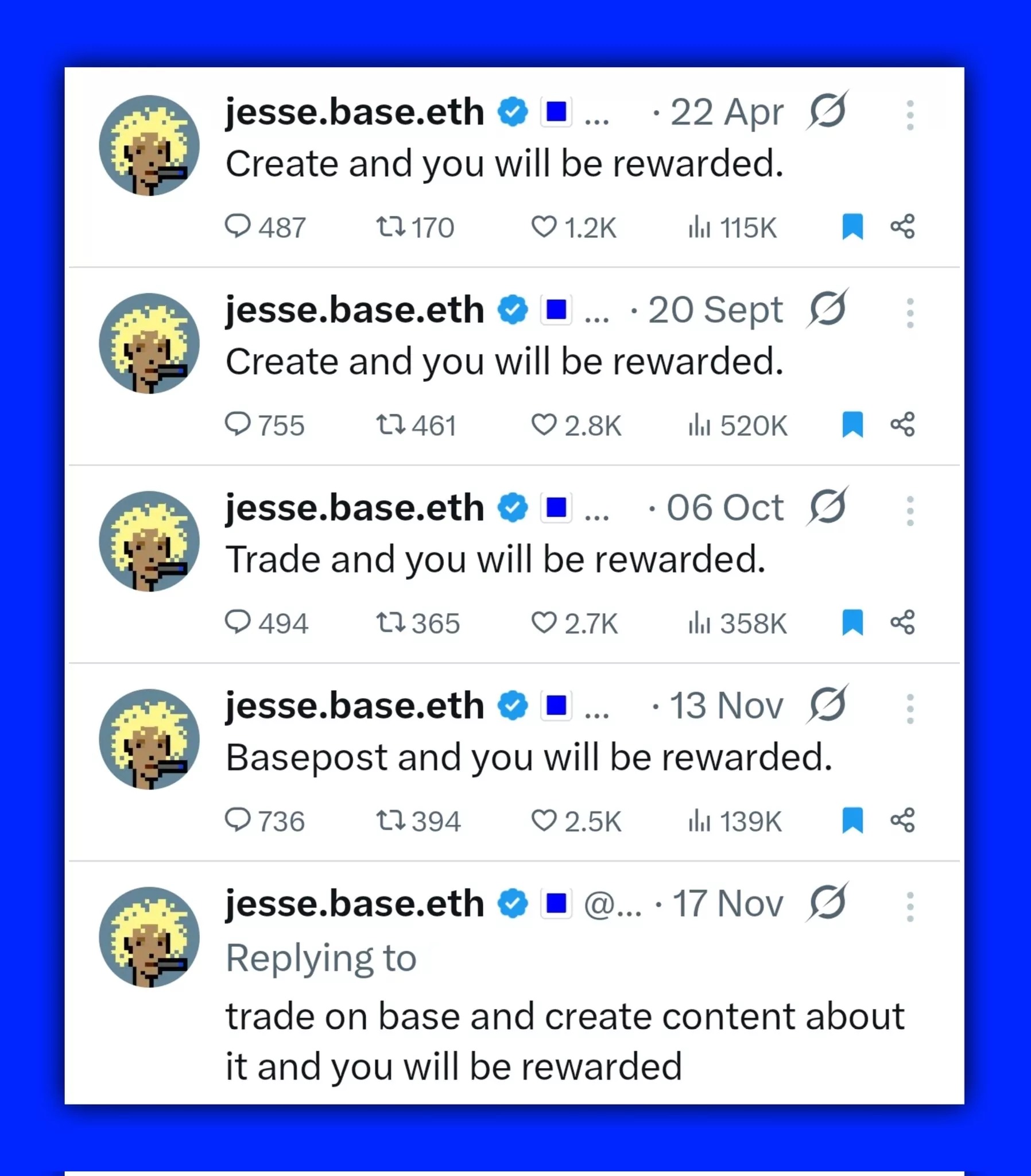
Even though nothing has been officially announced regarding a Base airdrop, everyone agrees that it will happen. The founders, who are very active on X, have posted several tweets mentioning criteria such as the use of DeFi tools, dApps, or token trading on this Ethereum Layer 2.
This is particularly true of @jessepolak, the founder of Base, who is encouraging investors to use Base through a series of tweets on the subject; the message is clear and unambiguous:
Jesse Polak on X
Regarding allocations and potential rewards, it is difficult to take a position, as unlike the eligibility criteria, no specific details have been provided by the Base team. All we know is that Ethereum’s most important Layer 2 is preparing an airdrop that’s sure to make waves.
Since Farcaster is built on Base, using it regularly should logically boost your eligibility. The advantage is that the platform offers numerous features and products, allowing you to maximize your impact across several areas: NFTs, swaps, or interactions.
How to farm the Farcaster and Base airdrops at the same time?
1. Create and set up your account
First of all, you cannot create an account directly from a computer. You must start by downloading the “Farcaster” app from the App Store or Google Play, depending on your phone.
Once installed, create your account. Nothing special here: simply customize your profile (name, bio, profile picture).
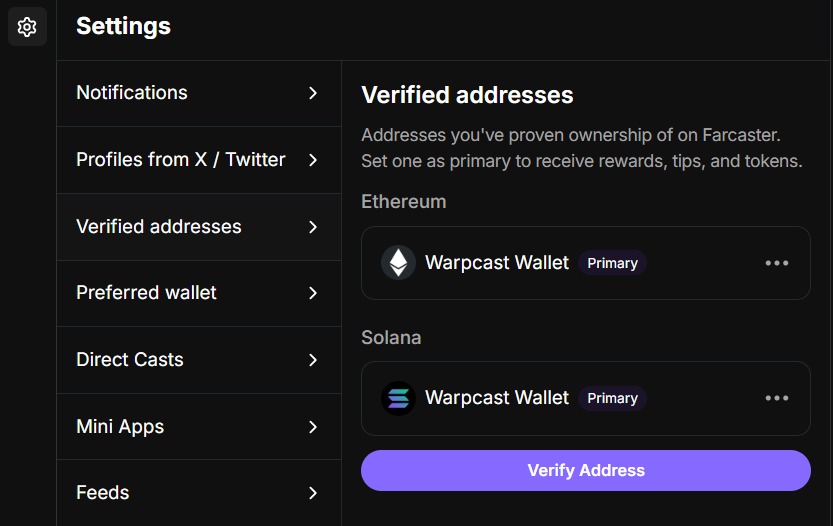
Important step: connect your wallets. By linking your wallet, you ensure that the app properly records your on-chain actions, and thus that you are actually farming. This option is available under “Settings” then “Verified addresses.”
Additionally, while this hasn’t been directly confirmed by the founders, we can assume that this could increase your eligibility for Base, because even if you aren’t directly using Layer 2, you’re still on the network, thereby increasing your on-chain activity.
Configuring your wallets on Farcaster
From there, you’re ready. Your adventure can begin, and all that’s left is to explore all the features available on the app.
2. Interact
One of the first steps—and also the simplest—is to interact. Farcaster is primarily a Web3 social network: interacting with the community is therefore at the heart of the strategy. In the documentation, the app recommends three principles:
- create content several times a week (called a Cast)
- create relevant content
- don’t spam
The rules are similar to those on Twitter. You can join communities, create them, send private messages, repost, and more.
There is no official information yet on the exact weight of Casts and interactions in the scoring algorithm, but it is very likely that they are valued.
3. Use the wallet
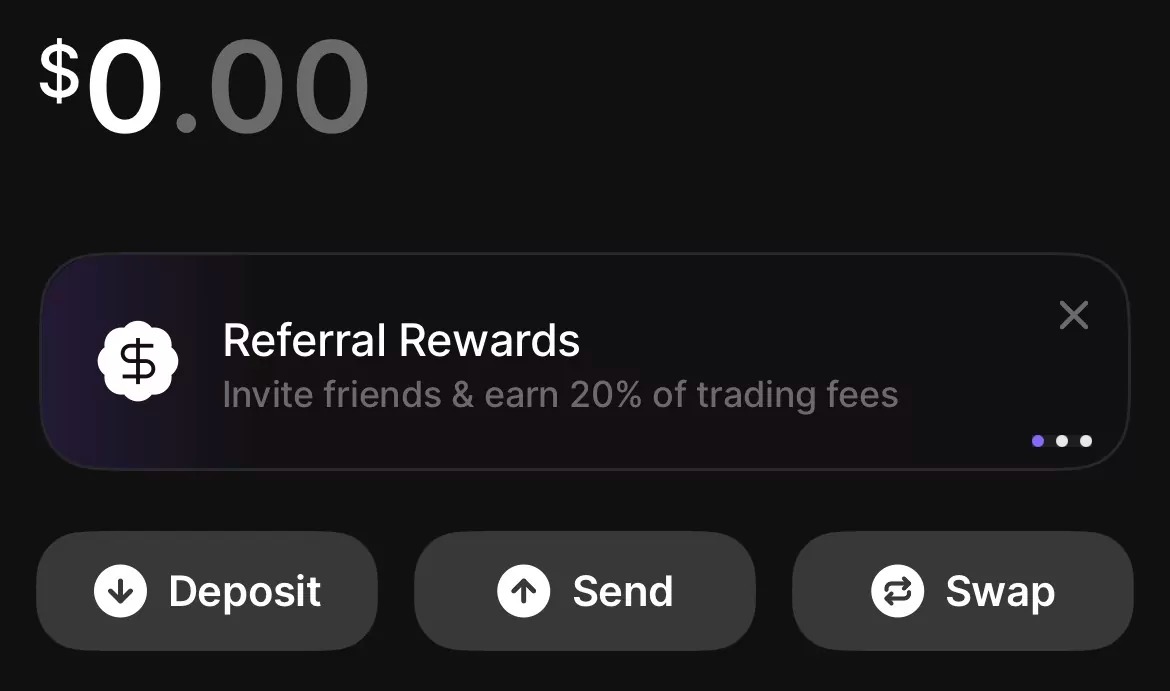
The wallet built into the app is the central element of your strategy. Due to the new direction taken by the team and its CEO, not using it means missing out on an on-chain and off-chain footprint that will be taken into account by the protocol during an airdrop. Even though it only displays three main features (deposit/receive, send, and token swap), using it regularly is the best course of action.
Wallet overview
In terms of features, the token alerts are game-changers: you can set up notifications for a target price or a percentage change (pump/dump). Add to that multi-chain swaps, a great interface, and several analysis tools, and you get an excellent wallet.
The only downside: it doesn’t yet connect to all external sites (but it can be imported into Rabby or Rainbow). Overall, for trading and farming, it’s a very effective wallet with zero fees and a solid setup. The team is doing a lot of marketing, and the product is evolving very quickly.
In addition to tokens, minting NFTs is also a relevant strategy to strengthen your on-chain footprint and increase your interaction signals within the ecosystem, particularly through the mini-apps dedicated to NFT minting and trading available directly within the app.
Given its recent pivot, farming now relies on the actual use of the wallet: swaps, transfers, minting, mini-apps, alerts, and on-chain interactions. Social interactions still matter but are no longer central. The idea is no longer to act as if on a social network, but as an active Base user via a full-featured wallet.
Mini-Apps: The Must-Have on Farcaster
Mini-apps also play a central role within the Farcaster ecosystem, covering a wide range of areas: Social, Finance, Games, Art, and Utility (infrastructure). Most offer airdrop campaigns: interacting with them not only allows you to farm the app in question but also to increase your presence on Farcaster. Here are three mini-apps worth checking out:
Rips
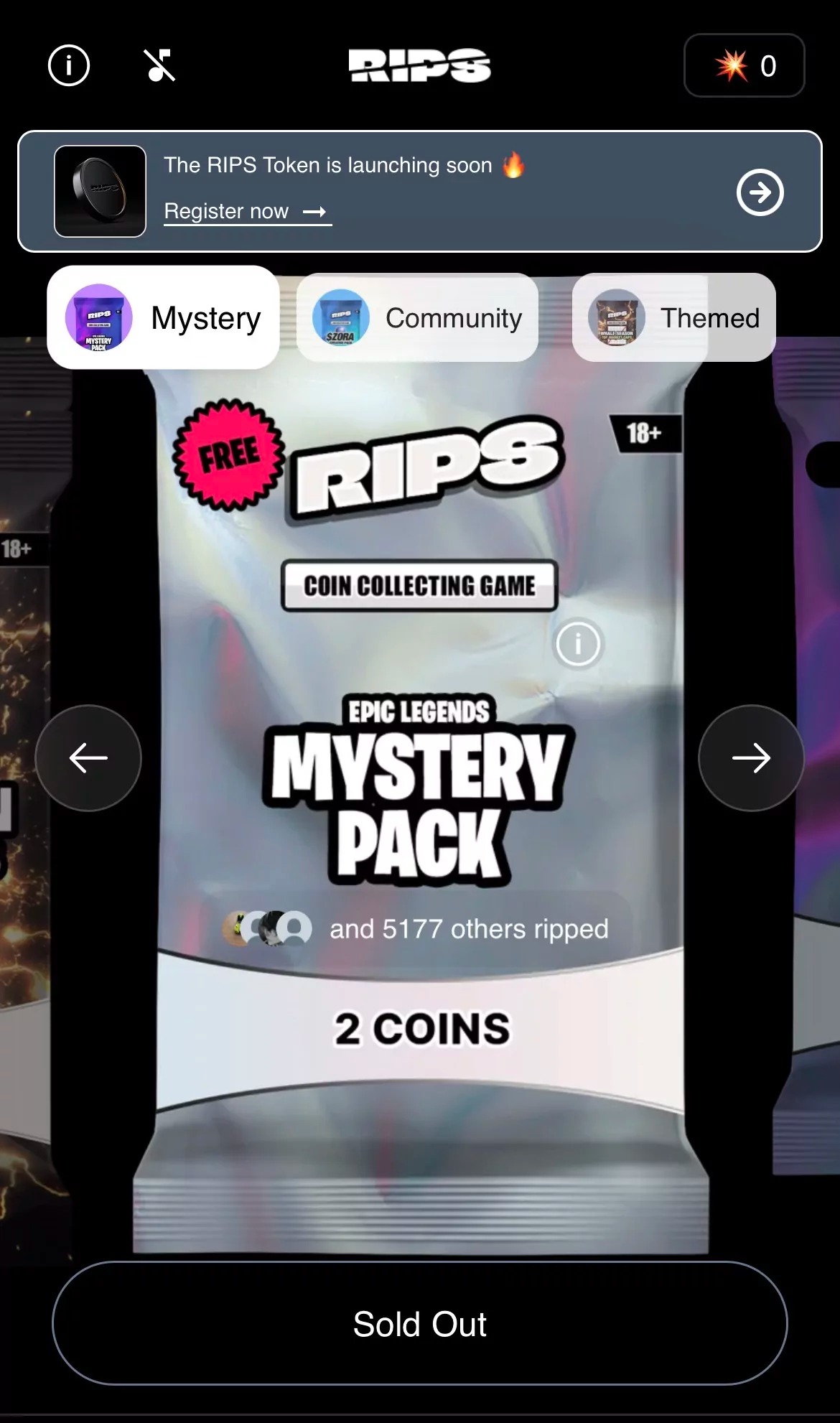
Rips is based on a simple principle: opening digital packs daily. Each pack reveals digital items (points, cards, rarities) that enhance your profile, inventory, and wallet. No initial capital is required. No yield farming. No risky bridging. No complex DeFi strategies. The only real driver: frequency.
The optimal strategy: open a pack every day
RIPS image
This is a major advantage: anyone can participate, even without capital. Also keep an eye on seasons, events, collaborations, limited editions, and themed packs—they could work in your favor. Long-term commitment to the project is generally valued. The crypto ecosystem still drastically undervalues the long-term signal.
Critical detail: the first Rips airdrop will require 100 points. These points are earned through purchased packs (5 to 50 points depending on value) or simply by claiming the daily free pack. In other words: consistent participation can allow you to become eligible without paying.
QR
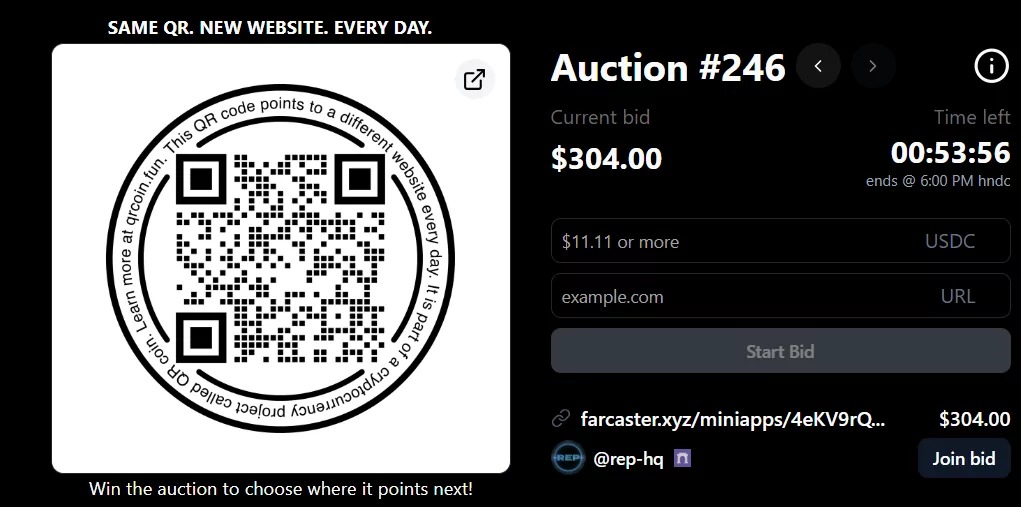
QR Coin is a project based on a simple yet innovative idea: a single QR code auctioned off every day on the Base blockchain. The winner controls the QR code’s redirect for 24 hours, making this token a viral gateway for advertising, gaming, and collecting within the Web3 ecosystem.
Beyond the core concept, what makes QR particularly interesting is its funding model. The project has raised no capital. $0 in external funding. The figures are transparent: <$40K over 3 weeks, <$1M over 100 days, and over $150K in auction revenue over 245 days. The founder had to buy his own tokens. In the current ecosystem, this is extremely rare; however, it demonstrates $QR’s commitment to avoiding the easy route of ICOs and to building a truly close-knit community around the project.
QR image
This project is consistently in the top 5 apps on Farcaster and is very popular with the community. The token, launched in February 2025, saw its market cap skyrocket to $7.6 million, before stabilizing today at around $2–3 million. As a point of reference, the founder of QR has over 10,000 followers on X and more than 27,000 on Farcaster, which attests to the project’s consistent engagement and the interest it generates.
Shark Vibe
Still in the realm of NFTs, SharkVibe stands out for its playful and lighthearted approach, while remaining highly unifying. Currently ranked 3rd among dApps on Farcaster, the NFT project is exceeding expectations.
SharkVibe image
The concept is simple: similar to Rips, you mint an NFT every day representing the “shark” you are today. This recurring system is therefore in place, and since the app is built on Base, minting fees remain very low, in the range of a few cents.
A few days ago, a token was launched: SHARKVIBE. However, due to a lack of communication from the founder, the token has not met initial expectations. Its market cap currently stands at around $330,000, and it does not appear to play a central role in the dApp. It is therefore best to focus on the daily minting of the NFT.
Analysis of Farcaster’s on-chain data
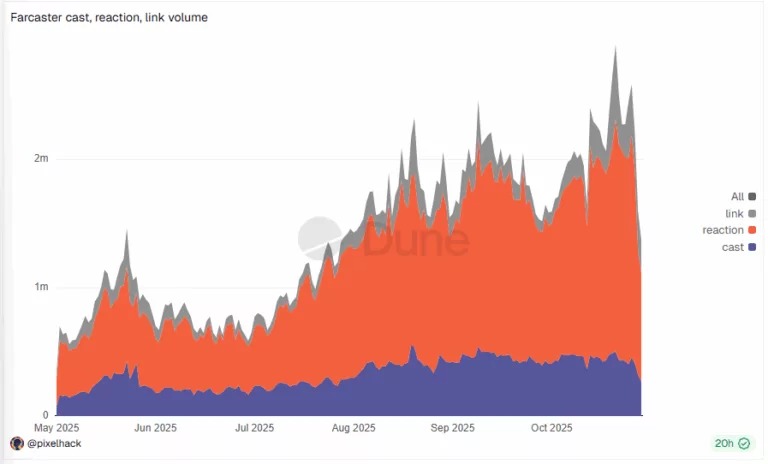
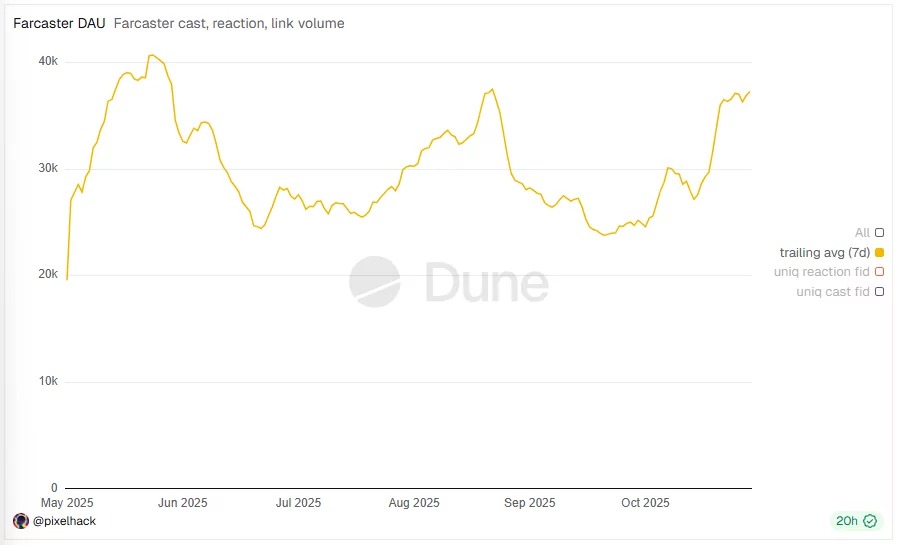
The introduction is complete, but it’s also interesting to look at the platform’s usage. To do so, simply visit Dune.
Currently, Farcaster has a total of one million users. This does not mean that one million people use the app daily. In reality, it’s quite the opposite.
If we look at the DAU (Daily Active Users) since May 2025, the platform has between 27,000 and 35,000 active users per day, far from the announced figure of one million.
Farcaster DAU on DUNE
But that’s not all: among these 30,000 daily users, most remain passive and simply like posts. Only about 20% take the time to publish a post, while the remaining 80% just scroll through the feed.
Interactions via Farcaster on Dune
However, this is not surprising: Farcaster remains a social network, and whether here, on X, or on Instagram, the proportion of users who create content has always been very low. It is therefore not surprising to see the same pattern repeating itself here.
Note: even though the platform encourages and recommends content creation, it has not provided any specific figures or information on the impact of casts.
Conclusion on Farcaster
In conclusion, Farcaster is no longer just a SocialFi opportunity, but a true, rapidly expanding wallet super-app. The wallet-first pivot completely redefines the project: the goal is no longer to recreate a decentralized social network, but to capture real-world usage on Base through a powerful, simple, and everyday-use wallet. Social features are no longer the core of the product, but a complementary component that enriches the experience and supports the ecosystem’s growth.