According to the latest IMF report, El Salvador has not continued its daily Bitcoin purchases as suggested by the Bitcoin Office’s public address. These movements are in fact simply transfers between government wallets, calling into question the transparency of Bukele’s Bitcoin strategy.
El Salvador may have actually stopped buying Bitcoin several months ago
In September 2021, El Salvador made history by becoming the first country to adopt Bitcoin as legal tender. In the months that followed, Nayib Bukele’s government purchased several thousand BTC. At the end of 2022, as the bear market reached its lowest point, it announced the launch of a program to purchase one Bitcoin per day on a regular basis. To date, the country holds a reserve of at least 6,241 BTC, worth more than $750 million.
However, at the end of 2024, El Salvador signed an agreement with the International Monetary Fund (IMF), making a $3.5 billion loan conditional on reducing its exposure to Bitcoin. Despite this agreement, the address made public by the Bitcoin Office continued to receive funds.
For many, Bukele and the Bitcoin Office’s responses had been interpreted as an act of defiance against the power of the IMF. But today, the latest report from the Bretton Woods institution confirms that these Bitcoin purchases were in fact nothing more than a facade.
In our documentary on El Salvador, published last March, we pointed out that the address made public by the Bitcoin Office was by no means complete proof of the country’s BTC holdings. We said that it was entirely possible that the government had acquired large amounts of Bitcoin much earlier, before gradually transferring them to this address at a rate of one BTC per day.
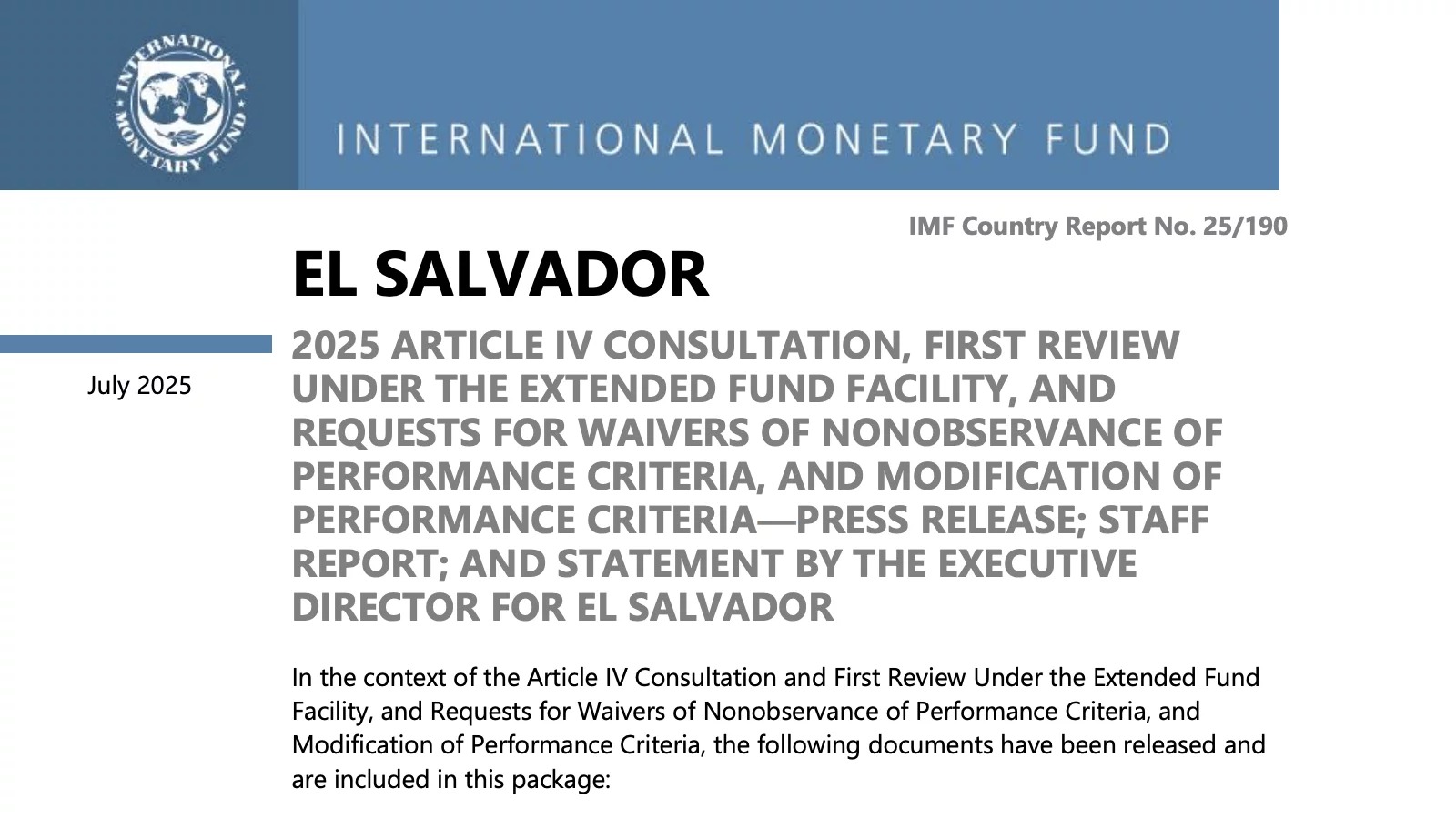
The IMF report confirms this hypothesis:
The increases in Bitcoin holdings in the Strategic Reserve Fund reflect the consolidation of Bitcoin from various government-held wallets.
This comes as no surprise: the Bukele government’s finances remain opaque, and in the absence of overall transparency, it is impossible to be certain about the actual composition of the national Bitcoin reserve.
After ending gangs, Bukele turns around El Salvador’s economy
Coincidentally, Bloomberg revealed yesterday that El Salvador’s government bonds are surging, becoming the best performers in emerging markets. This growth is reportedly driven by strong demand for a new bond issue by the state-owned energy company CEL, a sign of growing investor confidence in the Salvadoran economy.
After profoundly transforming the country, notably by eradicating gangs, the agreement reached between Nayib Bukele and the IMF seems to have strengthened El Salvador’s financial credibility to the point where it can raise more debt on international markets.