Stablecoins could become the financial backbone of AI agents, offering a cash payment system tailored to autonomous assistants. Their rapid adoption and growing utility place Circle and Coinbase at the heart of this new digital economy. Are stablecoins poised to disrupt traditional payment giants like Visa and Mastercard?
Stablecoins: the financial backbone of AI agents?
Circle CEO Jeremy Allaire expressed great optimism about the integration of stablecoins into Artificial Intelligence (AI) processes.
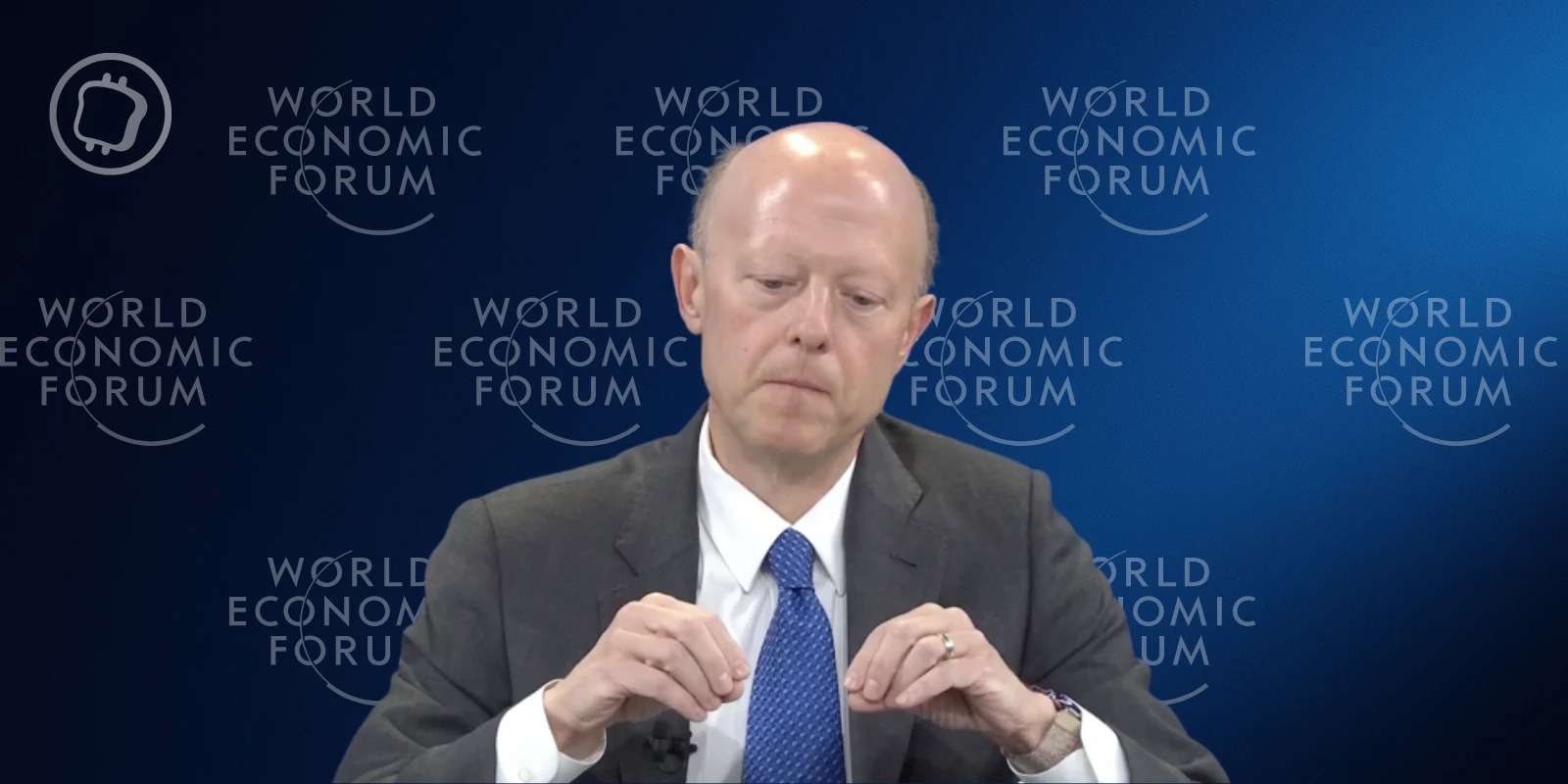
During a panel discussion on stablecoins at the World Economic Forum (WEF), Jeremy Allaire shared his vision for the evolution of stablecoins over the next 3 to 5 years.
“Within 3 to 5 years, billions of AI agents will use cryptocurrencies and stablecoins to transfer value in real time.” Jeremy Allaire, CEO of Circle. pic.twitter.com/eLgBjIaj30
— Cryptoast (@CryptoastMedia) January 23, 2026
He emphasizes that AI agents need a real economic system and appropriate payment mechanisms. In his view, stablecoins are currently the only solution capable of effectively meeting this requirement.
This viewpoint was also echoed by Changpeng Zhao, co-founder of Binance. More broadly, he believes that the native currency of AI will be crypto.
According to him, blockchain is the native technological interface for AI agents. By agents, he means assistants capable of reserving a table at a restaurant, as he gives as an example.
A promise that makes sense, since in May 2025, Coinbase unveiled its open-source protocol dubbed “x402.” Inspired by the long-unused HTTP 402 status code, this standard aims to fundamentally rethink how payments are made on the Internet.
Within this infrastructure, the Coinbase Developer Platform (CDP), developed by Coinbase, stands out as a benchmark. USDC thus appears well-positioned to become the underlying payment infrastructure.
This approach places Circle and Coinbase at the heart of a payment system likely to be adopted by thousands of AI agents and automated services, as the autonomous agent economy takes shape and matures.
USDC: A Rival to Visa and Mastercard?
In a second interview with CNBC on the sidelines of the WEF, Circle’s CEO noted that the amount of USDC in circulation has grown by 80% year-over-year for two consecutive years. He also highlighted a marked increase in the utility of stablecoins, whose use cases are multiplying.
In his words, “the more usage increases, the stronger the network effects become, and the more circulation grows.” That is why, when asked by the journalist, “When you wake up and see Visa starting to take an interest in stablecoins and their integration into payment systems, what is your reaction?” he replied:
That’s fantastic. Visa and Mastercard are both major partners.
He believes that stablecoins need to rely on a neutral infrastructure, a quality that Circle possesses. He has no desire to compete with banks, payment providers, or exchange platforms.
In the news – Bermuda aims to build a “fully on-chain” economy with Coinbase and Circle
That is why he is not opposed to the development of other stablecoins; he explains that these “are platforms on which we build and integrate, infrastructures to which users connect.”
Stablecoins have thus firmly established their position as cash payment instruments for AI agents.
Today, as evidenced by the debates surrounding the Clarity Act, traditional finance and major stablecoin players are engaged in a decisive battle over the issue of returns associated with stablecoins.